
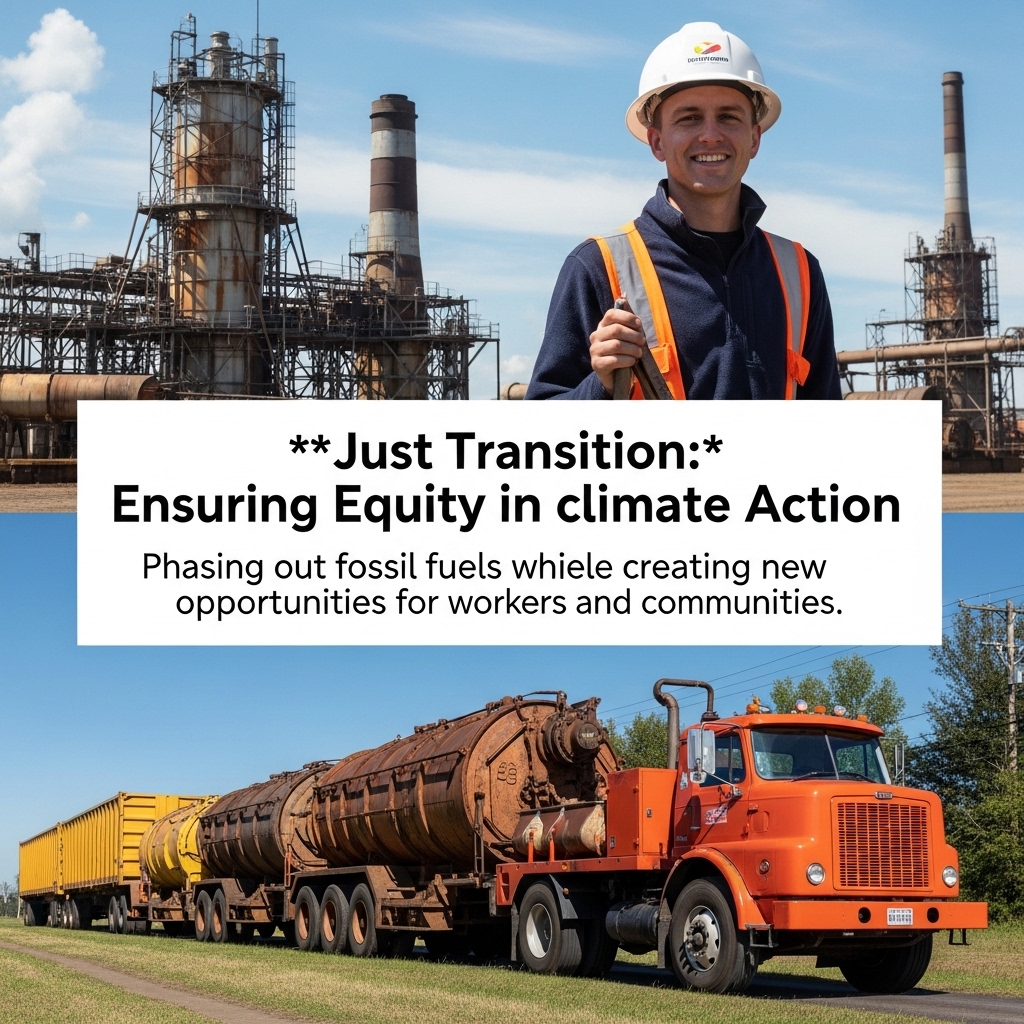
Introduction to Just Transition
A just transition refers to the process of transitioning to a low-carbon economy in a way that is fair, equitable, and just for all stakeholders, including workers, communities, and the environment. The concept of just transition has gained significant attention in recent years, particularly in the context of climate change mitigation efforts. As the world transitions away from fossil fuels and towards renewable energy sources, it is essential to ensure that this transition does not disproportionately harm certain groups, such as workers in the fossil fuel industry or vulnerable communities. In this article, we will explore the concept of just transition, its importance in climate change mitigation efforts, and examples of successful just transition initiatives.
What is a Just Transition?
A just transition is a framework for transitioning to a low-carbon economy that prioritizes social justice, equity, and human rights. It involves a planned and managed transition that takes into account the needs and concerns of all stakeholders, including workers, communities, and the environment. A just transition aims to minimize the negative impacts of the transition, such as job losses and economic disruption, while maximizing the benefits, such as new job opportunities and improved public health. The core principles of a just transition include social justice, equity, and human rights, as well as environmental sustainability and economic viability.
Importance of Just Transition in Climate Change Mitigation Efforts
The just transition is critical to climate change mitigation efforts because it helps to build a broad base of support for the transition to a low-carbon economy. By prioritizing social justice and equity, a just transition can help to address the concerns of workers and communities who may be disproportionately impacted by the transition. This can help to build trust and support for climate policies and initiatives, which is essential for their success. Additionally, a just transition can help to ensure that the benefits of the transition are shared fairly and that the costs are not borne disproportionately by certain groups.
Examples of Just Transition Initiatives
There are many examples of just transition initiatives around the world, including in countries such as Germany, Australia, and South Africa. For example, Germany's Energiewende (Energy Transition) program is a just transition initiative that aims to reduce the country's greenhouse gas emissions by 80% by 2050. The program includes a range of measures, such as investments in renewable energy, energy efficiency, and grid infrastructure, as well as support for workers in the fossil fuel industry who are transitioning to new jobs. Another example is the Australian government's Just Transition Authority, which was established to support workers and communities affected by the closure of coal-fired power plants.
Challenges and Barriers to Just Transition
Despite the importance of just transition, there are many challenges and barriers to its implementation. One of the main challenges is the lack of funding and resources to support just transition initiatives. Additionally, there may be resistance from workers and communities who are concerned about the impacts of the transition on their livelihoods and ways of life. There may also be challenges in terms of policy and regulatory frameworks, which may not be supportive of just transition initiatives. Furthermore, the just transition requires a high degree of coordination and cooperation among different stakeholders, including government, business, and civil society, which can be difficult to achieve.
Role of Policy and Regulation in Supporting Just Transition
Policies and regulations play a critical role in supporting just transition initiatives. Governments can establish policies and regulations that support the development of renewable energy, energy efficiency, and other low-carbon technologies, while also providing support for workers and communities affected by the transition. For example, governments can establish training programs and education initiatives to help workers develop new skills, as well as provide financial support for workers who are transitioning to new jobs. Additionally, governments can establish regulations that require companies to prioritize social justice and equity in their operations, such as through the use of environmental and social impact assessments.
Conclusion
In conclusion, a just transition is a critical component of climate change mitigation efforts, as it helps to build a broad base of support for the transition to a low-carbon economy. By prioritizing social justice, equity, and human rights, a just transition can help to minimize the negative impacts of the transition, while maximizing the benefits. There are many examples of successful just transition initiatives around the world, and policymakers and stakeholders can learn from these examples to develop their own just transition strategies. However, there are also challenges and barriers to just transition, including the lack of funding and resources, resistance from workers and communities, and challenges in terms of policy and regulatory frameworks. Addressing these challenges will require a high degree of coordination and cooperation among different stakeholders, as well as a commitment to social justice, equity, and human rights.