
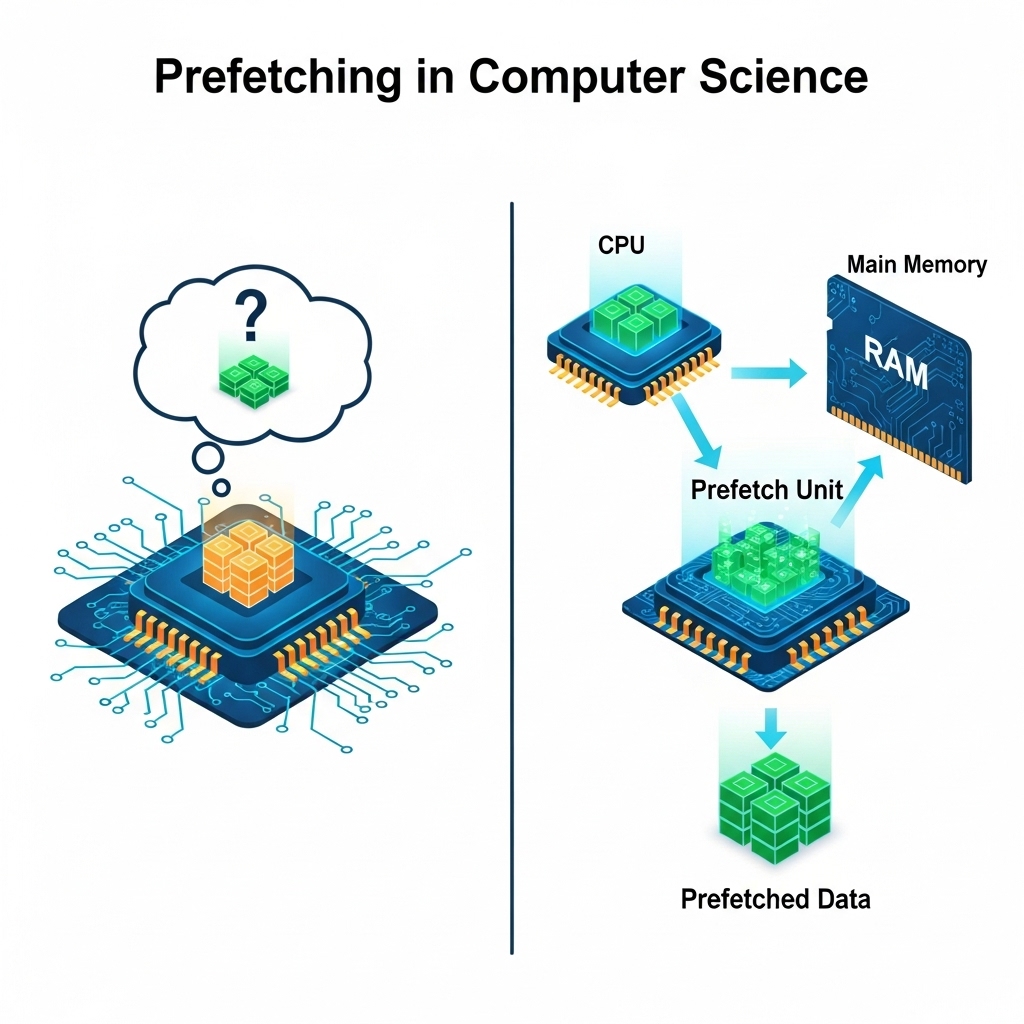
Introduction to Prefetching in Computer Science
Prefetching is a technique used in computer science to improve the performance of a system by anticipating and loading data or instructions before they are actually needed. This technique is used to reduce the time it takes to access data or execute instructions, thereby improving the overall speed and efficiency of the system. Prefetching is commonly used in various areas of computer science, including operating systems, databases, web browsers, and compilers. In this article, we will explore the concept of prefetching, its types, and how it works, along with some examples and benefits.
What is Prefetching and How Does it Work?
Prefetching involves loading data or instructions into a cache or a buffer before they are actually needed. The cache or buffer is a small, fast memory that stores frequently used data or instructions. When a program or a system needs to access data or execute instructions, it first checks the cache or buffer to see if the required data or instructions are already available. If they are, the system can access them quickly, without having to wait for them to be loaded from a slower memory or disk. Prefetching is based on the principle of locality of reference, which states that a program or a system is likely to access data or instructions that are located near the current location.
For example, when a web browser loads a webpage, it can prefetch the images, stylesheets, and scripts that are linked to the webpage, so that they are available in the cache when the user needs to access them. This can improve the loading time of the webpage and provide a better user experience.
Types of Prefetching
There are several types of prefetching, including:
1. **Data prefetching**: This involves loading data into a cache or buffer before it is actually needed. Data prefetching is commonly used in databases and file systems to improve the performance of queries and file access.
2. **Instruction prefetching**: This involves loading instructions into a cache or buffer before they are actually needed. Instruction prefetching is commonly used in compilers and operating systems to improve the performance of program execution.
3. **Link prefetching**: This involves loading resources that are linked to a webpage, such as images, stylesheets, and scripts, before they are actually needed. Link prefetching is commonly used in web browsers to improve the loading time of webpages.
4. **Thread prefetching**: This involves loading data or instructions into a cache or buffer before a thread or a process needs to access them. Thread prefetching is commonly used in operating systems and parallel computing to improve the performance of multithreaded programs.
Benefits of Prefetching
Prefetching has several benefits, including:
1. **Improved performance**: Prefetching can improve the performance of a system by reducing the time it takes to access data or execute instructions.
2. **Reduced latency**: Prefetching can reduce the latency of a system by loading data or instructions into a cache or buffer before they are actually needed.
3. **Increased throughput**: Prefetching can increase the throughput of a system by allowing multiple tasks or threads to be executed concurrently.
4. **Better user experience**: Prefetching can provide a better user experience by improving the loading time of webpages, reducing the time it takes to access data or execute instructions, and increasing the responsiveness of a system.
Examples of Prefetching in Real-World Applications
Prefetching is used in various real-world applications, including:
1. **Web browsers**: Web browsers use prefetching to load resources that are linked to a webpage, such as images, stylesheets, and scripts, before they are actually needed.
2. **Databases**: Databases use prefetching to load data into a cache or buffer before it is actually needed, to improve the performance of queries.
3. **Operating systems**: Operating systems use prefetching to load instructions into a cache or buffer before they are actually needed, to improve the performance of program execution.
4. **Compilers**: Compilers use prefetching to load instructions into a cache or buffer before they are actually needed, to improve the performance of program execution.
Challenges and Limitations of Prefetching
Prefetching has several challenges and limitations, including:
1. **Cache pollution**: Prefetching can cause cache pollution, where unwanted data or instructions are loaded into the cache, reducing its effectiveness.
2. **Memory waste**: Prefetching can cause memory waste, where unnecessary data or instructions are loaded into memory, reducing its availability.
3. **Increased complexity**: Prefetching can increase the complexity of a system, making it harder to design, implement, and maintain.
4. **Energy consumption**: Prefetching can increase energy consumption, as it requires more memory accesses and data transfers.
Conclusion
In conclusion, prefetching is a technique used in computer science to improve the performance of a system by anticipating and loading data or instructions before they are actually needed. Prefetching has several benefits, including improved performance, reduced latency, increased throughput, and better user experience. However, it also has several challenges and limitations, including cache pollution, memory waste, increased complexity, and energy consumption. Despite these challenges, prefetching is widely used in various real-world applications, including web browsers, databases, operating systems, and compilers. As computer systems continue to evolve, prefetching is likely to play an increasingly important role in improving their performance and efficiency.