
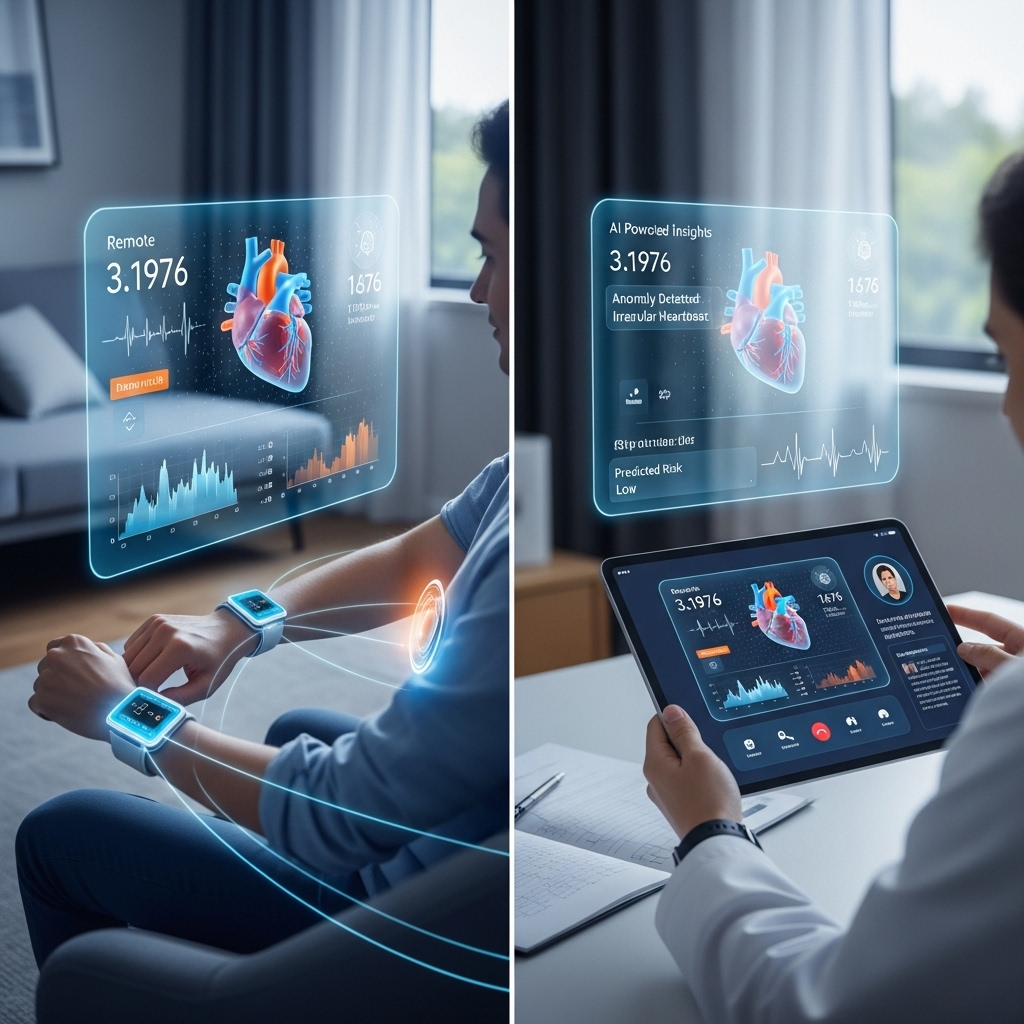
Introduction to AI in Remote Patient Monitoring
Remote patient monitoring (RPM) has become a crucial aspect of healthcare, allowing medical professionals to track patients' health conditions outside of traditional clinical settings. The integration of Artificial Intelligence (AI) in RPM systems is revolutionizing the way healthcare providers monitor and manage patient care. AI-powered RPM systems can analyze vast amounts of data, identify patterns, and provide personalized insights, enabling timely interventions and improved patient outcomes. In this article, we will explore the potential of AI in revolutionizing remote patient monitoring systems.
Enhanced Data Analysis and Pattern Recognition
AI algorithms can process large amounts of data from various sources, including wearable devices, mobile apps, and electronic health records (EHRs). By analyzing this data, AI can identify patterns and anomalies, enabling early detection of potential health risks. For example, AI-powered RPM systems can analyze data from wearable devices to detect early signs of congestive heart failure, such as changes in heart rate and blood pressure. This enables healthcare providers to intervene early, reducing the risk of hospitalization and improving patient outcomes.
Personalized Medicine and Predictive Analytics
AI-powered RPM systems can provide personalized insights and predictive analytics, enabling healthcare providers to tailor treatment plans to individual patients' needs. By analyzing data from EHRs, medical histories, and genetic profiles, AI can identify high-risk patients and predict the likelihood of adverse events. For instance, AI can analyze data from patients with diabetes to predict the risk of hypoglycemic events, enabling healthcare providers to adjust treatment plans and prevent hospitalizations.
Automated Alert Systems and Notifications
AI-powered RPM systems can automate alert systems and notifications, ensuring that healthcare providers are informed of potential health risks in real-time. For example, AI can analyze data from wearable devices to detect early signs of atrial fibrillation, triggering alerts to healthcare providers and enabling timely interventions. Automated alert systems can also notify patients and caregivers of potential health risks, empowering them to take proactive steps to manage their condition.
Improved Patient Engagement and Adherence
AI-powered RPM systems can improve patient engagement and adherence to treatment plans by providing personalized feedback and support. For instance, AI can analyze data from mobile apps to track patient adherence to medication regimens, providing reminders and notifications to patients who may be at risk of non-adherence. AI can also provide patients with personalized health coaching, enabling them to take a more active role in managing their condition.
Enhanced Clinical Decision Support
AI-powered RPM systems can provide healthcare providers with enhanced clinical decision support, enabling them to make more informed decisions about patient care. By analyzing data from EHRs, medical literature, and clinical trials, AI can provide healthcare providers with evidence-based recommendations for treatment. For example, AI can analyze data from patients with chronic obstructive pulmonary disease (COPD) to recommend personalized treatment plans, including medication regimens and lifestyle interventions.
Conclusion
In conclusion, AI has the potential to revolutionize remote patient monitoring systems, enabling healthcare providers to deliver more personalized, proactive, and effective care. By analyzing vast amounts of data, identifying patterns, and providing personalized insights, AI-powered RPM systems can improve patient outcomes, reduce hospitalizations, and enhance the overall quality of care. As the healthcare industry continues to evolve, it is likely that AI will play an increasingly important role in shaping the future of remote patient monitoring.