
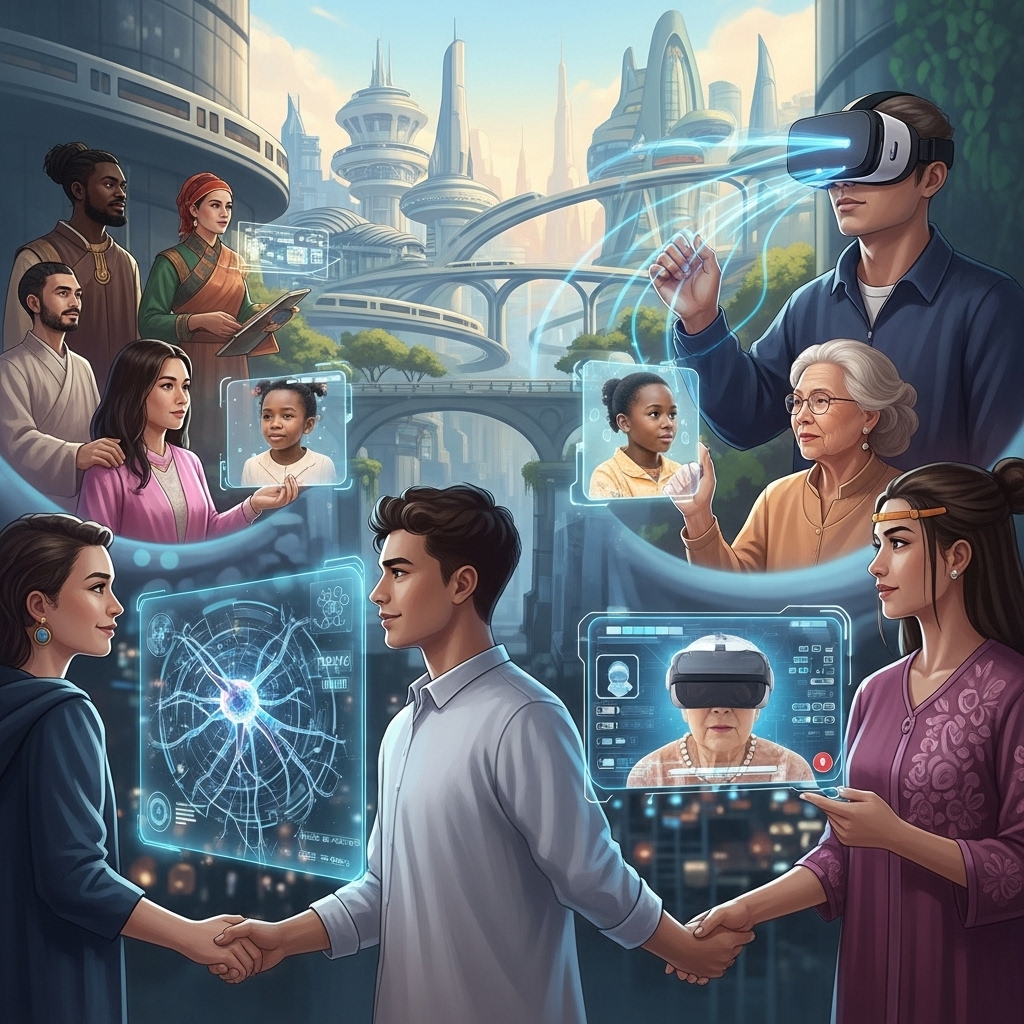
The Future of Human Relationships: How Technology, Culture, and Changing Values Redefine Connection
Human relationships are the foundation of society, shaping emotional well-being, identity, and collective resilience. As technology advances and cultural norms evolve, the way people form, maintain, and experience relationships is undergoing significant transformation. The future of human connection is influenced not only by digital tools but also by shifting values, economic pressures, and changing expectations about intimacy, commitment, and community.
Understanding these changes requires examining relationships through psychological, social, and technological lenses.
What Defines a Human Relationship?
A human relationship is a sustained interaction between individuals characterized by emotional exchange, mutual influence, and shared meaning. Relationships exist across many forms, including familial, romantic, professional, and communal bonds.
Connection fulfills fundamental psychological needs for belonging and security.
Historical Context of Relationships
Historically, relationships were shaped by proximity, tradition, and social roles. Families and communities formed the core of social life, with limited choice and mobility.
Modern societies emphasize individual choice, increasing relational diversity.
The Role of Technology in Connection
Digital communication tools allow relationships to form and persist across distance. Messaging, video calls, and social platforms maintain contact but alter interaction patterns.
Technology increases reach while changing depth.
Online Relationships and Emotional Authenticity
Online relationships can be emotionally meaningful despite lacking physical presence. Shared vulnerability and communication sustain intimacy.
However, absence of nonverbal cues can create misunderstandings.
Speed and Accessibility of Connection
Technology accelerates relationship formation. Connections that once took time now form rapidly.
Speed can enhance opportunity but may reduce deliberation.
Changing Expectations of Intimacy
Modern relationships emphasize emotional openness, mutual support, and personal growth. Expectations are higher and more complex.
This increases fulfillment potential but also pressure.
Individualism and Relationship Autonomy
Greater individual autonomy allows people to define relationships on their own terms. Traditional structures are less prescriptive.
Freedom introduces both empowerment and uncertainty.
Commitment in a Fluid World
Commitment is redefined in contexts of mobility and choice. Long-term relationships coexist with flexible arrangements.
Negotiation replaces assumption.
Romantic Relationships and Digital Dating
Digital dating platforms expand partner choice and efficiency. Algorithms influence attraction and selection.
Abundance can lead to comparison and dissatisfaction.
Friendship in Adulthood
Adult friendships face challenges due to time constraints and mobility. Intentional effort sustains connection.
Friendship remains essential for well-being.
Family Structures and Evolving Roles
Family structures diversify, including blended families, single-parent households, and chosen families.
Roles adapt to social and economic realities.
Intergenerational Relationships
Longer lifespans increase intergenerational interaction. Technology bridges gaps while highlighting differences.
Mutual learning strengthens bonds.
Workplace Relationships and Professional Boundaries
Workplace relationships influence collaboration and satisfaction. Remote work reshapes informal interaction.
Clear boundaries support trust.
Emotional Labor in Relationships
Emotional labor involves managing emotions to sustain relationships. Unequal distribution leads to strain.
Awareness supports balance.
Conflict and Communication
Healthy relationships require conflict resolution skills. Digital communication can escalate misunderstandings.
Intentional communication fosters understanding.
Loneliness in Connected Societies
Despite connectivity, loneliness increases in many societies. Quantity of interaction does not guarantee quality.
Meaningful connection requires presence.
Social Comparison and Relationship Satisfaction
Exposure to curated portrayals influences expectations. Comparison undermines satisfaction.
Realistic narratives support resilience.
Trust in the Digital Age
Trust is foundational to relationships. Digital interactions require new trust cues.
Consistency and transparency build credibility.
Boundaries and Self-Care
Healthy relationships respect boundaries. Over-availability leads to burnout.
Boundaries protect connection.
Cultural Differences in Relationships
Cultural values shape relational norms. Global interaction increases cross-cultural relationships.
Cultural sensitivity enhances connection.
The Role of Empathy
Empathy supports understanding across difference. Active listening strengthens bonds.
Empathy is a skill that can be developed.
Technology and Emotional Intelligence
Digital communication challenges emotional intelligence. Lack of cues requires greater intentionality.
Awareness compensates for distance.
Future Scenarios for Human Connection
Future relationships will blend digital and physical interaction. Hybrid connection becomes normal.
Adaptability ensures resilience.
Redefining Community
Communities increasingly form around shared interests rather than location.
Belonging evolves.
Ethical Considerations in Relationship Technologies
Relationship technologies influence vulnerability. Ethical design prioritizes consent and well-being.
Human dignity remains central.
Conclusion
The future of human relationships is shaped by technology, cultural change, and evolving values. Connection remains a fundamental human need.
By approaching relationships with awareness, empathy, and intentionality, individuals and societies can cultivate meaningful connection in a rapidly changing world.