
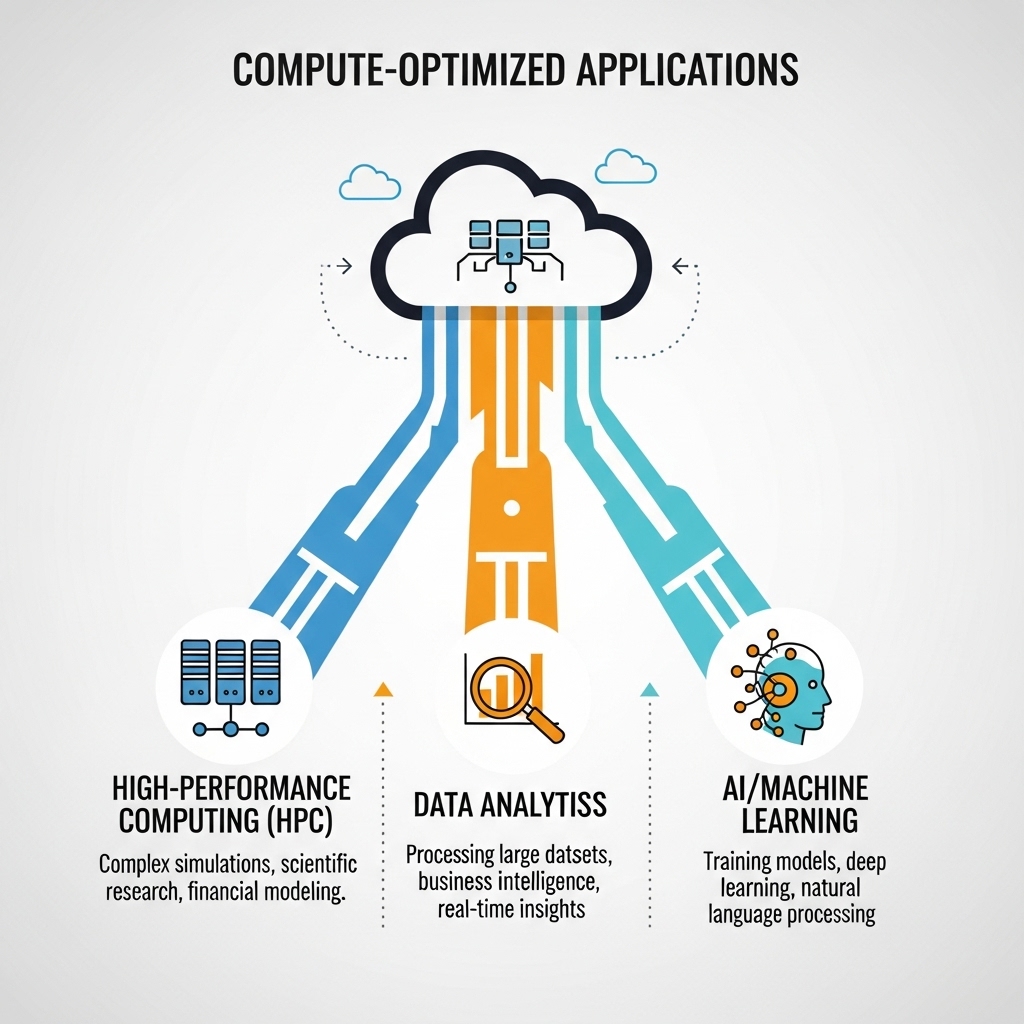
Introduction to Compute-Optimized Applications
Compute-optimized applications are designed to maximize the computational power of cloud computing resources, providing high-performance processing, faster execution, and efficient use of resources. These applications are optimized to take advantage of the scalable and flexible nature of cloud computing, allowing businesses to process large amounts of data, perform complex calculations, and deliver high-performance results. In this article, we will explore the concept of compute-optimized applications, their benefits, and examples of how they are used in various industries.
Characteristics of Compute-Optimized Applications
Compute-optimized applications have several key characteristics that distinguish them from other types of applications. These include high-performance processing, low latency, and efficient use of resources. They are designed to handle large amounts of data and perform complex calculations, making them ideal for applications such as scientific simulations, data analytics, and machine learning. Compute-optimized applications are also highly scalable, allowing businesses to quickly scale up or down to meet changing demands. This scalability is achieved through the use of cloud computing resources, such as virtual machines, containers, and serverless computing.
Benefits of Compute-Optimized Applications
The benefits of compute-optimized applications are numerous. They provide high-performance processing, faster execution, and efficient use of resources, resulting in cost savings and increased productivity. Compute-optimized applications also enable businesses to process large amounts of data, perform complex calculations, and deliver high-performance results, making them ideal for applications such as data analytics, machine learning, and scientific simulations. Additionally, compute-optimized applications are highly scalable, allowing businesses to quickly respond to changing demands and scale up or down as needed.
Examples of Compute-Optimized Applications
There are many examples of compute-optimized applications in use today. One example is scientific simulations, such as weather forecasting and climate modeling. These simulations require high-performance processing and large amounts of data, making them ideal for compute-optimized applications. Another example is data analytics, where compute-optimized applications are used to process large amounts of data and perform complex calculations. Machine learning is another area where compute-optimized applications are used, as they require high-performance processing and large amounts of data to train and test models. Other examples include video rendering, 3D modeling, and genomics.
Cloud Computing Platforms for Compute-Optimized Applications
There are several cloud computing platforms that support compute-optimized applications, including Amazon Web Services (AWS), Microsoft Azure, Google Cloud Platform (GCP), and IBM Cloud. These platforms provide a range of services and tools that enable businesses to build, deploy, and manage compute-optimized applications. These services include virtual machines, containers, serverless computing, and specialized services such as GPU acceleration and high-performance computing. Additionally, these platforms provide a range of tools and services for managing and optimizing compute-optimized applications, such as monitoring, logging, and security.
Best Practices for Building Compute-Optimized Applications
Building compute-optimized applications requires careful planning and design. One best practice is to use cloud-native services and tools, such as serverless computing and containers, to build and deploy applications. Another best practice is to optimize applications for performance, using techniques such as caching, parallel processing, and data compression. Additionally, businesses should use monitoring and logging tools to optimize application performance and identify areas for improvement. Security is also an important consideration, and businesses should use cloud security services and best practices to protect compute-optimized applications and data.
Conclusion
In conclusion, compute-optimized applications are designed to maximize the computational power of cloud computing resources, providing high-performance processing, faster execution, and efficient use of resources. These applications are ideal for use cases such as scientific simulations, data analytics, and machine learning, and are supported by a range of cloud computing platforms and services. By following best practices for building and deploying compute-optimized applications, businesses can unlock the full potential of cloud computing and achieve high-performance results. As the demand for compute-optimized applications continues to grow, we can expect to see new innovations and advancements in cloud computing, enabling businesses to process larger amounts of data, perform more complex calculations, and deliver even higher-performance results.