
Introduction to Upskilling Initiatives
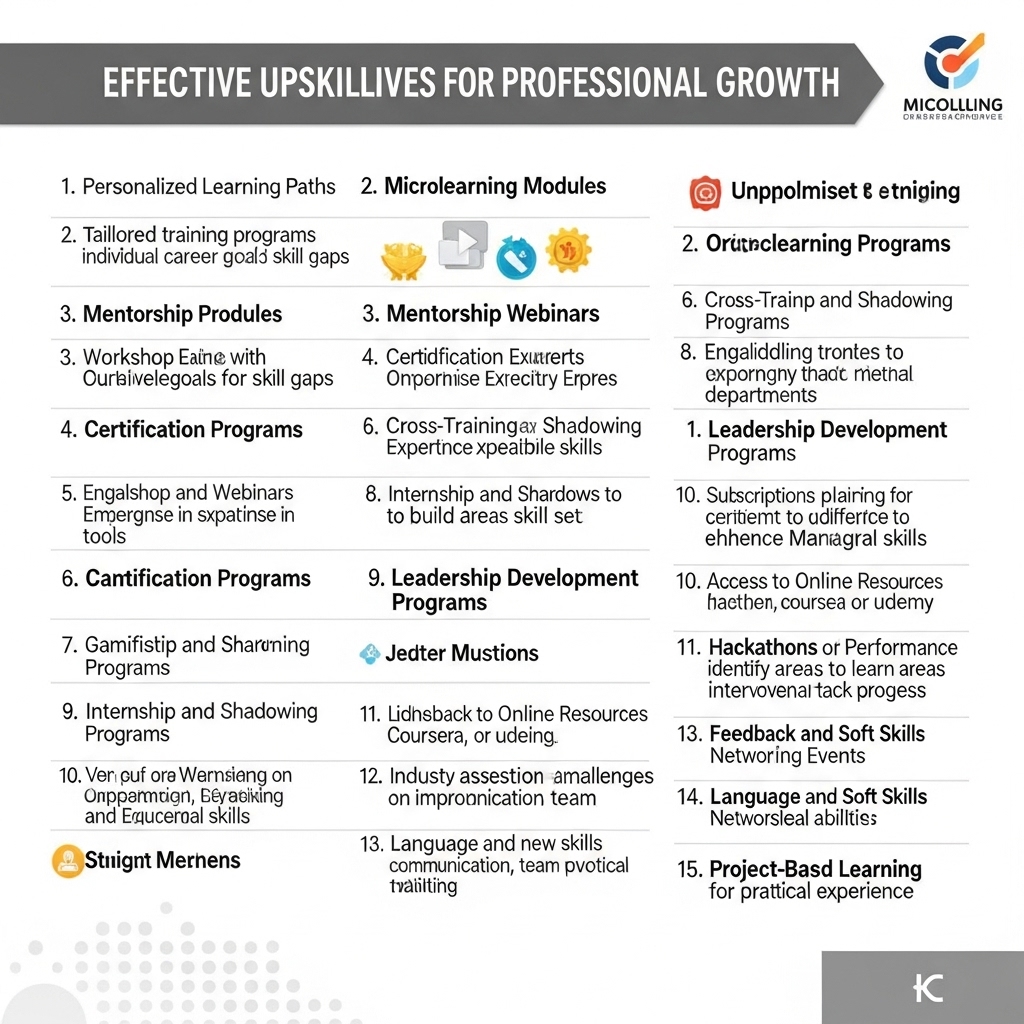
Upskilling is the process of acquiring new skills or enhancing existing ones to improve performance and stay relevant in a rapidly changing work environment. In today's fast-paced and competitive job market, upskilling initiatives are crucial for professional growth and career advancement. Employers and employees alike recognize the importance of continuous learning and development to stay ahead of the curve. Effective upskilling initiatives can lead to increased productivity, improved job satisfaction, and enhanced career prospects. In this article, we will explore various upskilling initiatives that can contribute to professional growth and development.
Identifying Skill Gaps and Areas for Improvement
The first step in implementing effective upskilling initiatives is to identify skill gaps and areas for improvement. This can be done through self-assessment, performance reviews, or skills assessments. Employers can use various tools and techniques, such as competency frameworks, to determine the skills required for specific roles and identify gaps in their employees' skills. For example, a marketing team may recognize the need for employees to develop digital marketing skills, such as social media marketing or search engine optimization (SEO). By identifying these gaps, employers can create targeted upskilling initiatives to address them.
Formal Education and Training Programs
Formal education and training programs are essential upskilling initiatives that can provide employees with the knowledge and skills they need to advance in their careers. These programs can range from degree programs to certification courses, workshops, and conferences. For instance, an employee looking to transition into a leadership role may benefit from an MBA program or a leadership development course. Employers can also provide in-house training programs, such as mentorship programs, coaching, or on-the-job training, to help employees develop new skills. Additionally, online courses and MOOCs (Massive Open Online Courses) offer flexible and accessible learning opportunities for employees to acquire new skills at their own pace.
Mentorship and Coaching Programs
Mentorship and coaching programs are valuable upskilling initiatives that can provide employees with guidance, support, and feedback. These programs can help employees develop soft skills, such as communication, teamwork, and problem-solving, which are essential for career advancement. Mentorship programs can be formal or informal, and can involve pairing employees with experienced colleagues or industry experts. Coaching programs, on the other hand, can be one-on-one or group-based, and can focus on specific skills or areas for improvement. For example, a company may offer a mentorship program for new employees, where they are paired with experienced colleagues who can provide guidance and support during their onboarding process.
Online Learning and Development Platforms
Online learning and development platforms have revolutionized the way we learn and develop new skills. These platforms offer a wide range of courses, tutorials, and resources that can be accessed anywhere, at any time. Employers can utilize these platforms to provide employees with flexible and personalized learning opportunities. For instance, platforms like LinkedIn Learning (formerly Lynda.com) or Coursera offer a vast library of courses on various topics, from business and technology to creative skills. Additionally, online communities and forums can provide employees with opportunities to network, share knowledge, and learn from others in their industry.
Job Rotation and Cross-Functional Training
Job rotation and cross-functional training are effective upskilling initiatives that can provide employees with diverse experiences and skills. Job rotation involves moving employees to different roles or departments within the company, while cross-functional training involves training employees in different functional areas. These initiatives can help employees develop a broader understanding of the organization, enhance their problem-solving skills, and increase their adaptability. For example, a marketing employee may be rotated to a sales role to gain a deeper understanding of customer needs and preferences. This can help them develop more effective marketing strategies and improve their overall performance.
Conclusion
In conclusion, effective upskilling initiatives are essential for professional growth and career advancement. By identifying skill gaps, providing formal education and training programs, offering mentorship and coaching, utilizing online learning and development platforms, and implementing job rotation and cross-functional training, employers can help employees acquire new skills and stay relevant in a rapidly changing work environment. Employees can also take ownership of their upskilling by seeking out opportunities for learning and development, setting career goals, and pursuing their interests. Ultimately, upskilling initiatives can lead to increased productivity, improved job satisfaction, and enhanced career prospects, making them a win-win for both employers and employees.