
Introduction to Facial Recognition Technology
Facial recognition technology has been around for several decades, but it has only been in recent years that it has become a mainstream phenomenon. This technology uses biometric skills to map and analyze the unique features of an individual's face, allowing for accurate identification and verification. The latest advances in facial recognition technology have made it more accurate, efficient, and widely available, with applications in various industries such as security, law enforcement, and commerce.
Advances in Deep Learning Algorithms
The latest advances in facial recognition technology can be attributed to the development of deep learning algorithms, particularly convolutional neural networks (CNNs). These algorithms enable computers to learn and recognize patterns in images, including facial features, with a high degree of accuracy. For example, a study by the National Institute of Standards and Technology (NIST) found that the use of deep learning algorithms improved facial recognition accuracy by up to 25% compared to traditional methods. This has significant implications for applications such as border control, where accurate identification is critical.
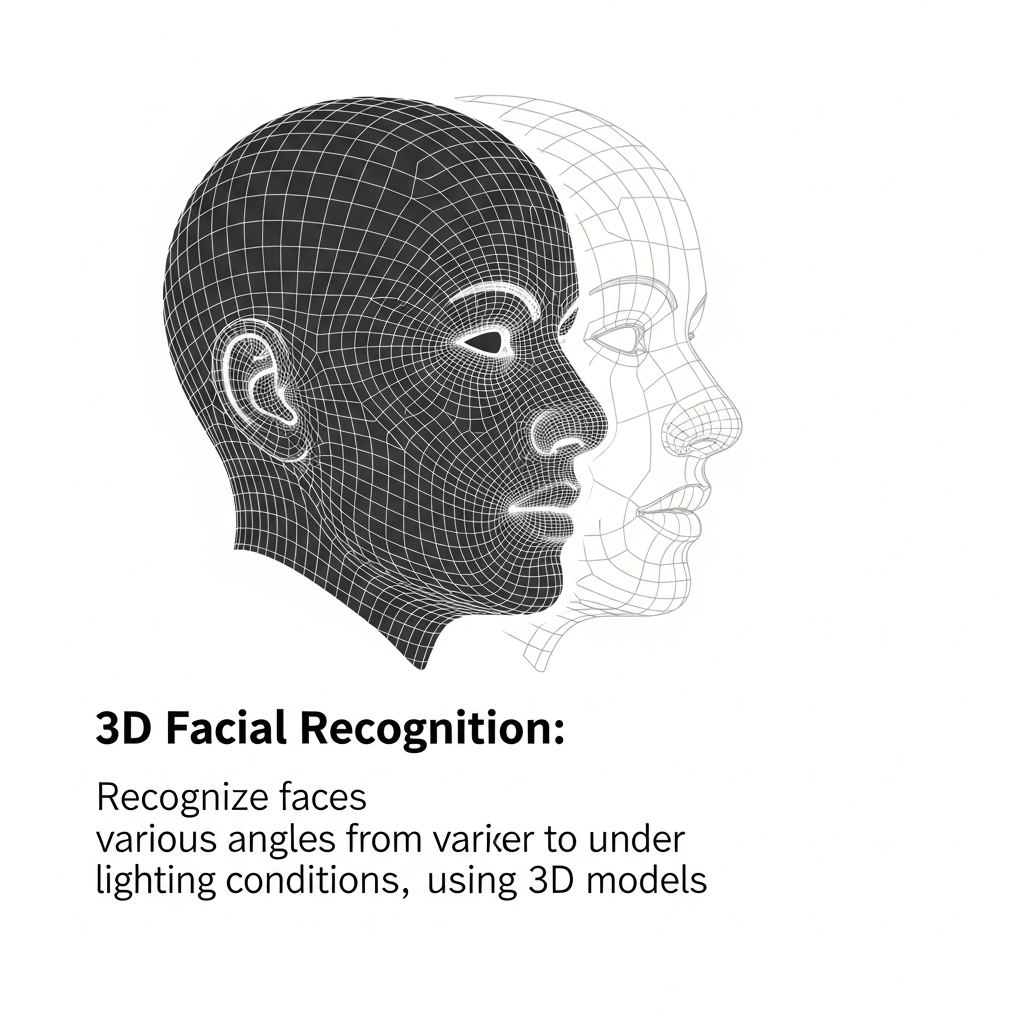
3D Facial Recognition
Another significant advancement in facial recognition technology is the development of 3D facial recognition. This technology uses 3D sensors and cameras to capture detailed images of an individual's face, including the shape and structure of their features. 3D facial recognition is more accurate than traditional 2D methods, as it is less susceptible to variations in lighting and pose. For instance, a 3D facial recognition system can accurately identify an individual even if they are wearing glasses or have changed their hairstyle. This technology has applications in high-security environments, such as government buildings and financial institutions.
Real-Time Facial Recognition
Real-time facial recognition is another area where significant advances have been made. This technology enables the identification of individuals in real-time, as they move through a crowd or appear on a video feed. This has significant implications for applications such as surveillance and law enforcement, where rapid identification is critical. For example, real-time facial recognition can be used to identify suspects in a crowd, or to track individuals who are wanted by the authorities. However, this technology also raises concerns about privacy and civil liberties, as it can be used to monitor and track individuals without their knowledge or consent.
Applications of Facial Recognition Technology
The latest advances in facial recognition technology have opened up a range of new applications across various industries. For example, facial recognition is being used in airports to speed up passenger processing and improve security. It is also being used in retail to personalize customer experiences and improve customer service. Additionally, facial recognition is being used in healthcare to identify patients and track medical records. Other applications include access control, border control, and identity verification. As the technology continues to improve, we can expect to see even more innovative applications in the future.
Challenges and Limitations
Despite the significant advances in facial recognition technology, there are still several challenges and limitations that need to be addressed. One of the main challenges is the issue of bias and accuracy, particularly when it comes to recognizing individuals from diverse ethnic and demographic backgrounds. For example, a study by the Massachusetts Institute of Technology (MIT) found that facial recognition systems were more accurate for white faces than for black faces. This highlights the need for more diverse and representative training data, as well as ongoing testing and evaluation to ensure that the technology is fair and unbiased.
Conclusion
In conclusion, the latest advances in facial recognition technology have made it more accurate, efficient, and widely available. The development of deep learning algorithms, 3D facial recognition, and real-time facial recognition have significant implications for various industries, including security, law enforcement, and commerce. However, there are still challenges and limitations that need to be addressed, particularly when it comes to bias and accuracy. As the technology continues to evolve, it is essential to prioritize transparency, accountability, and fairness, to ensure that facial recognition technology is used in a way that benefits society as a whole. With ongoing innovation and investment, we can expect to see even more exciting developments in facial recognition technology in the years to come.