
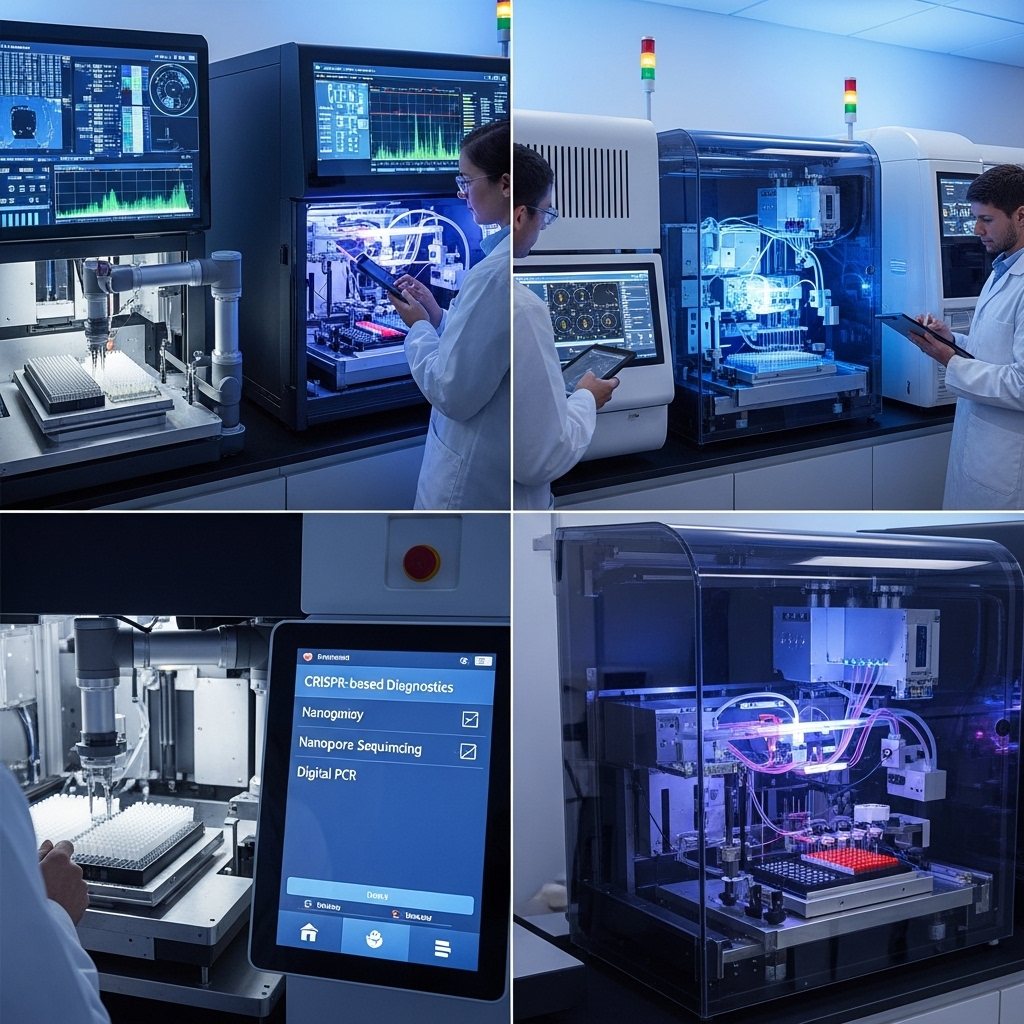
Introduction to Molecular Diagnostics Machines Technology
Molecular diagnostics machines have revolutionized the field of healthcare by enabling rapid and accurate detection of diseases at the molecular level. These machines use various technologies to analyze biological samples such as blood, tissue, or saliva to identify specific genetic markers, proteins, or other molecules associated with diseases. The latest advances in molecular diagnostics machines technology have improved the speed, accuracy, and accessibility of disease diagnosis, enabling healthcare professionals to provide personalized treatment and improve patient outcomes. In this article, we will explore the latest advances in molecular diagnostics machines technology and their applications in healthcare.
Next-Generation Sequencing (NGS) Technology
Next-generation sequencing (NGS) technology has been a significant advancement in molecular diagnostics machines. NGS enables the simultaneous analysis of millions of DNA sequences, allowing for the rapid identification of genetic mutations and variations associated with diseases. This technology has improved the diagnosis of genetic disorders, cancer, and infectious diseases. For example, NGS has been used to identify genetic mutations associated with breast cancer, enabling targeted therapy and improved treatment outcomes. Additionally, NGS has been used to track the spread of infectious diseases such as COVID-19, enabling public health officials to develop targeted interventions.
Point-of-Care (POC) Molecular Diagnostics
Point-of-care (POC) molecular diagnostics machines have improved the accessibility of molecular testing, enabling healthcare professionals to perform tests at the bedside or in clinics. POC molecular diagnostics machines are portable, user-friendly, and provide rapid results, making them ideal for use in resource-limited settings. For example, POC molecular diagnostics machines have been used to diagnose infectious diseases such as influenza and HIV in remote areas, enabling timely treatment and improving patient outcomes. Additionally, POC molecular diagnostics machines have been used to monitor disease progression and response to treatment, enabling healthcare professionals to adjust treatment plans accordingly.
Artificial Intelligence (AI) and Machine Learning (ML) in Molecular Diagnostics
Artificial intelligence (AI) and machine learning (ML) have been integrated into molecular diagnostics machines to improve the analysis and interpretation of test results. AI and ML algorithms can analyze large datasets, identify patterns, and provide insights that may not be apparent to human analysts. For example, AI-powered molecular diagnostics machines have been used to analyze genomic data to identify genetic mutations associated with cancer, enabling personalized treatment plans. Additionally, ML algorithms have been used to develop predictive models that can identify patients at risk of disease progression, enabling early intervention and improved treatment outcomes.
Nanotechnology in Molecular Diagnostics
Nanotechnology has been used to develop molecular diagnostics machines that are smaller, faster, and more sensitive. Nanoparticles and nanosensors have been used to detect biomarkers associated with diseases, enabling early diagnosis and treatment. For example, nanoparticles have been used to detect cancer biomarkers in blood samples, enabling early diagnosis and treatment. Additionally, nanosensors have been used to monitor disease progression and response to treatment, enabling healthcare professionals to adjust treatment plans accordingly.
Conclusion
In conclusion, the latest advances in molecular diagnostics machines technology have improved the speed, accuracy, and accessibility of disease diagnosis. Next-generation sequencing, point-of-care molecular diagnostics, artificial intelligence and machine learning, and nanotechnology have all contributed to the development of molecular diagnostics machines that are more sensitive, specific, and user-friendly. These advances have improved patient outcomes, enabled personalized treatment, and enhanced our understanding of diseases at the molecular level. As molecular diagnostics machines technology continues to evolve, we can expect to see even more innovative solutions that improve healthcare outcomes and save lives.