
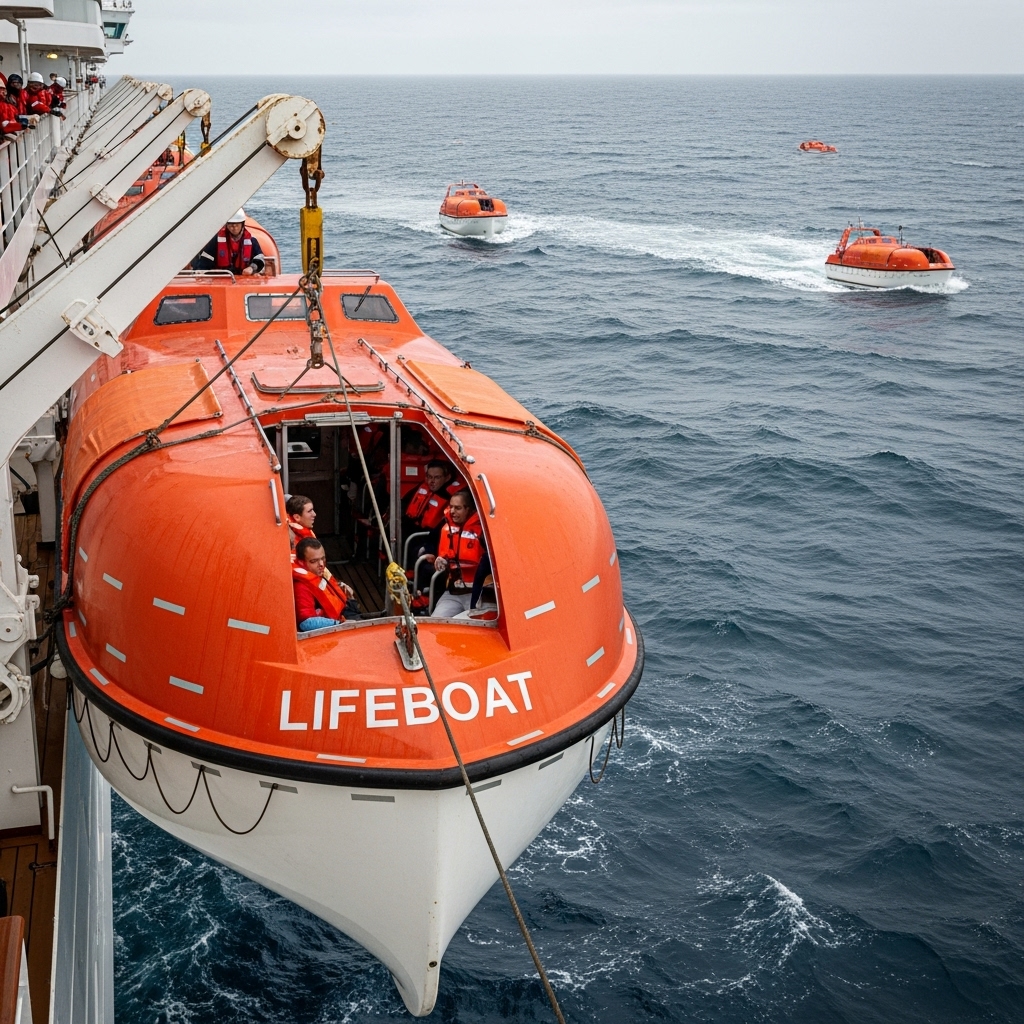
Introduction to Lifeboats and Their Importance
Lifeboats are an essential component of safety equipment on ships and boats, serving as a vital means of evacuation in emergency situations at sea. These vessels are designed to provide a safe and reliable way to rescue people from a sinking or distressed ship, protecting them from the dangers of the ocean. The primary functions of lifeboats are to save lives, provide emergency shelter, and facilitate rescue operations. In this article, we will delve into the primary functions of lifeboats in emergency situations at sea, exploring their design, equipment, and operation.
Design and Construction of Lifeboats
Lifeboats are specifically designed and constructed to withstand the harsh marine environment and provide a safe haven for people in distress. They are typically made of durable materials, such as fiberglass or aluminum, and are equipped with a range of safety features, including watertight compartments, self-righting mechanisms, and emergency beacons. The design of lifeboats takes into account the need for stability, buoyancy, and maneuverability, ensuring that they can operate effectively in a variety of sea conditions. For example, some lifeboats are designed with a drop-in bow, which allows them to be launched quickly and easily, even in rough seas.
Primary Functions of Lifeboats in Emergency Situations
The primary functions of lifeboats in emergency situations at sea are to rescue people from a sinking or distressed ship, provide emergency shelter, and facilitate rescue operations. In the event of an emergency, lifeboats are launched from the ship, and people are evacuated to the lifeboat, where they are provided with basic necessities, such as food, water, and first aid. Lifeboats are also equipped with communication equipment, such as radios and emergency position-indicating radio beacons (EPIRBs), which enable rescue teams to locate and retrieve the lifeboat. For instance, during the sinking of the Titanic, lifeboats played a crucial role in saving over 700 lives, highlighting the importance of these vessels in emergency situations.
Equipment and Supplies on Lifeboats
Lifeboats are equipped with a range of essential equipment and supplies, including food, water, first aid kits, and communication devices. The specific equipment and supplies on a lifeboat may vary depending on the type of ship, the number of people on board, and the expected duration of the emergency. For example, lifeboats on passenger ships may be equipped with additional supplies, such as blankets, warm clothing, and infant care equipment. In contrast, lifeboats on cargo ships may be equipped with more basic supplies, such as emergency rations and first aid kits. The equipment and supplies on lifeboats are designed to sustain people for an extended period, typically up to 30 days, in the event of a prolonged emergency.
Launching and Operating Lifeboats
Launching and operating lifeboats requires careful planning, training, and execution. In the event of an emergency, the crew must quickly and safely launch the lifeboat, ensuring that all people on board are accounted for and evacuated. The lifeboat must then be operated in a way that ensures the safety of all occupants, taking into account factors such as sea conditions, wind direction, and the location of rescue vessels. For example, in rough seas, the lifeboat may need to be operated at a slow speed to prevent capsizing, while in calm seas, the lifeboat can be operated at a faster speed to facilitate rescue. The crew must also be trained to operate the lifeboat's equipment, such as the engine, steering system, and communication devices.
Maintenance and Inspection of Lifeboats
Regular maintenance and inspection of lifeboats are crucial to ensuring their effectiveness in emergency situations. Lifeboats must be regularly inspected to ensure that they are in good working condition, with all equipment and supplies functioning properly. The hull, engine, and other critical systems must be checked for damage or wear, and any necessary repairs or replacements must be made. Additionally, lifeboats must be subjected to regular drills and exercises to ensure that the crew is familiar with their operation and can launch and operate them quickly and safely in an emergency. For example, the International Maritime Organization (IMO) requires that lifeboats be inspected and tested at regular intervals, including a monthly inspection and a annual dry-docking.
Conclusion
In conclusion, lifeboats play a critical role in emergency situations at sea, providing a safe and reliable means of evacuation and rescue. The primary functions of lifeboats are to save lives, provide emergency shelter, and facilitate rescue operations. The design, equipment, and operation of lifeboats are all critical factors in ensuring their effectiveness in emergency situations. Regular maintenance and inspection of lifeboats are also essential to ensuring their readiness in the event of an emergency. By understanding the importance of lifeboats and their primary functions, we can appreciate the vital role they play in protecting human life at sea and the need for ongoing investment in their development and maintenance.