
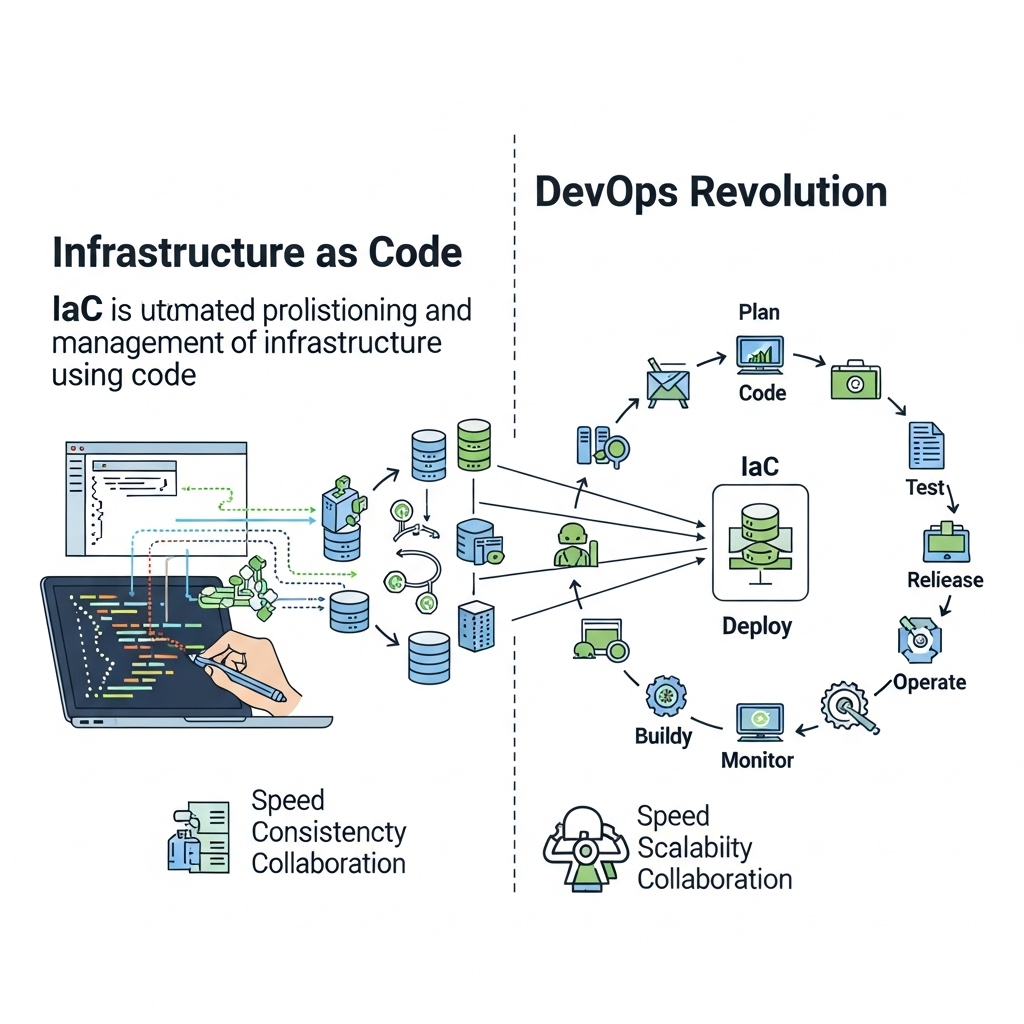
Introduction to Infrastructure as Code
Infrastructure as Code (IaC) is a revolutionary approach to managing and provisioning IT infrastructure through code, rather than physical hardware configuration or interactive configuration tools. This approach has gained significant traction in recent years, particularly in the context of DevOps, where it has become a crucial component of efficient and agile software development and deployment. In this article, we will delve into the world of Infrastructure as Code, exploring its definition, benefits, and how it is transforming the way teams manage their infrastructure and applications.
What is Infrastructure as Code?
Infrastructure as Code is a practice where infrastructure is managed and provisioned through code and software development techniques, such as version control and continuous integration. This means that infrastructure configurations, such as networks, virtual machines, and databases, are defined and managed using the same version control systems and workflows as application code. This approach allows for the automation of infrastructure provisioning, reducing the time and effort required to set up and manage infrastructure, and enabling teams to focus on higher-level tasks.
For example, tools like Terraform and AWS CloudFormation allow users to define infrastructure configurations in human-readable files, which can then be used to provision and manage infrastructure resources. This approach enables teams to version and track changes to their infrastructure, just like they would with application code, and to automate the deployment of infrastructure changes using continuous integration and continuous deployment (CI/CD) pipelines.
Benefits of Infrastructure as Code
The benefits of Infrastructure as Code are numerous and significant. One of the primary advantages is the ability to automate infrastructure provisioning and management, reducing the time and effort required to set up and manage infrastructure. This, in turn, enables teams to focus on higher-level tasks, such as developing and deploying applications, and improving overall efficiency and productivity. Additionally, IaC enables teams to version and track changes to their infrastructure, reducing the risk of configuration drift and errors, and making it easier to roll back changes if something goes wrong.
Another significant benefit of IaC is the ability to create consistent and reproducible infrastructure environments. By defining infrastructure configurations in code, teams can ensure that their development, testing, and production environments are identical, reducing the risk of environment-specific issues and making it easier to troubleshoot problems. This consistency also enables teams to create identical environments for different applications and services, reducing the complexity and overhead of managing multiple environments.
Key Tools and Technologies
There are several key tools and technologies that enable Infrastructure as Code, including Terraform, AWS CloudFormation, Azure Resource Manager, and Google Cloud Deployment Manager. These tools provide a way to define infrastructure configurations in code, and to automate the provisioning and management of infrastructure resources. Additionally, tools like Ansible, Puppet, and Chef provide a way to automate the configuration and management of infrastructure resources, and to enforce consistency and compliance across environments.
For example, Terraform is a popular IaC tool that allows users to define infrastructure configurations in human-readable files, using a syntax called HashiCorp Configuration Language (HCL). Terraform supports a wide range of infrastructure providers, including AWS, Azure, Google Cloud, and OpenStack, and provides a way to automate the provisioning and management of infrastructure resources, such as virtual machines, networks, and databases.
Best Practices for Implementing Infrastructure as Code
Implementing Infrastructure as Code requires careful planning and execution, and there are several best practices that teams should follow to ensure success. One of the most important best practices is to start small, and to begin with a limited scope and set of infrastructure resources. This allows teams to gain experience and build confidence with IaC, and to gradually expand their scope and complexity over time.
Another important best practice is to use version control and continuous integration and continuous deployment (CI/CD) pipelines to manage and automate infrastructure changes. This enables teams to track changes to their infrastructure, and to automate the deployment of infrastructure changes, reducing the risk of errors and downtime. Additionally, teams should use modular and reusable infrastructure configurations, to reduce complexity and improve maintainability, and to use automation and scripting to enforce consistency and compliance across environments.
Challenges and Limitations
While Infrastructure as Code offers many benefits, there are also several challenges and limitations that teams should be aware of. One of the primary challenges is the need for significant upfront investment in tools, training, and process changes. Implementing IaC requires teams to adopt new tools and technologies, and to change their workflows and processes, which can be time-consuming and costly.
Another challenge is the risk of complexity and sprawl, as teams may end up with multiple IaC tools and configurations, which can be difficult to manage and maintain. Additionally, teams may struggle with security and compliance, as IaC introduces new risks and challenges, such as the need to manage and secure infrastructure configurations, and to ensure compliance with regulatory requirements.
Conclusion
In conclusion, Infrastructure as Code is a powerful approach to managing and provisioning IT infrastructure, which offers many benefits, including automation, consistency, and reproducibility. By defining infrastructure configurations in code, and using tools and technologies like Terraform and AWS CloudFormation, teams can automate the provisioning and management of infrastructure resources, reduce the risk of errors and downtime, and improve overall efficiency and productivity.
However, implementing IaC requires careful planning and execution, and teams should be aware of the challenges and limitations, including the need for significant upfront investment, the risk of complexity and sprawl, and the need to manage and secure infrastructure configurations. By following best practices, such as starting small, using version control and CI/CD pipelines, and using modular and reusable infrastructure configurations, teams can ensure success with Infrastructure as Code, and unlock the full potential of this powerful approach to infrastructure management.