
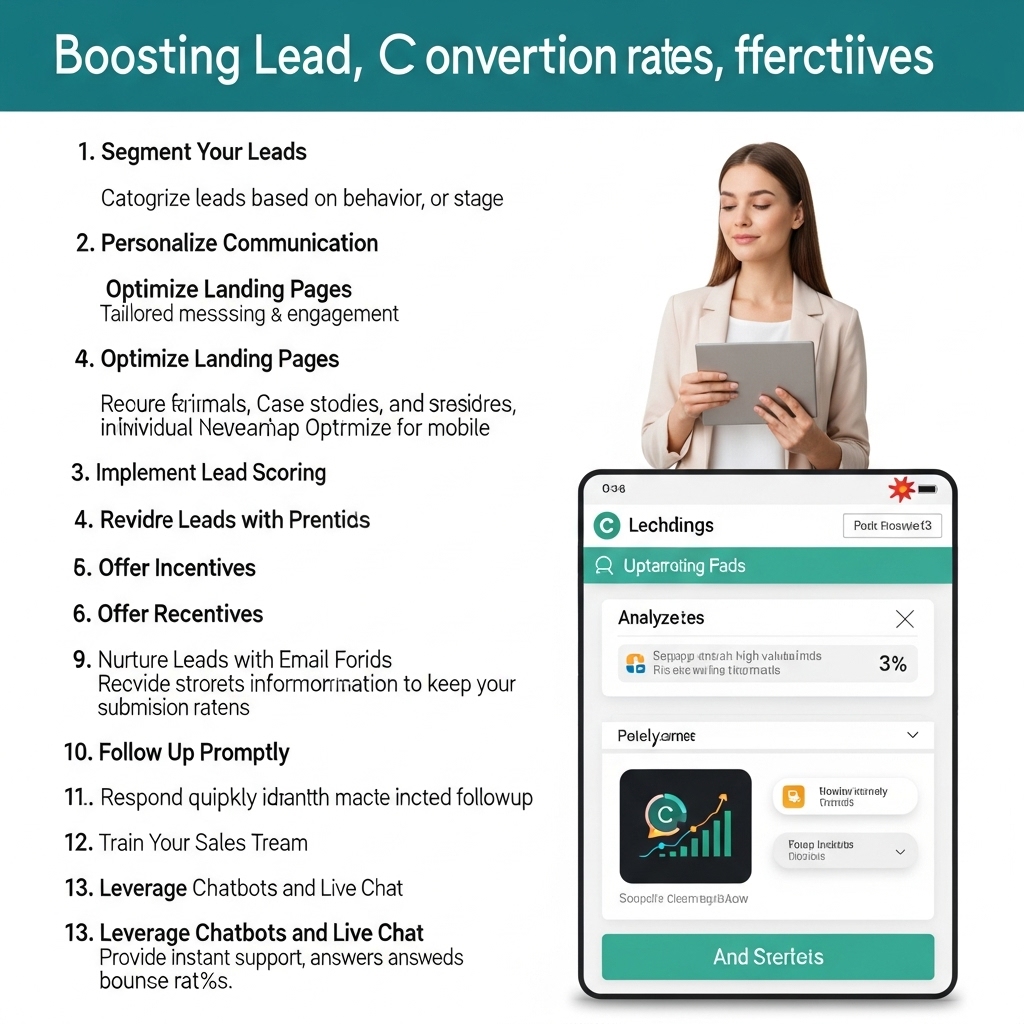
Introduction to Lead Conversion Rates
Lead conversion rates are a crucial metric for businesses, as they indicate the percentage of leads that complete a desired action, such as making a purchase, filling out a form, or subscribing to a service. Boosting lead conversion rates is essential to maximize the return on investment (ROI) of marketing efforts and ultimately drive business growth. In this article, we will explore effective strategies to increase lead conversion rates and provide examples to illustrate their implementation.
Understanding Your Target Audience
To boost lead conversion rates, it's vital to have a deep understanding of your target audience. This includes their needs, preferences, pain points, and behaviors. By creating buyer personas, businesses can tailor their marketing messages, content, and offers to resonate with their ideal customers. For instance, a company selling fitness equipment might create separate personas for beginners, athletes, and seniors, each with unique characteristics and requirements. By doing so, they can develop targeted marketing campaigns that address the specific needs of each group, increasing the likelihood of conversion.
Optimizing Landing Pages
Landing pages play a critical role in lead conversion, as they are often the first point of contact between a potential customer and a business. To optimize landing pages for conversion, it's essential to ensure they are visually appealing, easy to navigate, and provide a clear call-to-action (CTA). A well-designed landing page should also be mobile-friendly, load quickly, and have a clear headline that communicates the value proposition. For example, a company offering a free trial of their software might use a landing page with a prominent CTA button, such as "Start Your Free Trial Today," and a brief form to capture lead information.
Streamlining the Conversion Process
A lengthy or complicated conversion process can lead to frustration and abandonment, resulting in lower conversion rates. To streamline the conversion process, businesses should aim to minimize the number of steps required to complete a desired action. This can be achieved by reducing form fields, using auto-fill options, and providing clear instructions. Additionally, using social proof, such as customer testimonials and trust badges, can help build trust and increase the likelihood of conversion. For instance, an e-commerce website might use a one-click checkout option, allowing customers to quickly and easily complete their purchase without having to fill out lengthy forms.
Leveraging Social Proof and Testimonials
Social proof and testimonials are powerful tools for building trust and credibility with potential customers. By showcasing customer success stories, reviews, and ratings, businesses can demonstrate the value and effectiveness of their products or services. This can be done through various channels, such as customer testimonials on the website, case studies, or user-generated content on social media. For example, a company offering marketing services might feature a testimonial from a satisfied client on their homepage, highlighting the results they achieved through the company's services.
Using Personalization and Segmentation
Personalization and segmentation are essential for increasing lead conversion rates, as they allow businesses to tailor their marketing efforts to specific groups or individuals. By using data and analytics, companies can segment their audience based on demographics, behavior, or preferences, and create targeted campaigns that resonate with each group. Personalization can also be used to create customized content, offers, and recommendations, increasing the likelihood of conversion. For instance, an online retailer might use data on a customer's browsing history and purchase behavior to offer personalized product recommendations, increasing the chances of a sale.
Conclusion and Final Thoughts
In conclusion, boosting lead conversion rates requires a combination of strategies, including understanding your target audience, optimizing landing pages, streamlining the conversion process, leveraging social proof and testimonials, and using personalization and segmentation. By implementing these strategies, businesses can increase the effectiveness of their marketing efforts, drive more conversions, and ultimately grow their revenue. Remember, lead conversion rates are a key performance indicator (KPI) that can make or break a business, so it's essential to continuously monitor and optimize your conversion rates to stay ahead of the competition.