
Introduction to AI-Based Academic Performance Prediction
The integration of Artificial Intelligence (AI) in the education sector has revolutionized the way student performance is predicted and analyzed. In India, where the education system is vast and diverse, AI models have been increasingly used to forecast student outcomes, helping educators and policymakers make informed decisions. This article delves into how AI models predict student performance in Indian schools and universities, exploring the methodologies, benefits, and challenges associated with this innovative approach.
Understanding AI Models in Education
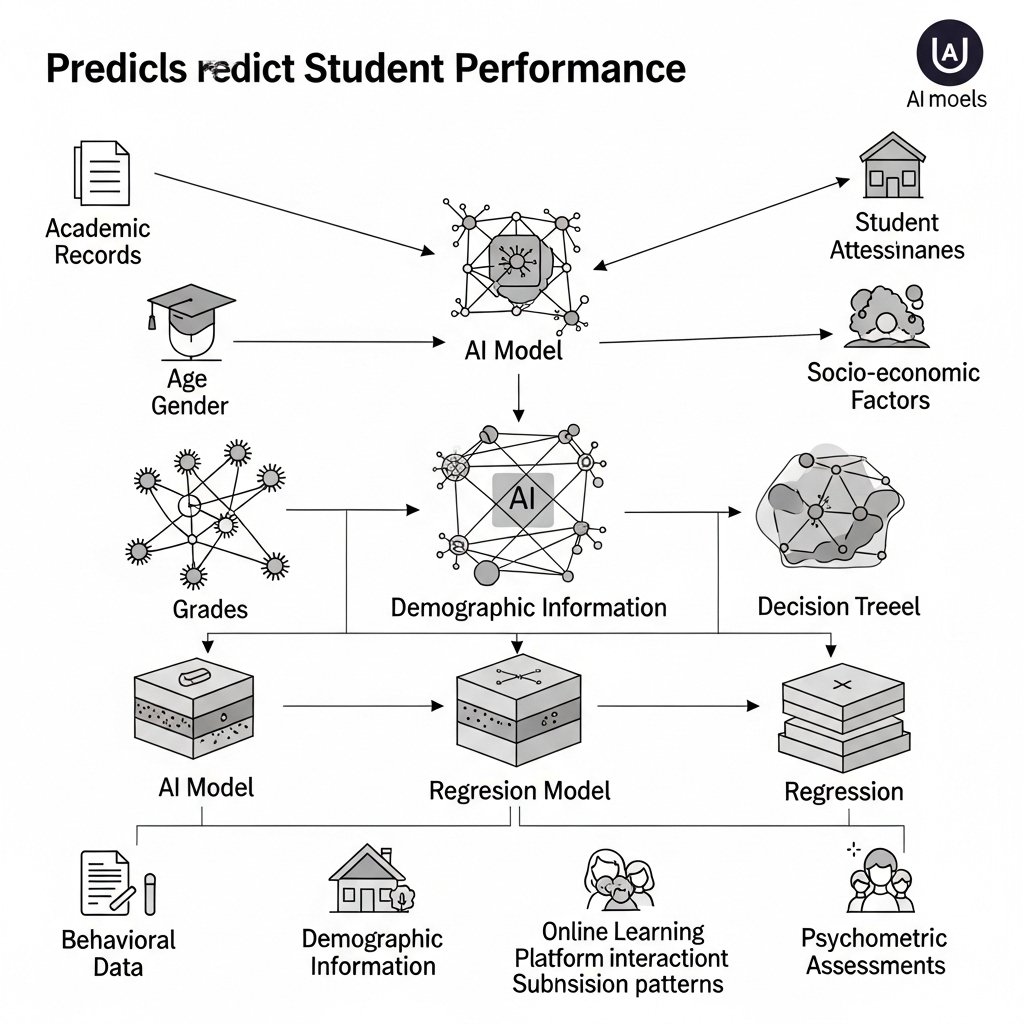
AI models in education are designed to analyze large datasets, including student demographics, academic history, and behavioral patterns, to predict future performance. These models can identify at-risk students, suggest personalized learning paths, and provide insights into the effectiveness of educational interventions. In the Indian context, AI models can help address issues such as high dropout rates, low academic achievement, and unequal access to quality education. For instance, the Indian government's National Education Policy 2020 emphasizes the use of technology, including AI, to improve learning outcomes and enhance the overall quality of education.
Data Collection and Analysis
The accuracy of AI models in predicting student performance depends on the quality and quantity of data available. In Indian schools and universities, data collection involves gathering information on students' past academic records, attendance, assignments, and test scores. Additionally, data on socio-economic factors, such as family income, parental education, and access to resources, can provide valuable insights into the factors influencing student performance. AI algorithms analyze this data to identify patterns and correlations, which are then used to make predictions about future academic outcomes. For example, a study by the Indian Institute of Technology (IIT) Delhi used machine learning algorithms to analyze student data and predict academic performance, with an accuracy rate of over 80%.
Machine Learning Algorithms for Performance Prediction
Various machine learning algorithms are used in AI models to predict student performance, including decision trees, random forests, support vector machines, and neural networks. These algorithms can handle complex datasets and identify non-linear relationships between variables. In the Indian context, researchers have used algorithms such as Gradient Boosting and Random Forest to predict student performance in subjects like mathematics and science. For instance, a study published in the Journal of Intelligent Information Systems used a combination of machine learning algorithms to predict student performance in Indian schools, with results showing a significant improvement in prediction accuracy.
Benefits of AI-Based Performance Prediction
The use of AI models to predict student performance in Indian schools and universities offers several benefits. Firstly, it enables early identification of at-risk students, allowing educators to provide targeted interventions and support. Secondly, AI models can help personalize learning paths, tailoring instruction to individual students' needs and abilities. Thirdly, AI-based performance prediction can inform educational policy and decision-making, enabling policymakers to allocate resources more effectively. For example, the Andhra Pradesh government has launched an AI-powered platform to predict student performance and provide personalized learning recommendations, resulting in significant improvements in academic outcomes.
Challenges and Limitations
Despite the potential benefits of AI-based performance prediction, there are several challenges and limitations to its implementation in Indian schools and universities. One major concern is the quality and availability of data, with many institutions lacking the infrastructure and resources to collect and analyze large datasets. Additionally, there are concerns about bias and fairness in AI models, with the potential for algorithms to perpetuate existing inequalities and biases. Furthermore, the use of AI models raises ethical questions about student privacy and the potential for over-reliance on technology. For instance, a study by the Centre for Internet and Society highlighted the need for greater transparency and accountability in the use of AI models in Indian education.
Future Directions and Recommendations
As AI models continue to play a larger role in predicting student performance in Indian schools and universities, it is essential to address the challenges and limitations associated with their implementation. This includes investing in data infrastructure, ensuring transparency and accountability in AI model development, and providing training and support for educators to effectively use AI-based tools. Additionally, there is a need for further research into the effectiveness of AI models in different contexts and the development of more nuanced and context-specific models. By leveraging the potential of AI while addressing its limitations, India can harness the power of technology to improve educational outcomes and create a more equitable and effective education system.
Conclusion
In conclusion, AI models have the potential to revolutionize the way student performance is predicted and analyzed in Indian schools and universities. By leveraging machine learning algorithms and large datasets, AI models can identify at-risk students, personalize learning paths, and inform educational policy and decision-making. While there are challenges and limitations to the implementation of AI-based performance prediction, these can be addressed through investment in data infrastructure, transparency and accountability, and further research and development. As India continues to navigate the complexities of its education system, the strategic use of AI models can help create a more effective, efficient, and equitable education system for all.