
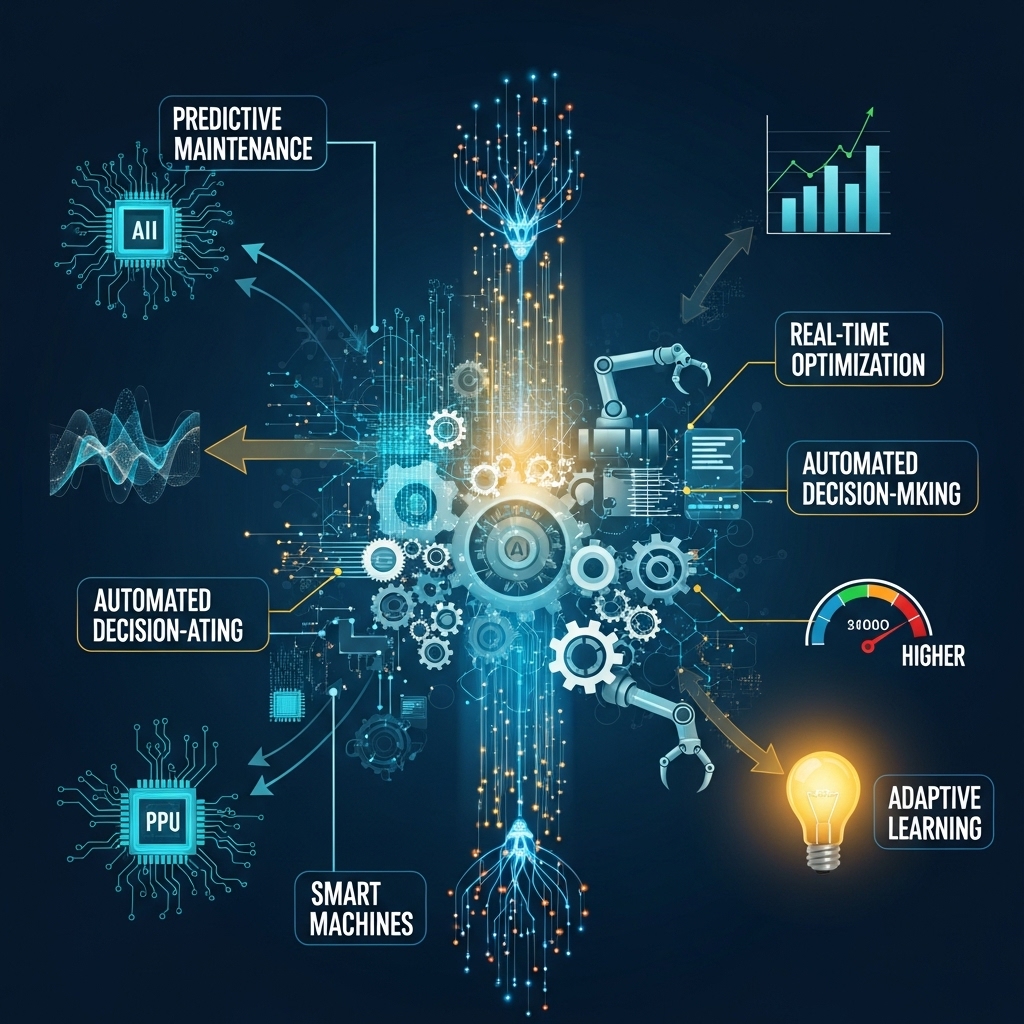
Introduction to Artificial Intelligence in Smart Machine Control
Artificial Intelligence (AI) has revolutionized the way machines operate, making them smarter, more efficient, and autonomous. The integration of AI in smart machines has enabled them to perform complex tasks with precision and accuracy, reducing the need for human intervention. In this article, we will delve into the world of AI-controlled smart machines, exploring how they work, their applications, and the benefits they offer. We will also examine the various techniques used by AI to control smart machines efficiently, including machine learning, computer vision, and natural language processing.
Understanding Artificial Intelligence and Smart Machines
Artificial Intelligence refers to the development of computer systems that can perform tasks that typically require human intelligence, such as learning, problem-solving, and decision-making. Smart machines, on the other hand, are devices that can operate autonomously, using sensors, actuators, and programming to interact with their environment. When combined, AI and smart machines create a powerful synergy, enabling machines to learn from experience, adapt to new situations, and make decisions in real-time. For example, self-driving cars use AI to navigate through traffic, recognize obstacles, and make decisions about steering, acceleration, and braking.
Machine Learning in Smart Machine Control
Machine learning is a key technique used in AI-controlled smart machines. It involves training algorithms on large datasets, enabling them to learn patterns, make predictions, and improve their performance over time. In smart machine control, machine learning is used to optimize performance, predict maintenance needs, and detect anomalies. For instance, predictive maintenance algorithms can analyze sensor data from industrial equipment to predict when maintenance is required, reducing downtime and increasing overall efficiency. Similarly, quality control algorithms can analyze images of products on a production line to detect defects and irregularities, enabling real-time correction and improvement.
Computer Vision in Smart Machine Control
Computer vision is another crucial technique used in AI-controlled smart machines. It involves the use of cameras, sensors, and algorithms to interpret and understand visual data from the environment. In smart machine control, computer vision is used for tasks such as object recognition, tracking, and inspection. For example, robots in warehouses use computer vision to recognize and pick items from shelves, while drones use computer vision to navigate and inspect infrastructure such as bridges and pipelines. Computer vision can also be used to monitor and analyze the condition of equipment, detecting signs of wear and tear, and predicting potential failures.
Natural Language Processing in Smart Machine Control
Natural Language Processing (NLP) is a technique used in AI-controlled smart machines to enable human-machine interaction. NLP involves the use of algorithms to interpret and understand human language, enabling machines to respond to voice commands, answer questions, and provide information. In smart machine control, NLP is used to control and interact with machines using voice commands, such as in virtual assistants like Alexa and Google Home. NLP can also be used to analyze and respond to customer feedback, providing personalized support and improving customer experience.
Applications of AI-Controlled Smart Machines
AI-controlled smart machines have a wide range of applications across various industries, including manufacturing, healthcare, transportation, and energy. In manufacturing, AI-controlled robots can perform tasks such as assembly, welding, and inspection, improving efficiency and reducing costs. In healthcare, AI-controlled machines can be used to diagnose diseases, develop personalized treatment plans, and monitor patient progress. In transportation, AI-controlled self-driving cars and drones can improve safety, reduce congestion, and increase mobility. In energy, AI-controlled smart grids can optimize energy distribution, predict energy demand, and reduce waste.
Benefits of AI-Controlled Smart Machines
The benefits of AI-controlled smart machines are numerous and significant. They include improved efficiency, increased productivity, enhanced safety, and reduced costs. AI-controlled smart machines can also improve customer experience, provide personalized support, and enable real-time monitoring and analysis. Additionally, AI-controlled smart machines can help reduce environmental impact, improve resource allocation, and increase competitiveness. However, there are also challenges and limitations associated with AI-controlled smart machines, such as data privacy, security, and job displacement, which need to be addressed through careful planning, regulation, and education.
Conclusion
In conclusion, AI-controlled smart machines are revolutionizing the way we live and work, enabling machines to perform complex tasks with precision and accuracy. The techniques used by AI to control smart machines efficiently, including machine learning, computer vision, and natural language processing, have numerous applications across various industries. While there are challenges and limitations associated with AI-controlled smart machines, the benefits they offer are significant, and their potential to improve efficiency, productivity, and customer experience is vast. As AI technology continues to evolve, we can expect to see even more innovative applications of AI-controlled smart machines, transforming industries and improving our daily lives.