
Introduction to Print on Demand Business
The print on demand business has emerged as a lucrative opportunity for entrepreneurs and artists looking to monetize their creativity without the need for significant upfront investments. This business model allows individuals to design and sell custom products such as t-shirts, mugs, phone cases, and more, without holding any inventory. The production and shipping of products are handled by a third-party supplier, making it a largely passive income stream. In this article, we will delve into the world of print on demand, exploring its benefits, how it works, and the steps to get started.
Understanding the Print on Demand Model
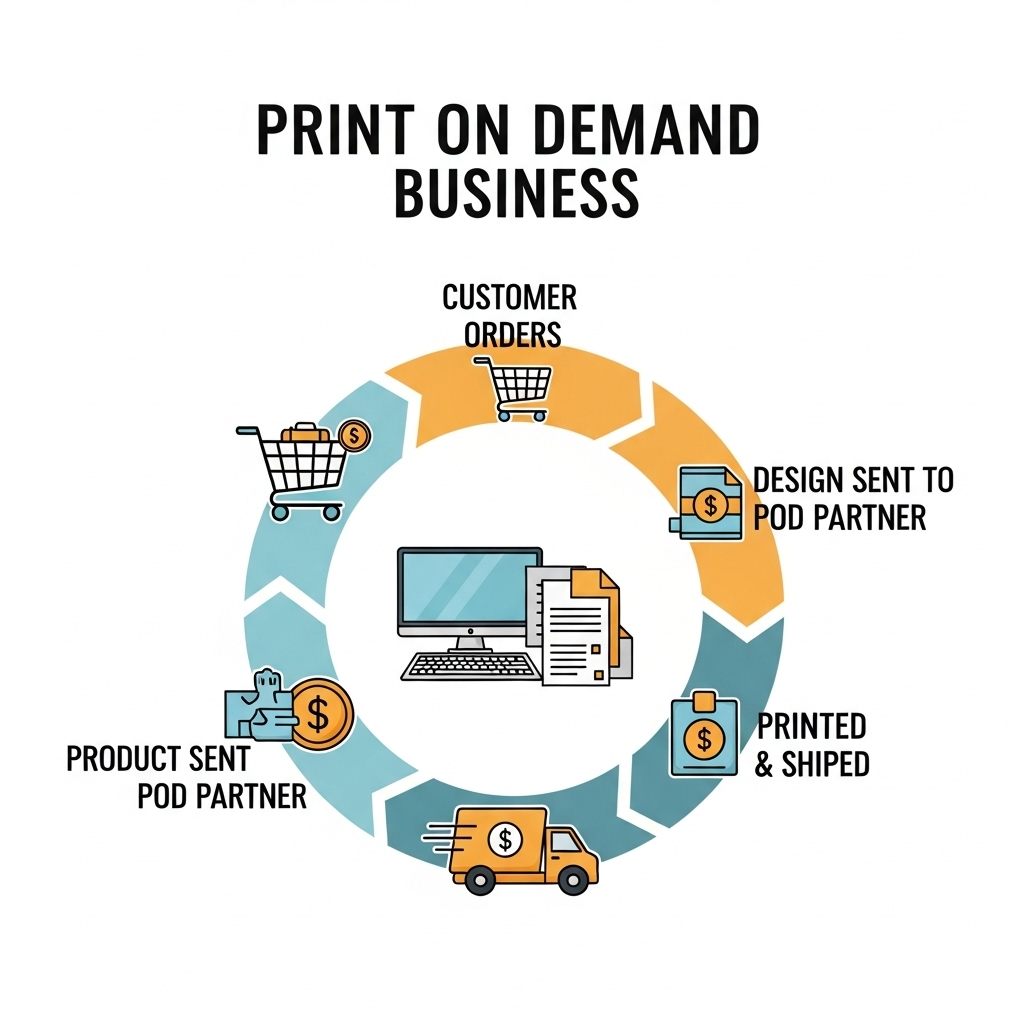
The print on demand model is straightforward. It begins with the design process, where an individual creates digital designs that can be applied to various products. These designs can range from simple text and logos to complex artworks and patterns. Once the designs are created, they are uploaded to an online platform that specializes in print on demand services. These platforms partner with suppliers who produce and ship the products. When a customer places an order, the platform forwards the order and design specifications to the supplier, who then manufactures the product and ships it directly to the customer. This process eliminates the need for inventory storage and management, significantly reducing the operational costs for the seller.
Benefits of Starting a Print on Demand Business
One of the most significant advantages of a print on demand business is its low barrier to entry. Starting such a venture requires minimal initial investment, as there is no need to purchase inventory or equipment. This makes it accessible to a wide range of individuals, from students looking for a part-time income to retired individuals seeking to supplement their pension. Additionally, the risk is minimal since you only pay for the products that have been sold. Another benefit is the flexibility and scalability of the business. Since production and shipping are handled by a third party, the business can grow without the need for significant additional resources. This model also allows for a wide range of products to be offered, enabling sellers to cater to diverse customer preferences and trends.
Popular Platforms for Print on Demand
Several platforms facilitate the print on demand business, each with its unique features, product offerings, and target markets. Redbubble is popular for artists and designers who want to sell print on demand products such as home decor, accessories, and apparel. Teespring is another well-known platform, especially for creating and selling custom t-shirts and other apparel. Printful stands out for its wide range of products and integration with various e-commerce platforms like Shopify and WooCommerce, making it a favorite among entrepreneurs who want to sell print on demand products through their own online stores. Zazzle offers a vast array of products that can be customized with individual designs, from invitations and cards to electronics and home goods. Choosing the right platform depends on the type of products you want to sell, your target audience, and the level of customization you require.
Marketing Strategies for Print on Demand Success
Successful print on demand businesses rely heavily on effective marketing strategies to reach potential customers and drive sales. Social media platforms like Instagram, TikTok, and Facebook are invaluable tools for promoting products. Creating engaging content, such as high-quality product images and videos, and leveraging hashtags can increase visibility and attract buyers. Influencer marketing is another strategy, where partnering with influencers in your niche can help reach a broader audience. Running targeted ads on platforms like Google Ads and Facebook Ads can also be highly effective, especially when combined with retargeting campaigns to reach users who have shown interest in similar products. Additionally, building an email list and sending newsletters to subscribers with new designs, promotions, and discounts can help retain customers and encourage repeat business.
Designing for Print on Demand
Design is at the heart of any print on demand business. To succeed, your designs need to be appealing, relevant, and of high quality. Understanding current trends and what is in demand is crucial. Using design software like Adobe Illustrator and Photoshop can help create professional-looking designs. It's also important to ensure that designs are optimized for the products they will be printed on, considering factors like resolution, color mode, and file format. Offering a variety of designs can help cater to different tastes and preferences, increasing the appeal to a broader customer base. Moreover, seasonal and timely designs, such as holiday-themed products, can capitalize on current events and trends, boosting sales during specific periods.
Conclusion
In conclusion, the print on demand business offers a flexible and potentially lucrative opportunity for individuals to earn passive income. With its low startup costs, minimal risk, and the ability to scale without significant additional investment, it's an attractive option for those looking to monetize their creativity or supplement their income. By understanding the print on demand model, leveraging the right platforms, implementing effective marketing strategies, and creating high-quality designs, entrepreneurs can build a successful and sustainable business. As the e-commerce industry continues to grow, the demand for unique, customized products is likely to increase, making now an ideal time to explore the possibilities of print on demand.