
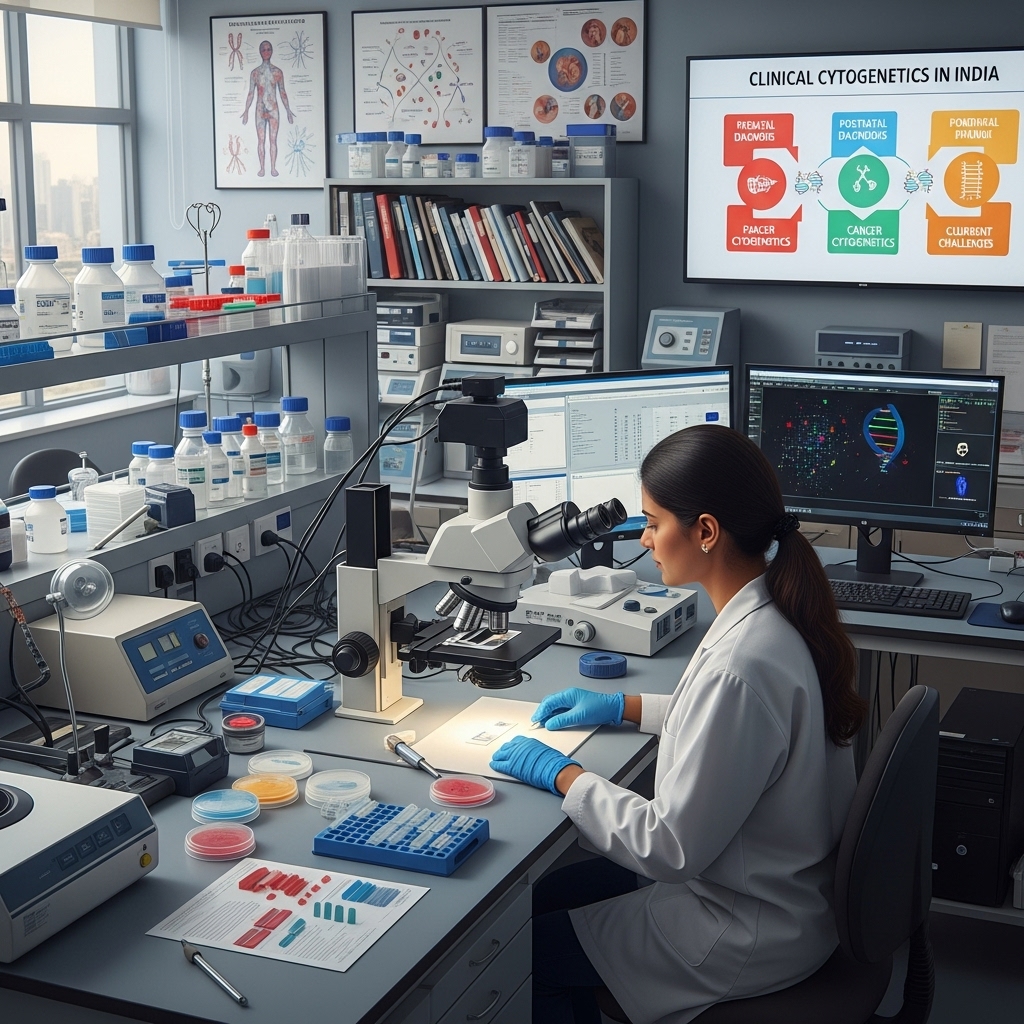
Introduction to Clinical Cytogenetics in India
Clinical cytogenetics plays a vital role in the diagnosis and management of genetic disorders in patients. In India, where the population is large and diverse, the importance of clinical cytogenetics cannot be overstated. With a high birth rate and a significant number of genetic disorders, the need for accurate diagnosis and treatment is paramount. Clinical cytogenetics involves the study of the structure and function of chromosomes, which are the thread-like structures that carry genetic information in the nucleus of living cells. By analyzing chromosomes, clinical cytogeneticists can identify abnormalities that can lead to genetic disorders, allowing for early diagnosis and treatment.
Chromosomal Abnormalities in Indian Patients
Chromosomal abnormalities are a major cause of genetic disorders in India. These abnormalities can occur in the form of numerical abnormalities, such as aneuploidy, where there is an extra or missing chromosome, or structural abnormalities, such as translocations, deletions, and duplications. In India, the most common chromosomal abnormalities include Down syndrome, Turner syndrome, and Klinefelter syndrome. For example, Down syndrome, which is caused by an extra copy of chromosome 21, is one of the most common genetic disorders in India, affecting approximately 1 in 1000 births. Clinical cytogenetics plays a crucial role in the diagnosis of these disorders, allowing for early intervention and management.
Techniques Used in Clinical Cytogenetics
Clinical cytogeneticists use a range of techniques to analyze chromosomes and diagnose genetic disorders. These techniques include karyotyping, fluorescence in situ hybridization (FISH), and chromosomal microarray analysis (CMA). Karyotyping involves the analysis of chromosomes under a microscope, allowing for the identification of numerical and structural abnormalities. FISH involves the use of fluorescent probes to detect specific DNA sequences, allowing for the identification of chromosomal abnormalities. CMA involves the analysis of DNA copy number variations, allowing for the identification of deletions and duplications. For example, CMA has been used to diagnose genetic disorders such as autism and intellectual disability in Indian patients.
Clinical Applications of Cytogenetics in India
Clinical cytogenetics has a range of clinical applications in India, including prenatal diagnosis, postnatal diagnosis, and cancer diagnosis. Prenatal diagnosis involves the analysis of fetal chromosomes to detect genetic disorders, allowing for early intervention and management. Postnatal diagnosis involves the analysis of chromosomes in newborns and children to detect genetic disorders, allowing for early treatment and management. Cancer diagnosis involves the analysis of chromosomes in cancer cells to detect genetic abnormalities, allowing for targeted treatment and management. For example, clinical cytogenetics has been used to diagnose genetic disorders such as thalassemia and sickle cell anemia in Indian patients, allowing for early treatment and management.
Challenges Facing Clinical Cytogenetics in India
Despite the importance of clinical cytogenetics in India, there are several challenges facing the field. These challenges include a lack of awareness and education about genetic disorders, a shortage of trained clinical cytogeneticists, and limited access to diagnostic facilities. Additionally, the high cost of diagnostic tests and the lack of health insurance coverage for genetic testing are significant barriers to access. For example, many Indian patients are unable to afford the cost of CMA, which can range from Rs. 10,000 to Rs. 50,000 or more. To address these challenges, there is a need for increased awareness and education about genetic disorders, as well as increased funding and support for clinical cytogenetics services.
Future Directions for Clinical Cytogenetics in India
The future of clinical cytogenetics in India is promising, with advances in technology and techniques allowing for more accurate and efficient diagnosis of genetic disorders. Next-generation sequencing (NGS) is one such technology, which allows for the simultaneous analysis of multiple genes and chromosomes. NGS has the potential to revolutionize the field of clinical cytogenetics, allowing for the diagnosis of complex genetic disorders and the identification of new genetic mutations. Additionally, the development of non-invasive prenatal testing (NIPT) has the potential to improve prenatal diagnosis, allowing for the detection of genetic disorders in fetal DNA present in maternal blood. For example, NIPT has been used to detect Down syndrome and other chromosomal abnormalities in Indian patients, allowing for early intervention and management.
Conclusion
In conclusion, clinical cytogenetics plays a vital role in the diagnosis and management of genetic disorders in Indian patients. With a range of techniques and applications, clinical cytogenetics has the potential to improve the health and well-being of millions of Indians. However, there are several challenges facing the field, including a lack of awareness and education, a shortage of trained clinical cytogeneticists, and limited access to diagnostic facilities. To address these challenges, there is a need for increased awareness and education about genetic disorders, as well as increased funding and support for clinical cytogenetics services. With advances in technology and techniques, the future of clinical cytogenetics in India is promising, and it is likely that the field will continue to play an increasingly important role in the diagnosis and management of genetic disorders in the years to come.