
Introduction to AI in Language Acquisition
Artificial Intelligence (AI) has revolutionized numerous aspects of our lives, and one of the most significant impacts has been on language learning. The integration of AI in language acquisition has opened up new possibilities for children to learn languages more effectively and efficiently. AI-enhanced language learning platforms, tools, and techniques have transformed the way children interact with languages, making the learning process more engaging, personalized, and enjoyable. In this article, we will delve into the world of AI in language acquisition research and explore how AI enhances language learning outcomes in children.
Personalized Learning with AI
A key benefit of AI in language learning is its ability to provide personalized learning experiences for children. AI algorithms can analyze a child's learning style, pace, and strengths to create tailored lesson plans that cater to their individual needs. For instance, AI-powered language learning apps can adjust the difficulty level of exercises and activities based on a child's performance, ensuring that they are consistently challenged but not overwhelmed. This personalized approach helps children stay motivated and engaged, as they are able to learn at their own pace and focus on areas where they need improvement.
Moreover, AI can help identify learning gaps and weaknesses in children, allowing teachers and parents to intervene early and provide targeted support. By leveraging AI-driven analytics, educators can gain valuable insights into a child's learning progress, track their development over time, and make data-driven decisions to optimize their instruction.
Interactive and Immersive Learning Experiences
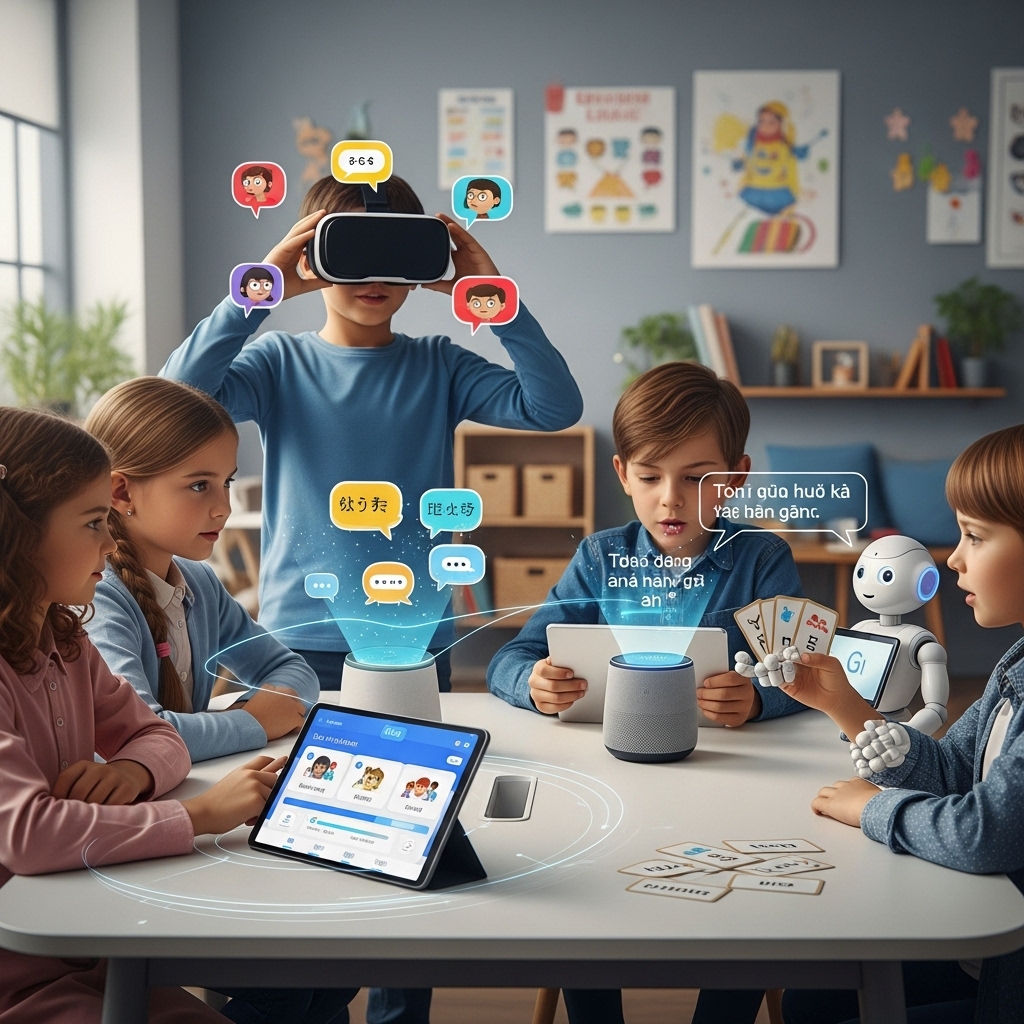
AI has also enabled the creation of interactive and immersive language learning experiences that simulate real-life conversations and scenarios. Virtual reality (VR) and augmented reality (AR) technologies, powered by AI, can transport children to virtual environments where they can practice their language skills in a more engaging and interactive way. For example, AI-driven chatbots can engage children in conversations, using natural language processing (NLP) to understand and respond to their inputs. This interactive approach helps children develop their speaking, listening, and comprehension skills, as they are able to practice their language skills in a more authentic and meaningful way.
Additionally, AI-powered games and activities can make language learning a fun and enjoyable experience for children. AI-driven game design can create adaptive difficulty levels, ensuring that children are consistently challenged and motivated to learn. By incorporating game-like elements, such as rewards, badges, and leaderboards, AI can help children develop a sense of accomplishment and pride in their language learning achievements.
Intelligent Tutoring Systems
AI has also given rise to intelligent tutoring systems (ITS) that can provide one-on-one support to children as they learn a language. ITS can offer real-time feedback, correct errors, and provide guidance on pronunciation, grammar, and vocabulary usage. AI-powered tutoring systems can also help children develop their writing skills, by analyzing their compositions and providing constructive feedback on structure, coherence, and style.
For instance, AI-driven writing tools can help children improve their writing skills by suggesting alternative phrases, correcting grammatical errors, and providing feedback on clarity and concision. By leveraging AI-powered ITS, children can receive personalized support and guidance, helping them to overcome learning obstacles and achieve their language learning goals.
Accessibility and Equity in Language Learning
A significant advantage of AI in language learning is its potential to increase accessibility and equity in language education. AI-powered language learning platforms can reach children in remote or underserved areas, providing them with access to high-quality language instruction and resources. AI can also help children with disabilities, such as hearing or speech impairments, by providing adaptive learning tools and accommodations that cater to their individual needs.
Moreover, AI can help bridge the gap between native and non-native speakers, by providing language learning opportunities that are tailored to the needs of diverse learner populations. AI-powered language learning platforms can offer culturally sensitive and relevant content, helping children to develop a deeper understanding of the language and its cultural context.
Challenges and Limitations of AI in Language Learning
While AI has the potential to revolutionize language learning, there are also challenges and limitations that need to be addressed. One of the primary concerns is the risk of over-reliance on technology, which can lead to a lack of human interaction and social skills development. Additionally, AI-powered language learning platforms can be limited by their lack of contextual understanding, which can result in inaccurate or inappropriate feedback.
Furthermore, there is a need for more research on the effectiveness of AI in language learning, particularly in terms of its impact on long-term language retention and fluency. There is also a risk of bias in AI algorithms, which can perpetuate existing inequalities and disparities in language education. By acknowledging these challenges and limitations, we can work towards creating more effective and equitable AI-powered language learning solutions that benefit all children.
Conclusion
In conclusion, AI has the potential to significantly enhance language learning outcomes in children, by providing personalized, interactive, and immersive learning experiences. AI-powered language learning platforms, tools, and techniques can help children develop their language skills more effectively and efficiently, while also increasing accessibility and equity in language education. However, it is essential to address the challenges and limitations of AI in language learning, by promoting more research, development, and evaluation of AI-powered language learning solutions. By harnessing the power of AI, we can create a more inclusive, effective, and enjoyable language learning experience for children, helping them to achieve their full potential and succeed in an increasingly globalized and interconnected world.