
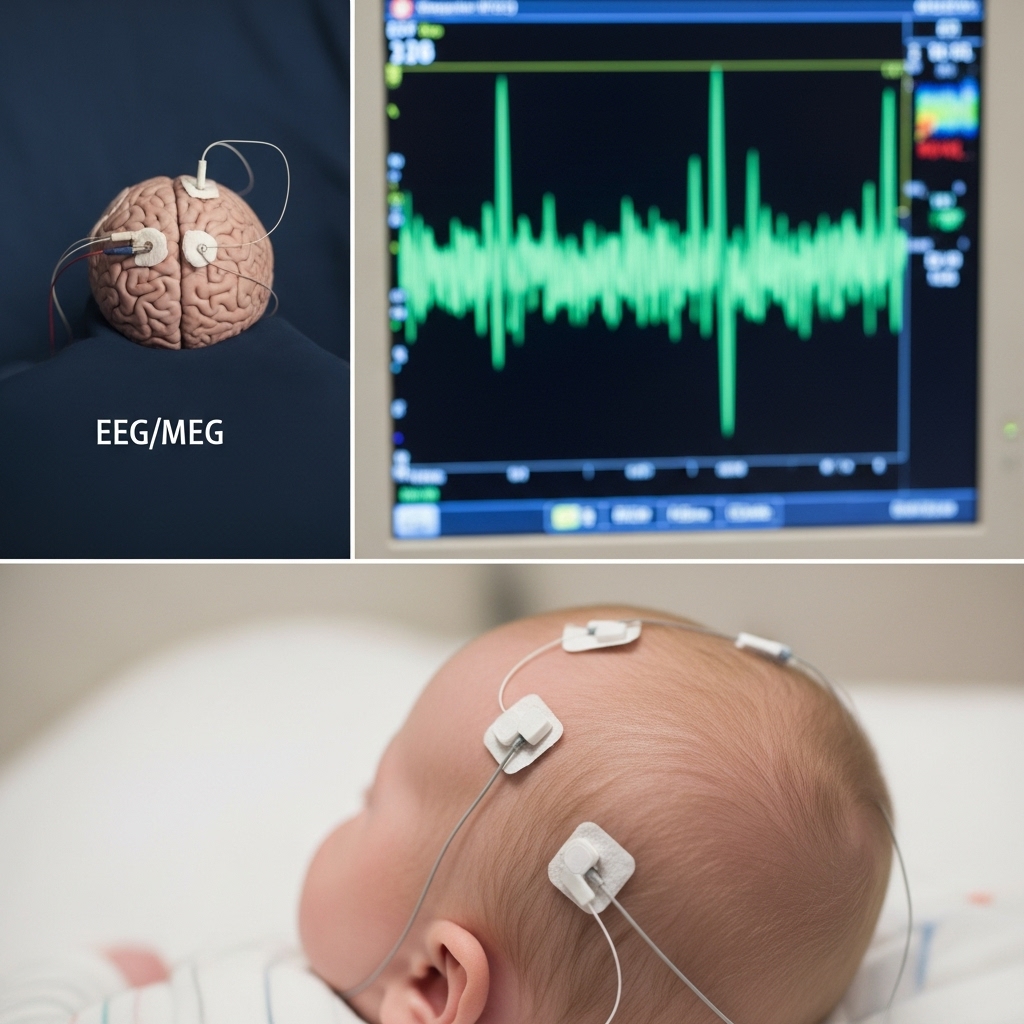
Introduction to Neonatal Brain Imaging
Neonatal brain imaging has undergone significant advancements in recent years, revolutionizing the field of neonatal care. These advancements have enabled healthcare professionals to diagnose and treat neurological disorders in newborns more effectively, improving outcomes and reducing morbidity. In this article, we will explore the recent developments in neonatal brain imaging techniques, highlighting their benefits, limitations, and potential applications.
Advances in Magnetic Resonance Imaging (MRI)
MRI has become a crucial tool in neonatal brain imaging, offering high-resolution images of the brain's structure and function. Recent advancements in MRI technology have improved image quality, reduced scan times, and enhanced safety for newborns. For example, the development of dedicated neonatal MRI machines with smaller bore sizes and specialized coils has increased image resolution and reduced the need for sedation. Additionally, the use of diffusion-weighted imaging (DWI) and magnetic resonance angiography (MRA) has improved the detection of brain injuries, such as hypoxic-ischemic encephalopathy and cerebral vasculature abnormalities.
Functional MRI (fMRI) and Its Applications
fMRI has emerged as a valuable tool for assessing brain function in newborns. By measuring changes in blood oxygenation, fMRI can map brain activity and identify areas of abnormal function. This technique has been used to study brain development, language processing, and sensory perception in newborns. For instance, a study using fMRI found that premature infants showed altered brain activity patterns compared to term infants, highlighting the potential for early identification of neurodevelopmental disorders. Furthermore, fMRI has been used to investigate the effects of maternal voice and music on brain activity in newborns, demonstrating the importance of auditory stimulation in early brain development.
Diffusion Tensor Imaging (DTI) and Tractography
DTI and tractography have revolutionized the field of neonatal brain imaging by enabling the visualization of white matter tracts and their development. These techniques have been used to study brain maturation, identify abnormalities in brain connectivity, and monitor the effects of injury or disease on brain development. For example, a study using DTI and tractography found that preterm infants showed reduced fractional anisotropy (FA) values, indicating impaired white matter development, which was associated with adverse neurodevelopmental outcomes. Additionally, DTI has been used to investigate the effects of neonatal stroke on brain connectivity, highlighting the potential for early intervention and rehabilitation.
Positron Emission Tomography (PET) and Single-Photon Emission Computed Tomography (SPECT)
PET and SPECT have been used in neonatal brain imaging to study brain metabolism, perfusion, and function. These techniques involve the use of radiotracers to visualize specific biological processes, such as glucose metabolism or dopamine receptor binding. For instance, a study using PET found that newborns with hypoxic-ischemic encephalopathy showed reduced glucose metabolism in the brain, which was associated with poor outcomes. Additionally, SPECT has been used to investigate the effects of neonatal seizures on brain perfusion, demonstrating the potential for early identification of seizure-related brain injury.
Optical Imaging Techniques
Optical imaging techniques, such as near-infrared spectroscopy (NIRS) and diffuse optical imaging (DOI), have emerged as non-invasive and portable tools for neonatal brain imaging. These techniques use light to measure changes in blood oxygenation and hemodynamics, providing information on brain activity and function. For example, a study using NIRS found that preterm infants showed altered cerebral oxygenation patterns compared to term infants, highlighting the potential for early identification of neurodevelopmental disorders. Additionally, DOI has been used to investigate the effects of maternal voice on brain activity in newborns, demonstrating the importance of auditory stimulation in early brain development.
Conclusion and Future Directions
In conclusion, recent advancements in neonatal brain imaging techniques have significantly improved our understanding of brain development, function, and injury in newborns. These techniques have the potential to revolutionize the field of neonatal care, enabling early diagnosis and treatment of neurological disorders. However, further research is needed to fully exploit the potential of these techniques and to address the challenges associated with their use in clinical practice. Future studies should focus on developing standardized protocols, improving image analysis techniques, and investigating the long-term outcomes of newborns undergoing brain imaging. By continuing to advance the field of neonatal brain imaging, we can improve the lives of newborns and their families, and ultimately reduce the burden of neurological disorders in our society.