
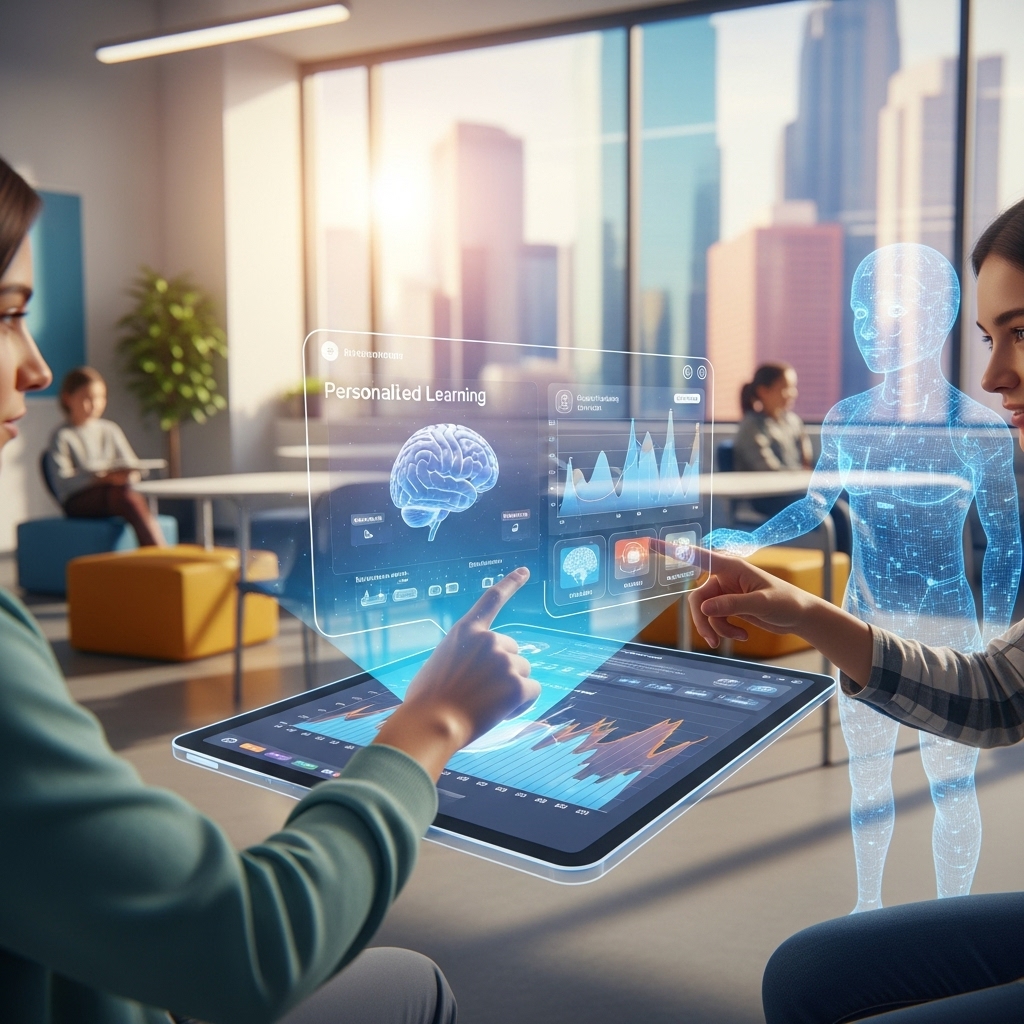
Introduction to Personalized Learning
The traditional one-size-fits-all approach to education has been a longstanding critique of the modern educational system. Every individual learns at their own pace, has their own learning style, and is motivated by different factors. Recognizing these differences, educators and technologists have been exploring ways to tailor learning experiences to the unique needs and abilities of each student. Artificial Intelligence (AI) has emerged as a powerful tool in this pursuit, promising to revolutionize the way we learn by making education more personalized, effective, and accessible. In this article, we will delve into the potential of AI in unlocking cognitive potential through personalized learning experiences.
The Current State of Education
Traditional classroom settings often struggle to cater to the diverse needs of students. Teachers face the challenge of managing classrooms with students of varying skill levels, learning speeds, and interests. This can lead to some students feeling left behind or others not being sufficiently challenged. The integration of AI in education aims to address these challenges by providing a more adaptive and responsive learning environment. AI systems can analyze vast amounts of data on student performance, preferences, and learning behaviors, allowing for the creation of highly personalized learning plans.
How AI Personalizes Learning
AI personalizes learning through several key mechanisms. Firstly, it uses machine learning algorithms to analyze student data and identify patterns that indicate knowledge gaps or areas where a student excels. This information is then used to adjust the difficulty level of course materials, ensuring that students are always challenged but not overwhelmed. Secondly, AI can offer real-time feedback, which is crucial for immediate correction of mistakes and reinforcement of correct understanding. This feedback loop helps in improving student outcomes by ensuring that misconceptions are addressed promptly.
Examples of AI in Education
Several educational platforms and tools are already leveraging AI to enhance learning experiences. For instance, adaptive learning software can adjust the curriculum based on a student's performance in real-time. Virtual learning environments (VLEs) use AI to recommend learning resources, such as videos, readings, and quizzes, tailored to the individual's learning style and pace. Moreover, AI-powered chatbots and virtual assistants are being used to provide support to students, answering questions, and offering guidance on coursework. These technologies not only make learning more engaging but also help in reducing the workload of teachers, allowing them to focus on what matters most - teaching and mentoring.
Benefits of AI-Driven Personalized Learning
The integration of AI in education has numerous benefits. It enhances student engagement by making learning more relevant and interesting. Personalized learning experiences lead to better academic outcomes, as students are more likely to understand and retain information that is presented in a way that resonates with them. Additionally, AI-driven education can help in early identification of learning disabilities or difficulties, allowing for timely intervention. This approach also promotes inclusivity, as AI can cater to the needs of students with special needs more effectively than traditional methods.
Challenges and Limitations
Despite the potential of AI in revolutionizing education, there are challenges and limitations to its adoption. One of the significant hurdles is the availability and quality of data. AI systems are only as good as the data they are trained on, and in many educational settings, data may be incomplete, biased, or of poor quality. Moreover, the development and implementation of AI-powered educational tools require significant investment, which can be a barrier for many institutions, especially those in under-resourced areas. Ethical considerations, such as privacy and equity, must also be carefully addressed to ensure that AI enhances education without exacerbating existing inequalities.
Conclusion: The Future of Personalized Learning
In conclusion, AI has the potential to revolutionize the educational landscape by providing personalized learning experiences that cater to the unique needs and abilities of each student. While there are challenges to overcome, the benefits of improved engagement, academic outcomes, and inclusivity make the integration of AI in education a worthwhile pursuit. As technology continues to evolve, we can expect to see more sophisticated AI-powered educational tools that not only adapt to how students learn but also predict and prepare them for future challenges. The future of education is undoubtedly linked to the strategic and responsible use of AI, and as we move forward, it will be exciting to see how this technology unlocks the cognitive potential of learners around the world.