
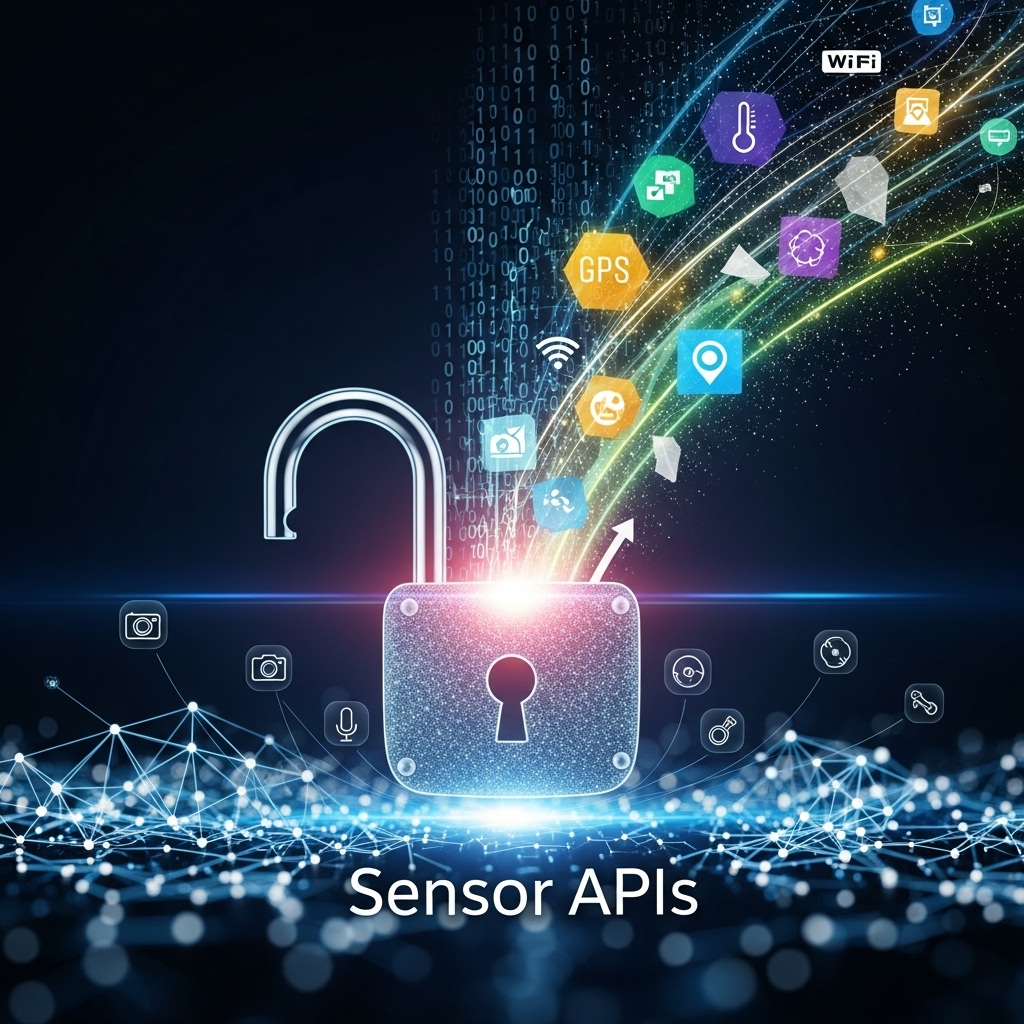
Introduction to Sensor APIs
Sensor APIs have revolutionized the way we interact with and understand the world around us. By providing a gateway to the vast amounts of data generated by sensors, these APIs have opened up endless possibilities for innovation and exploration. From smart home devices to industrial automation, sensor APIs are being used in a wide range of applications to collect, analyze, and act upon data from the physical world. In this article, we will delve into the world of sensor APIs, exploring their capabilities, applications, and potential use cases.
What are Sensor APIs?
A sensor API is an application programming interface that allows developers to access and interact with sensor data. Sensors are devices that detect and measure physical parameters such as temperature, humidity, pressure, and motion, and convert them into electrical signals that can be processed and analyzed. Sensor APIs provide a standardized way for developers to access these signals, allowing them to build applications that can collect, analyze, and act upon sensor data. Sensor APIs can be categorized into different types, including hardware-based APIs, software-based APIs, and cloud-based APIs, each with its own strengths and weaknesses.
Applications of Sensor APIs
Sensor APIs have a wide range of applications across various industries, including industrial automation, smart homes, healthcare, and transportation. For example, in industrial automation, sensor APIs can be used to monitor equipment performance, detect anomalies, and optimize production processes. In smart homes, sensor APIs can be used to control lighting, temperature, and security systems, creating a more comfortable and convenient living environment. In healthcare, sensor APIs can be used to monitor patient vital signs, track medication adherence, and detect early warning signs of disease. These are just a few examples of the many applications of sensor APIs, and the possibilities are endless.
Benefits of Sensor APIs
The benefits of sensor APIs are numerous and significant. One of the primary benefits is the ability to collect and analyze large amounts of data from the physical world, allowing developers to build more accurate and informative applications. Sensor APIs also enable real-time monitoring and control, allowing for faster response times and more efficient decision-making. Additionally, sensor APIs can help reduce costs by automating manual processes, improving resource allocation, and extending the lifespan of equipment. Furthermore, sensor APIs can improve safety by detecting potential hazards and preventing accidents, and can also enhance customer experience by providing more personalized and responsive services.
Examples of Sensor APIs in Action
There are many examples of sensor APIs in action, and some of the most notable include the Nest Learning Thermostat, the Fitbit wearable device, and the Tesla Autopilot system. The Nest Learning Thermostat uses sensor APIs to collect data on temperature, humidity, and occupancy, and adjusts the heating and cooling system accordingly. The Fitbit wearable device uses sensor APIs to collect data on physical activity, sleep patterns, and heart rate, providing users with personalized insights and recommendations. The Tesla Autopilot system uses sensor APIs to collect data on speed, direction, and surroundings, enabling semi-autonomous driving capabilities. These examples demonstrate the power and potential of sensor APIs, and show how they can be used to create innovative and transformative applications.
Challenges and Limitations of Sensor APIs
While sensor APIs offer many benefits and opportunities, there are also challenges and limitations to consider. One of the primary challenges is the complexity of sensor data, which can be noisy, incomplete, or inconsistent. Additionally, sensor APIs often require specialized knowledge and expertise, which can create a barrier to entry for developers. Furthermore, sensor APIs can raise concerns about data privacy and security, particularly when dealing with sensitive or personal data. Finally, sensor APIs can be affected by issues such as sensor drift, calibration, and maintenance, which can impact the accuracy and reliability of the data. Despite these challenges, the benefits of sensor APIs far outweigh the limitations, and with careful planning, design, and implementation, these challenges can be overcome.
Future Directions for Sensor APIs
The future of sensor APIs is exciting and promising, with many new developments and innovations on the horizon. One of the most significant trends is the growth of the Internet of Things (IoT), which is expected to connect billions of devices and sensors over the next few years. Another trend is the increasing use of artificial intelligence (AI) and machine learning (ML) to analyze and interpret sensor data, enabling more accurate and informative applications. Additionally, the development of new sensor technologies, such as nanosensors and biosensors, is expected to expand the range and accuracy of sensor data, enabling new and innovative applications. Finally, the growth of edge computing and fog computing is expected to enable more efficient and effective processing of sensor data, reducing latency and improving real-time decision-making.
Conclusion
In conclusion, sensor APIs have the potential to unlock a vast array of new possibilities and applications, from smart homes and industrial automation to healthcare and transportation. By providing a gateway to the physical world, sensor APIs enable developers to collect, analyze, and act upon data from sensors, creating more accurate, informative, and responsive applications. While there are challenges and limitations to consider, the benefits of sensor APIs far outweigh the limitations, and with careful planning, design, and implementation, these challenges can be overcome. As the IoT continues to grow and expand, and new sensor technologies and innovations emerge, the future of sensor APIs is exciting and promising, and we can expect to see many new and innovative applications in the years to come.