
Introduction to Marine Ecosystems
Marine ecosystems are complex communities of plants and animals that live in the ocean and interact with each other and their environment. These ecosystems are essential for the health of our planet, providing numerous benefits, including food, coastal protection, and climate regulation. The diversity of marine ecosystems is remarkable, ranging from shallow coral reefs to deep-sea trenches, and from polar seas to tropical oceans. In this article, we will explore the different types of marine ecosystems, their characteristics, and the unique plants and animals that inhabit them.
Coral Reef Ecosystems
Coral reefs are some of the most biologically diverse ecosystems on the planet, with thousands of species of fish, invertebrates, and algae living among the coral structures. These ecosystems are found in shallow, tropical waters and are formed by coral polyps, small animals that secrete a hard, calcium carbonate exoskeleton. Coral reefs provide important habitat for many marine species, protect coastlines from erosion and storm damage, and support commercial fisheries. For example, the Great Barrier Reef in Australia is one of the largest coral reef ecosystems in the world, spanning over 2,300 kilometers and home to more than 1,500 species of fish.
Open Ocean Ecosystems
Open ocean ecosystems, also known as pelagic ecosystems, are characterized by their open water and lack of solid substrate. These ecosystems are home to a wide range of marine life, from tiny plankton to massive blue whales. Open ocean ecosystems can be further divided into different zones, including the epipelagic zone (0-200 meters depth), the mesopelagic zone (200-1,000 meters depth), and the bathypelagic zone (1,000-4,000 meters depth). Each zone has its unique community of plants and animals, adapted to the specific conditions of light, temperature, and pressure. For example, the epipelagic zone is home to many species of fish, such as tuna and swordfish, while the mesopelagic zone is inhabited by bioluminescent species, such as lanternfish and dragonfish.
Deep-Sea Ecosystems
Deep-sea ecosystems are found in the deepest parts of the ocean, below 4,000 meters depth. These ecosystems are characterized by extreme conditions, including near-freezing temperatures, crushing pressure, and total darkness. Despite these challenges, deep-sea ecosystems are home to a unique community of plants and animals, such as giant tube worms, deep-sea fish, and microorganisms that thrive in the harsh conditions. For example, the Mariana Trench, the deepest point in the ocean, is home to species such as the anglerfish and the frilled shark, which have adapted to the extreme conditions of the deep sea.
Estuarine and Coastal Ecosystems
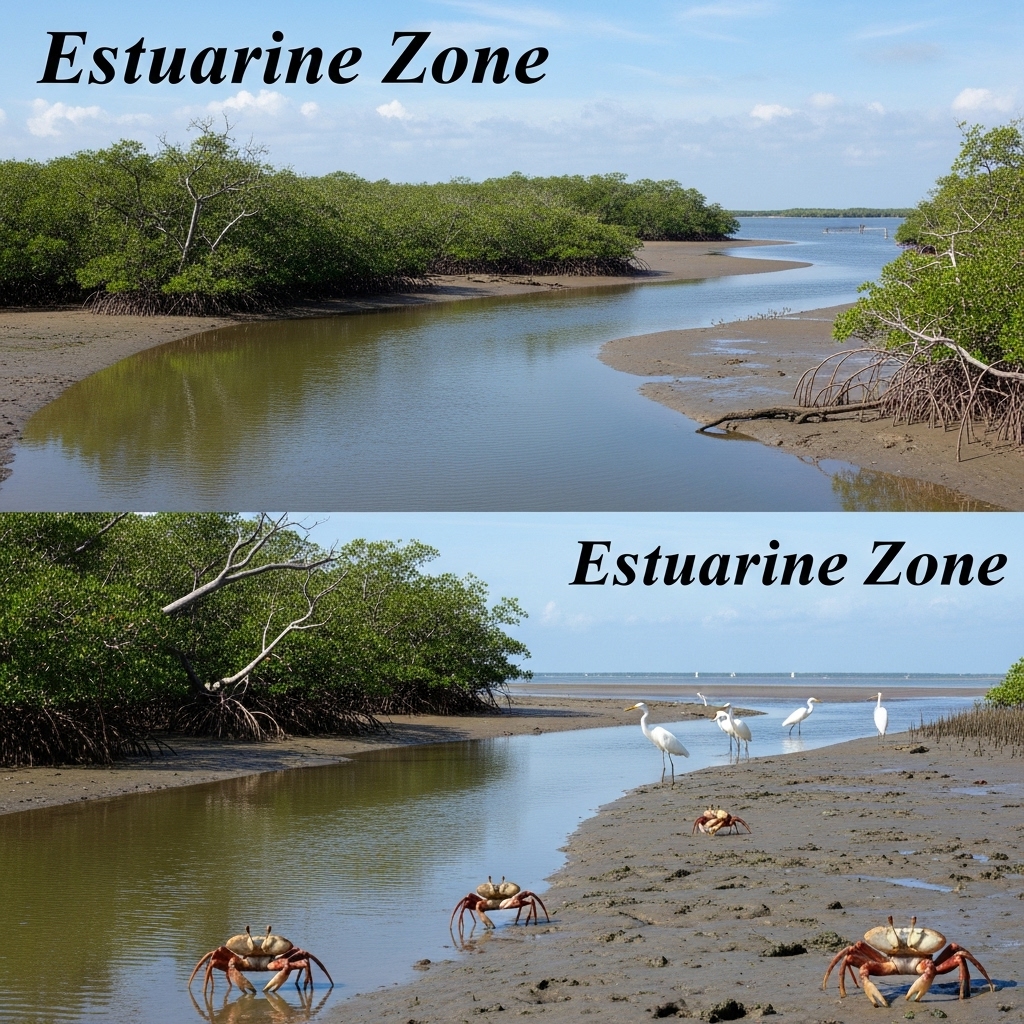
Estuarine and coastal ecosystems are found in the areas where freshwater rivers and streams meet the ocean. These ecosystems are characterized by a mix of fresh and saltwater, and are home to a diverse range of plants and animals. Estuaries, such as bays, deltas, and mangrove swamps, provide important habitat for many marine species, including fish, shellfish, and birds. For example, the Chesapeake Bay in the United States is an important estuarine ecosystem, providing habitat for species such as the blue crab and the oyster, and supporting commercial fisheries and tourism.
Polar Ecosystems
Polar ecosystems are found in the Arctic and Antarctic regions, and are characterized by cold water, ice, and limited sunlight. These ecosystems are home to a unique community of plants and animals, adapted to the extreme conditions of the polar regions. For example, the Arctic Ocean is home to species such as the polar bear, the walrus, and the beluga whale, while the Antarctic Ocean is home to species such as the penguin, the seal, and the krill. Polar ecosystems are also important for the global climate, as they play a key role in regulating the Earth's temperature and weather patterns.
Seagrass and Kelp Ecosystems
Seagrass and kelp ecosystems are found in shallow, coastal waters, and are characterized by the presence of seagrasses or kelp forests. These ecosystems provide important habitat for many marine species, including fish, invertebrates, and microorganisms. Seagrass ecosystems, such as those found in the Mediterranean Sea, are home to species such as the sea turtle and the monkfish, while kelp ecosystems, such as those found in the Pacific Ocean, are home to species such as the sea otter and the kelpfish. Seagrass and kelp ecosystems also play an important role in coastal protection, as they help to stabilize the sediment and prevent erosion.
Conclusion
In conclusion, marine ecosystems are diverse and complex communities of plants and animals that live in the ocean and interact with each other and their environment. From coral reefs to deep-sea trenches, and from polar seas to tropical oceans, each ecosystem has its unique characteristics and inhabitants. Understanding and protecting these ecosystems is essential for the health of our planet, as they provide numerous benefits, including food, coastal protection, and climate regulation. By learning more about the different types of marine ecosystems, we can appreciate the beauty and importance of these ecosystems, and work to conserve and protect them for future generations.