
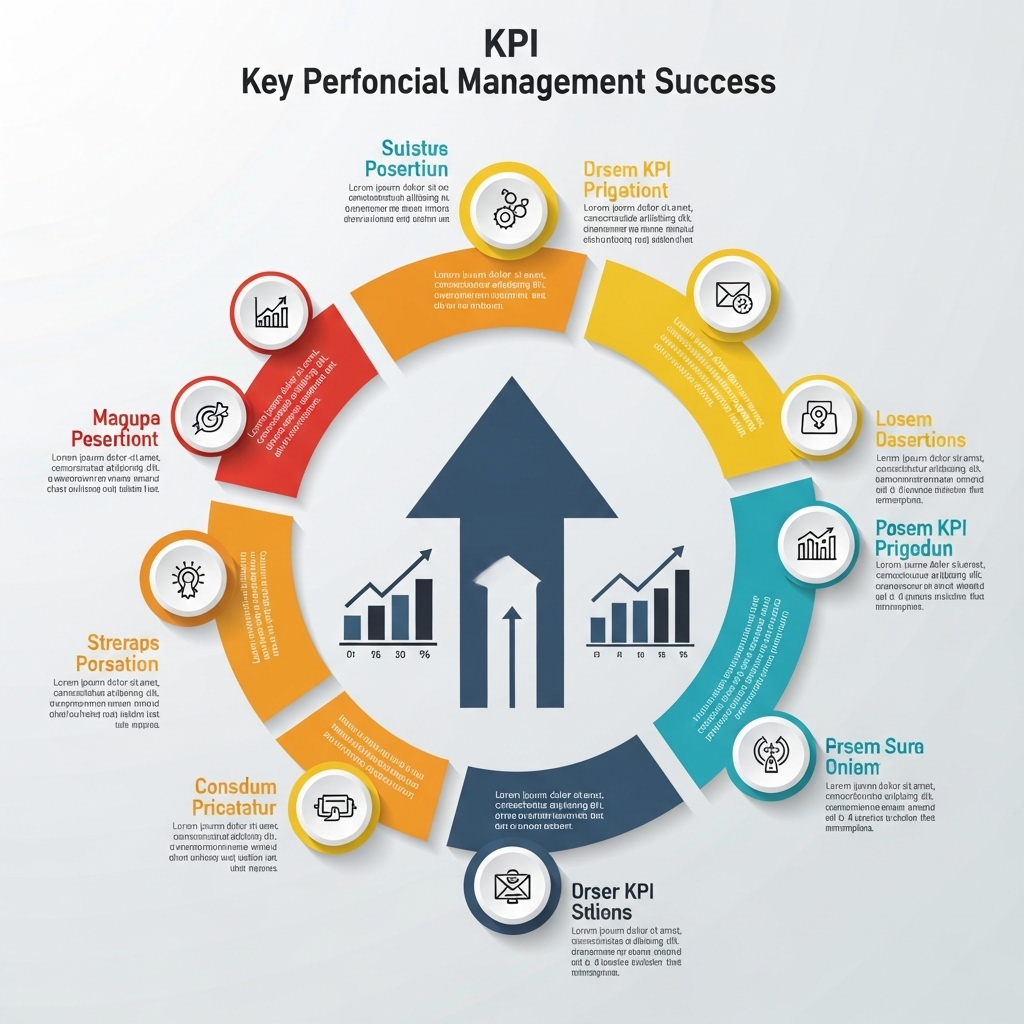
Introduction to Key Performance Indicators for Financial Management Success
Key Performance Indicators (KPIs) are quantifiable measures used to evaluate the success of an organization, employee, or process in achieving its objectives. In the context of financial management, KPIs play a crucial role in assessing the financial health and performance of a company. Effective financial management is essential for the success and sustainability of any business, and KPIs help in making informed decisions, identifying areas of improvement, and measuring progress towards financial goals. This article will delve into the key performance indicators for financial management success, exploring their types, applications, and importance in driving business growth and profitability.
Understanding Financial KPIs
Financial KPIs are specific metrics that help organizations track their financial performance over time. These indicators can be categorized into different types, including liquidity ratios, profitability ratios, efficiency ratios, and solvency ratios. Liquidity ratios, such as the current ratio and quick ratio, indicate a company's ability to meet its short-term obligations. Profitability ratios, including the gross margin ratio and return on equity (ROE), measure a company's ability to generate earnings. Efficiency ratios, like the asset turnover ratio, assess how effectively a company uses its assets to generate sales. Solvency ratios, including the debt-to-equity ratio, evaluate a company's long-term financial stability.
Types of Financial KPIs
There are numerous financial KPIs that organizations can use, depending on their specific goals and objectives. Some common examples include: - Revenue Growth Rate: The rate at which a company's revenue is increasing or decreasing over time. - Gross Margin Ratio: The difference between revenue and the cost of goods sold, expressed as a percentage. - Operating Expense Ratio: The ratio of operating expenses to revenue, indicating how much of each dollar of revenue is consumed by operational costs. - Return on Investment (ROI): A measure of the return generated by an investment, expressed as a percentage. - Debt-to-Equity Ratio: A measure of a company's financial leverage, indicating the extent to which it relies on debt to finance its operations. These KPIs provide insights into different aspects of a company's financial performance, allowing for a comprehensive assessment of its financial health and management effectiveness.
Implementing Financial KPIs
Implementing financial KPIs involves several steps, including identifying relevant metrics, setting targets, and establishing a system for tracking and reporting. Companies should start by identifying the KPIs that align with their strategic objectives and are most relevant to their industry and business model. For example, a retail company might focus on sales growth, inventory turnover, and customer satisfaction, while a manufacturing company might prioritize production efficiency, supply chain management, and product quality. Once the KPIs are identified, companies should set realistic targets and benchmarks, based on historical data, industry benchmarks, or best practices. A regular reporting system should be established to track progress, identify areas for improvement, and make data-driven decisions.
Best Practices for Using Financial KPIs
There are several best practices that organizations should follow when using financial KPIs. First, KPIs should be aligned with the company's overall strategy and objectives, ensuring that everyone is working towards the same goals. Second, KPIs should be measurable, actionable, relevant, and time-bound (SMART), providing clear direction and focus. Third, KPIs should be regularly reviewed and updated, reflecting changes in the business environment, market conditions, or company priorities. Fourth, KPIs should be communicated clearly and transparently, ensuring that all stakeholders understand their significance and how they contribute to the company's success. Finally, KPIs should be used to drive decision-making, rather than just for reporting or compliance purposes, enabling organizations to respond quickly to opportunities and challenges.
Common Challenges and Limitations
While financial KPIs are essential for effective financial management, there are common challenges and limitations that organizations may encounter. One challenge is selecting the right KPIs, as too many or irrelevant metrics can lead to confusion and distraction. Another challenge is ensuring data quality and integrity, as inaccurate or incomplete data can undermine the reliability of KPIs. Additionally, KPIs may not always capture the full picture, as they focus on quantitative aspects of financial performance, potentially overlooking important qualitative factors. Furthermore, KPIs can be manipulated or gamed, if not designed or implemented carefully, leading to unintended consequences or behaviors. To overcome these challenges, organizations should regularly review and refine their KPIs, invest in robust data management systems, and foster a culture of transparency and accountability.
Conclusion
In conclusion, key performance indicators are vital for financial management success, providing organizations with the insights and metrics needed to make informed decisions, drive growth, and improve profitability. By understanding the different types of financial KPIs, implementing them effectively, and following best practices, companies can optimize their financial performance, respond to challenges and opportunities, and achieve their strategic objectives. While there are common challenges and limitations associated with financial KPIs, these can be overcome by selecting relevant metrics, ensuring data quality, and fostering a culture of transparency and accountability. As the business environment continues to evolve, the importance of financial KPIs will only continue to grow, making them an essential tool for organizations seeking to succeed and thrive in today's competitive marketplace.