
Introduction to Cell Architecture
The design of a cell's architecture is crucial in determining its overall performance, security, and scalability. In the realm of cell architecture, there are two primary designs: monolithic and microkernel. Both architectures have their strengths and weaknesses, and understanding the differences between them is essential for developing efficient and effective cell systems. In this article, we will delve into the world of cell architecture, exploring the monolithic and microkernel designs, their characteristics, advantages, and disadvantages, as well as providing examples to illustrate the concepts.
Monolithic Cell Architecture
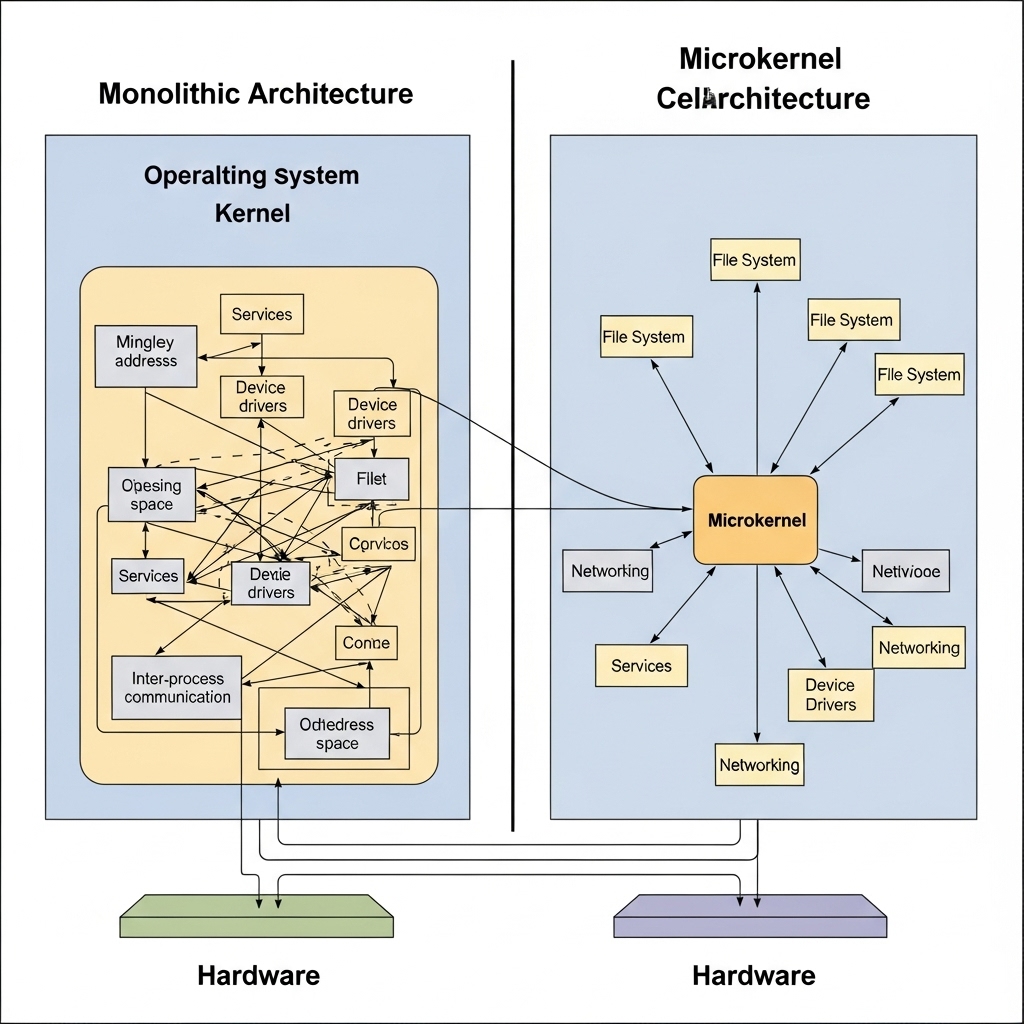
A monolithic cell architecture is a design where all the components, including the operating system, device drivers, and applications, are combined into a single, self-contained unit. This design is often referred to as a "monolith" because it is a single, unified structure. In a monolithic architecture, all the components share the same memory space and communicate with each other directly. This design is simple, efficient, and easy to implement, making it a popular choice for many cell systems. For example, the Android operating system uses a monolithic architecture, where the Linux kernel and device drivers are combined into a single unit.
Microkernel Cell Architecture
A microkernel cell architecture, on the other hand, is a design where the operating system is broken down into smaller, independent components, each with its own specific function. The microkernel is the core component, responsible for providing basic services such as process scheduling, memory management, and inter-process communication. The device drivers and applications are separate components, communicating with the microkernel through a defined interface. This design provides a high degree of modularity, flexibility, and scalability, making it suitable for complex cell systems. For instance, the Symbian operating system uses a microkernel architecture, where the kernel and device drivers are separate components.
Key Differences Between Monolithic and Microkernel Architectures
The primary differences between monolithic and microkernel architectures lie in their design philosophy, component interaction, and scalability. Monolithic architectures are characterized by a single, unified structure, where all components share the same memory space. In contrast, microkernel architectures are designed as a collection of independent components, each with its own memory space. Microkernel architectures provide a higher degree of modularity, making it easier to modify or replace individual components without affecting the entire system. Additionally, microkernel architectures are more scalable, as new components can be added or removed as needed, without requiring significant changes to the existing system.
Advantages and Disadvantages of Monolithic Architectures
Monolithic architectures have several advantages, including simplicity, efficiency, and ease of implementation. They are also less prone to errors, as the components are tightly integrated and communicate directly with each other. However, monolithic architectures have some significant disadvantages. They can be difficult to maintain and modify, as changes to one component can affect the entire system. Additionally, monolithic architectures are less scalable, as adding new components can require significant changes to the existing system. For example, the Android operating system, which uses a monolithic architecture, can be challenging to modify or customize, as changes to the kernel or device drivers can affect the entire system.
Advantages and Disadvantages of Microkernel Architectures
Microkernel architectures have several advantages, including modularity, flexibility, and scalability. They are easier to maintain and modify, as individual components can be changed or replaced without affecting the entire system. Microkernel architectures are also more secure, as the kernel and device drivers are isolated from each other, reducing the risk of errors or security breaches. However, microkernel architectures have some disadvantages, including increased complexity and overhead. The communication between components can be slower, as it requires passing messages through the microkernel, which can result in increased latency. For instance, the Symbian operating system, which uses a microkernel architecture, can be more complex to implement and manage, due to the separate components and interfaces.
Real-World Examples and Applications
Both monolithic and microkernel architectures have been used in various cell systems and applications. For example, the iPhone operating system uses a monolithic architecture, where the kernel and device drivers are combined into a single unit. In contrast, the QNX operating system uses a microkernel architecture, where the kernel and device drivers are separate components. The choice of architecture depends on the specific requirements of the system, including performance, security, and scalability. In general, monolithic architectures are suitable for simple, embedded systems, while microkernel architectures are more suitable for complex, scalable systems.
Conclusion
In conclusion, the difference between monolithic and microkernel cell architectures is significant, with each design having its strengths and weaknesses. Monolithic architectures are simple, efficient, and easy to implement, but can be difficult to maintain and modify. Microkernel architectures are more modular, flexible, and scalable, but can be more complex and have increased overhead. Understanding the characteristics, advantages, and disadvantages of each architecture is essential for developing efficient and effective cell systems. By choosing the right architecture, developers can create systems that meet the specific requirements of their application, including performance, security, and scalability. Ultimately, the choice of architecture depends on the specific needs of the system, and a thorough understanding of the trade-offs between monolithic and microkernel designs is crucial for making informed decisions.