
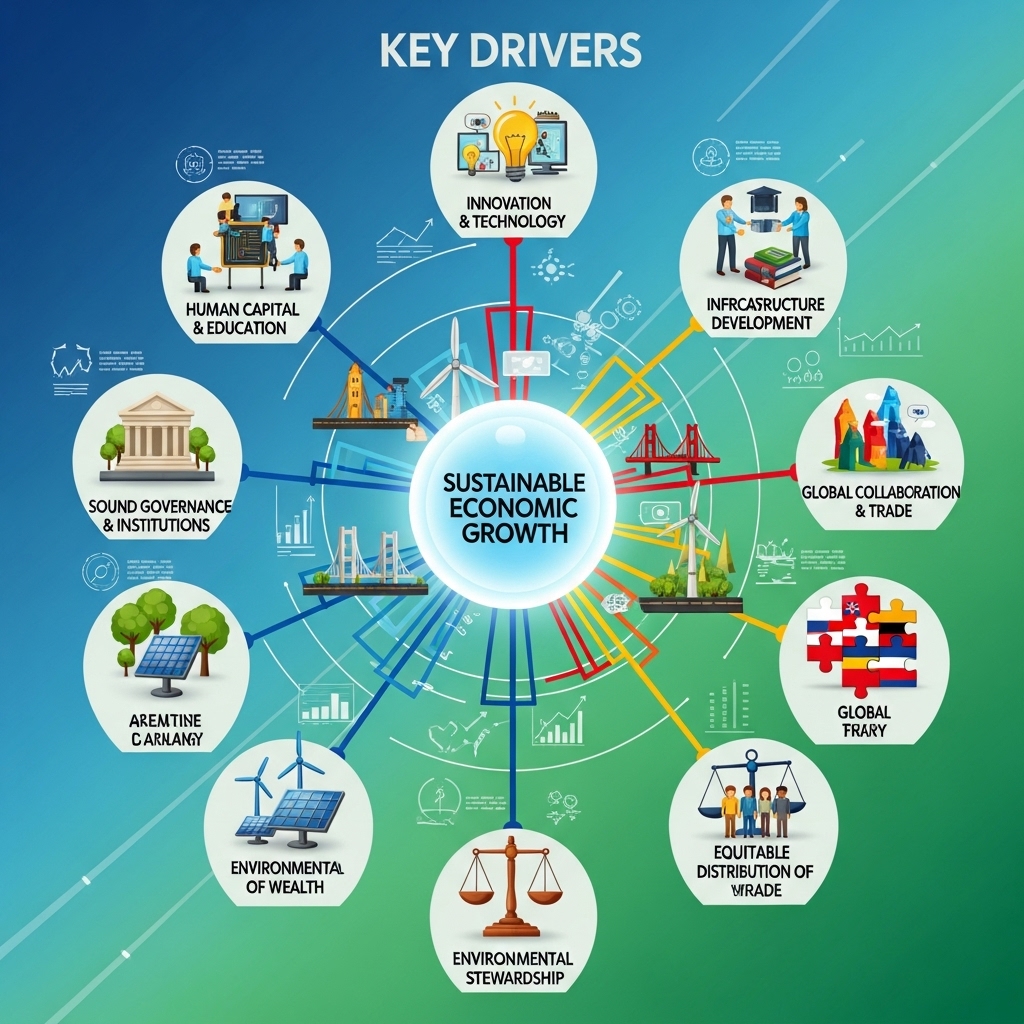
Introduction to Durable Economic Growth and Sustainability
Durable economic growth and sustainability are key concepts in the modern economic landscape. As the world grapples with the challenges of climate change, inequality, and social injustice, it has become increasingly important to understand the drivers of economic growth that are not only sustainable but also equitable. Durable economic growth refers to the ability of an economy to maintain a consistent and steady rate of growth over a long period, while sustainability refers to the ability of the economy to meet the needs of the present without compromising the ability of future generations to meet their own needs. In this article, we will explore the key drivers of durable economic growth and sustainability, and examine the importance of adopting a holistic approach to economic development.
The Role of Human Capital in Durable Economic Growth
Human capital, which refers to the skills, knowledge, and experience of a workforce, plays a critical role in driving durable economic growth. A well-educated and skilled workforce is better equipped to adapt to changing economic conditions, innovate, and drive productivity growth. Countries with high levels of human capital, such as those in Northern Europe, have been able to maintain high levels of economic growth and competitiveness, while also achieving high standards of living and social welfare. For example, countries like Denmark and Sweden have invested heavily in education and training, and have seen significant returns in terms of economic growth and innovation. In contrast, countries with low levels of human capital, such as those in some parts of Africa and South Asia, have struggled to achieve sustainable economic growth and have often been trapped in cycles of poverty and underdevelopment.
The Importance of Institutional Frameworks in Supporting Durable Economic Growth
Institutional frameworks, which refer to the rules, regulations, and norms that govern economic activity, are also critical drivers of durable economic growth. A well-functioning institutional framework provides a stable and predictable environment for businesses to operate, and helps to promote investment, innovation, and entrepreneurship. Countries with strong institutional frameworks, such as those in North America and Western Europe, have been able to attract high levels of foreign investment, promote economic growth, and reduce poverty and inequality. For example, countries like Singapore and Hong Kong have developed highly effective institutional frameworks, which have enabled them to become major hubs for international trade and finance. In contrast, countries with weak institutional frameworks, such as those in some parts of Latin America and Africa, have struggled to attract investment and promote economic growth, and have often been plagued by corruption, instability, and conflict.
The Role of Technology and Innovation in Driving Durable Economic Growth
Technology and innovation are also key drivers of durable economic growth. The development and adoption of new technologies, such as information and communication technologies (ICTs), have enabled businesses to increase productivity, reduce costs, and improve efficiency. Countries that have been able to leverage technology and innovation, such as those in East Asia, have been able to achieve rapid economic growth and industrialization, and have become major players in the global economy. For example, countries like South Korea and Taiwan have invested heavily in research and development, and have seen significant returns in terms of economic growth and innovation. In contrast, countries that have been slow to adopt new technologies, such as those in some parts of Africa and South Asia, have struggled to achieve sustainable economic growth and have often been left behind in the global economy.
The Importance of Environmental Sustainability in Supporting Durable Economic Growth
Environmental sustainability is also critical to supporting durable economic growth. The natural environment provides a range of ecosystem services, including clean air and water, soil formation, and climate regulation, which are essential for human well-being and economic activity. Countries that have been able to balance economic growth with environmental sustainability, such as those in Northern Europe, have been able to achieve high levels of economic growth and competitiveness, while also protecting the natural environment and promoting social welfare. For example, countries like Norway and Switzerland have developed highly effective environmental policies, which have enabled them to reduce greenhouse gas emissions, protect biodiversity, and promote sustainable development. In contrast, countries that have prioritized economic growth over environmental sustainability, such as those in some parts of Asia and Latin America, have often seen significant environmental degradation, and have struggled to achieve sustainable economic growth and development.
The Role of Social Inclusion in Supporting Durable Economic Growth
Social inclusion is also critical to supporting durable economic growth. Social inclusion refers to the ability of all members of society to participate fully in economic activity, and to share in the benefits of economic growth. Countries that have been able to promote social inclusion, such as those in Northern Europe, have been able to achieve high levels of economic growth and competitiveness, while also reducing poverty and inequality. For example, countries like Iceland and Finland have developed highly effective social welfare systems, which have enabled them to promote social inclusion, reduce poverty, and improve health and education outcomes. In contrast, countries that have struggled to promote social inclusion, such as those in some parts of Africa and South Asia, have often seen significant social unrest, and have struggled to achieve sustainable economic growth and development.
Conclusion
In conclusion, durable economic growth and sustainability are complex and multifaceted concepts, which require a holistic approach to economic development. Human capital, institutional frameworks, technology and innovation, environmental sustainability, and social inclusion are all critical drivers of durable economic growth, and must be balanced and integrated in order to achieve sustainable economic development. By adopting a comprehensive and inclusive approach to economic development, countries can promote durable economic growth, reduce poverty and inequality, and protect the natural environment. Ultimately, the key to achieving durable economic growth and sustainability is to recognize the interconnectedness of economic, social, and environmental systems, and to adopt policies and practices that promote the well-being of both people and the planet.