
Introduction to Federated Identity
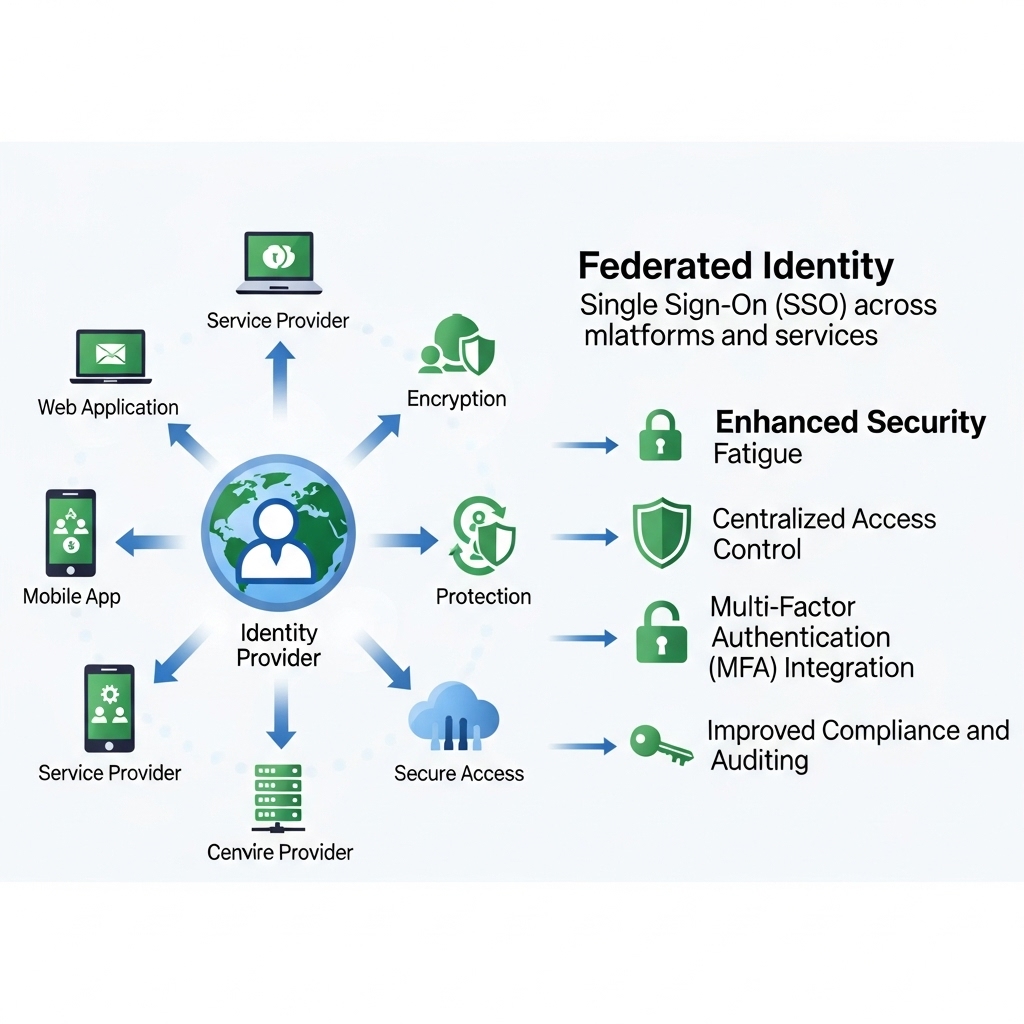
Federated identity is a system that enables users to access multiple applications or services with a single set of login credentials. This approach allows individuals to use their existing identities, such as those from their organization or social media platforms, to authenticate and authorize access to various resources. The primary goal of federated identity is to simplify the login process, reduce password fatigue, and enhance security by minimizing the number of credentials that need to be managed.
Understanding the Basics of Federated Identity
In a federated identity system, there are typically three main entities involved: the user, the identity provider (IdP), and the service provider (SP). The IdP is responsible for managing and verifying the user's identity, while the SP is the application or service that the user wants to access. When a user attempts to access an SP, they are redirected to the IdP to authenticate. If the authentication is successful, the IdP issues an authentication token that the user can use to access the SP.
For example, a university student may use their university-issued credentials to access not only the university's internal resources but also external services such as online libraries or educational platforms. The university acts as the IdP, and the external services are the SPs.
Benefits of Federated Identity
Federated identity offers several benefits, including improved user experience, increased security, and reduced administrative burdens. By enabling users to access multiple applications with a single set of credentials, federated identity simplifies the login process and reduces the likelihood of password-related issues. Additionally, federated identity can help organizations comply with regulatory requirements and industry standards for identity and access management.
Another significant advantage of federated identity is that it allows organizations to outsource identity management to trusted providers, such as social media platforms or specialized identity management companies. This approach can reduce the costs and complexities associated with managing identities and passwords.
How Federated Identity Enhances Security
Federated identity enhances security in several ways. Firstly, it reduces the risk of password-related breaches by minimizing the number of credentials that need to be managed. When users have fewer passwords to remember, they are less likely to use weak or easily guessable passwords. Secondly, federated identity enables organizations to implement stronger authentication mechanisms, such as multi-factor authentication, to protect user identities.
Furthermore, federated identity allows organizations to enforce consistent access control policies across multiple applications and services. This ensures that users only have access to the resources they need to perform their jobs or access the services they require. For example, a company may use federated identity to grant employees access to specific cloud-based applications based on their job roles or responsibilities.
Common Use Cases for Federated Identity
Federated identity has a wide range of applications across various industries. Some common use cases include single sign-on (SSO) for employees, partners, or customers; cloud-based services, such as software-as-a-service (SaaS) applications; and social media platforms. Federated identity is also used in the education sector to enable students and staff to access online resources and services.
For instance, a company may use federated identity to provide its employees with SSO access to cloud-based productivity tools, such as Google Workspace or Microsoft 365. This allows employees to use their corporate credentials to access these services, eliminating the need for separate usernames and passwords.
Implementing Federated Identity
Implementing federated identity requires careful planning and execution. Organizations need to assess their identity management requirements, choose a suitable identity provider, and integrate their applications and services with the federated identity system. This may involve deploying new infrastructure, such as identity management software or authentication servers.
Additionally, organizations must ensure that their federated identity system is scalable, secure, and compliant with relevant regulatory requirements. This may involve implementing additional security measures, such as encryption and access controls, to protect user identities and sensitive data.
Conclusion
In conclusion, federated identity is a powerful approach to identity and access management that offers numerous benefits, including improved user experience, increased security, and reduced administrative burdens. By enabling users to access multiple applications with a single set of credentials, federated identity simplifies the login process and reduces the likelihood of password-related issues. As organizations continue to adopt cloud-based services and mobile technologies, federated identity will play an increasingly important role in protecting user identities and ensuring secure access to sensitive resources.
By understanding the basics of federated identity, its benefits, and its common use cases, organizations can make informed decisions about implementing federated identity systems to enhance security and improve user experience. Whether it's for employees, customers, or partners, federated identity has the potential to transform the way we manage identities and access sensitive resources.