
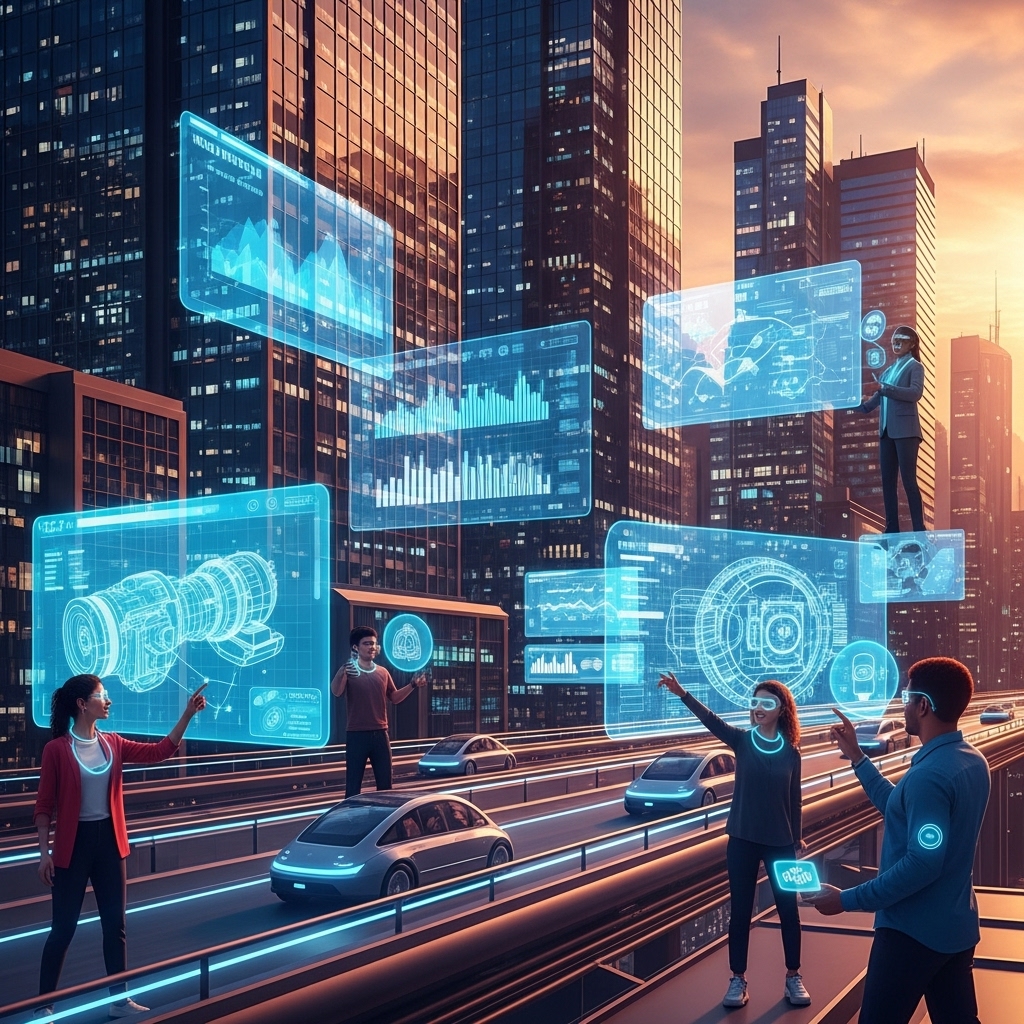
Introduction to Multimodal AI Integration
The rapid advancement of artificial intelligence (AI) has led to the development of various modalities, including visual, auditory, and textual interactions. Multimodal AI integration refers to the combination of these modalities to create more intuitive and human-like interfaces. This technology has the potential to revolutionize the way we interact with machines, enabling more natural and efficient communication. As we delve into the future of multimodal AI integration, it is essential to explore the current state of this technology, its applications, and the potential challenges that lie ahead.
Current State of Multimodal AI Integration
Currently, multimodal AI integration is being applied in various domains, including virtual assistants, smart homes, and healthcare. For instance, virtual assistants like Amazon's Alexa and Google Assistant use multimodal interactions to understand voice commands and provide visual responses. Smart home devices, such as thermostats and security systems, can be controlled using voice commands, gestures, or mobile apps. In healthcare, multimodal AI integration is being used to develop more accurate diagnostic tools, such as computer vision-based systems for disease detection. These examples demonstrate the potential of multimodal AI integration to improve human-machine interaction and enhance overall user experience.
Applications of Multimodal AI Integration
The applications of multimodal AI integration are vast and diverse. One significant area is education, where multimodal AI can be used to create personalized learning experiences. For example, an AI-powered tutoring system can use speech recognition, facial analysis, and gesture tracking to understand a student's learning style and provide tailored feedback. Another area is customer service, where multimodal AI-powered chatbots can use natural language processing, sentiment analysis, and emotional intelligence to provide more empathetic and effective support. Additionally, multimodal AI integration can be used in autonomous vehicles, smart cities, and environmental monitoring, enabling more efficient and sustainable systems.
Challenges and Limitations of Multimodal AI Integration
Despite the potential benefits of multimodal AI integration, there are several challenges and limitations that need to be addressed. One significant challenge is the complexity of integrating multiple modalities, which requires significant advances in areas like signal processing, machine learning, and human-computer interaction. Another challenge is ensuring the privacy and security of user data, particularly in applications where sensitive information is involved. Furthermore, multimodal AI integration requires large amounts of labeled data, which can be time-consuming and expensive to collect. Addressing these challenges will be crucial to the successful development and deployment of multimodal AI integration.
Future Directions of Multimodal AI Integration
As multimodal AI integration continues to evolve, we can expect to see significant advancements in areas like edge AI, explainable AI, and human-AI collaboration. Edge AI will enable more efficient and real-time processing of multimodal data, reducing latency and improving overall performance. Explainable AI will provide more transparency and accountability in multimodal AI decision-making, enabling users to understand how machines arrive at their conclusions. Human-AI collaboration will enable more seamless and natural interaction between humans and machines, leading to more productive and creative outcomes. These future directions will be critical to the development of more sophisticated and effective multimodal AI integration.
Real-World Examples of Multimodal AI Integration
Several companies and organizations are already exploring the potential of multimodal AI integration. For example, Microsoft's Azure Kinect uses multimodal AI to enable more natural and intuitive human-computer interaction. The system combines speech recognition, gesture tracking, and facial analysis to understand user intent and provide more personalized responses. Another example is the NASA's Valkyrie robot, which uses multimodal AI to enable more efficient and effective human-robot collaboration. The robot combines computer vision, speech recognition, and gesture tracking to understand user commands and provide more accurate feedback. These examples demonstrate the potential of multimodal AI integration to transform various industries and applications.
Conclusion
In conclusion, the future of multimodal AI integration holds significant promise for transforming the way we interact with machines. As this technology continues to evolve, we can expect to see more sophisticated and effective applications in areas like education, customer service, and healthcare. However, addressing the challenges and limitations of multimodal AI integration will be crucial to its successful development and deployment. By exploring the current state, applications, and future directions of multimodal AI integration, we can better understand the potential of this technology to revolutionize human-machine interaction and improve overall user experience. As we move forward, it is essential to prioritize transparency, accountability, and human-centered design to ensure that multimodal AI integration benefits society as a whole.