
Introduction to Choosing the Right Legal Structure for Your Startup
When starting a new business, one of the most critical decisions you will make is choosing the right legal structure. This decision can have significant implications for your company's future, affecting everything from taxation and liability to ownership and control. With so many options available, it can be overwhelming to determine which legal structure is best for your startup. In this article, we will explore the different types of legal structures, their advantages and disadvantages, and provide guidance on how to choose the right one for your business.
Understanding the Different Types of Legal Structures
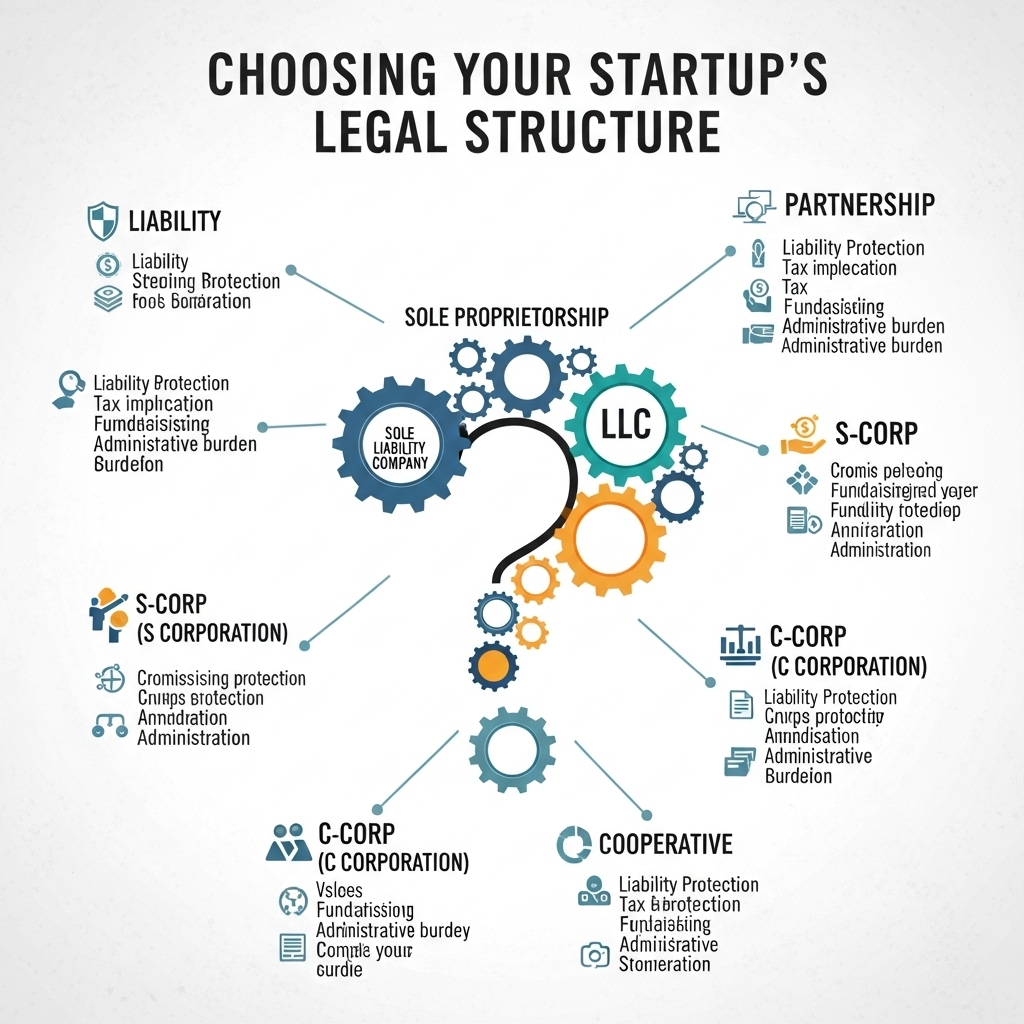
There are several types of legal structures to choose from, each with its own unique characteristics. The most common types of legal structures include sole proprietorships, partnerships, limited liability companies (LLCs), corporations, and non-profit organizations. A sole proprietorship is a business owned and operated by one individual, with unlimited personal liability. Partnerships, on the other hand, are businesses owned and operated by two or more individuals, with shared liability. LLCs and corporations offer limited liability protection, separating the business from the owners' personal assets. Non-profit organizations are formed for charitable or social purposes, with tax-exempt status.
Sole Proprietorships: The Simplest Legal Structure
A sole proprietorship is the simplest and most common type of legal structure. It is easy to establish and requires minimal paperwork. As a sole proprietor, you have complete control over the business and are entitled to all the profits. However, you also have unlimited personal liability, which means your personal assets are at risk in case the business incurs debts or liabilities. For example, if you are a freelance writer or consultant, a sole proprietorship may be a suitable legal structure. However, if you are starting a business with high liability risks, such as a construction company, a sole proprietorship may not be the best choice.
Partnerships: Sharing Ownership and Liability
A partnership is a legal structure that allows two or more individuals to share ownership and liability. There are different types of partnerships, including general partnerships, limited partnerships, and limited liability partnerships (LLPs). In a general partnership, all partners have equal control and liability, while in a limited partnership, some partners have limited liability. LLPs offer limited liability protection for all partners. Partnerships can be beneficial for businesses that require multiple owners with different skill sets and expertise. For instance, a law firm or medical practice may be formed as a partnership, allowing multiple professionals to share ownership and liability.
Limited Liability Companies (LLCs): A Popular Choice for Startups
LLCs have become a popular choice for startups due to their flexibility and limited liability protection. An LLC is a hybrid entity that combines the benefits of a corporation and a partnership. LLCs offer pass-through taxation, meaning the business income is only taxed at the individual level, not at the business level. Additionally, LLCs provide limited liability protection, shielding the owners' personal assets from business debts and liabilities. For example, a tech startup with multiple founders may choose to form an LLC, allowing them to share ownership and liability while protecting their personal assets.
Corporations: The Most Complex Legal Structure
A corporation is a separate legal entity from its owners, with its own rights and liabilities. Corporations offer limited liability protection and can issue stock to raise capital. However, corporations are subject to double taxation, meaning the business income is taxed at the corporate level, and then again at the individual level when dividends are distributed. Corporations are also subject to strict regulatory requirements and formalities, such as holding annual meetings and maintaining a board of directors. For instance, a large business with multiple shareholders may choose to form a corporation, allowing them to raise capital and provide limited liability protection to their shareholders.
Conclusion: Choosing the Right Legal Structure for Your Startup
In conclusion, choosing the right legal structure for your startup is a critical decision that can have significant implications for your business. It is essential to consider factors such as liability, taxation, ownership, and control when selecting a legal structure. By understanding the different types of legal structures, including sole proprietorships, partnerships, LLCs, corporations, and non-profit organizations, you can make an informed decision that suits your business needs. It is also recommended to consult with an attorney or accountant to ensure you choose the right legal structure for your startup and comply with all regulatory requirements.