
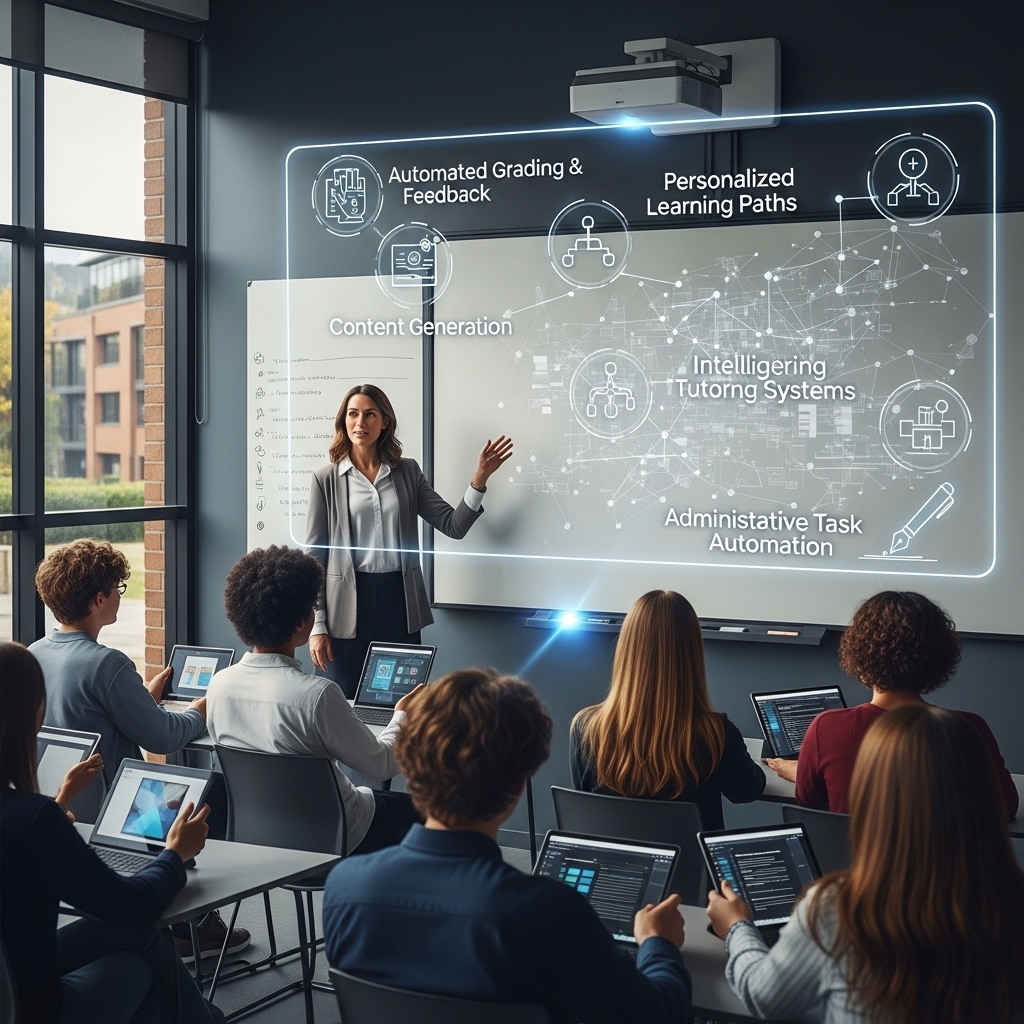
Introduction to AI in Teaching Automation
The integration of Artificial Intelligence (AI) in educational settings has been a topic of significant interest and debate in recent years. As technology continues to advance, the potential for AI to automate various aspects of the teaching process has become increasingly evident. From grading assignments to creating personalized learning plans, AI can play a crucial role in enhancing the efficiency and effectiveness of teaching. This article will explore the role of AI in automating teaching processes, highlighting its benefits, challenges, and future prospects.
Automating Administrative Tasks
One of the primary ways AI contributes to teaching automation is by handling administrative tasks. These tasks, such as record-keeping, attendance tracking, and grading, are essential but time-consuming, taking away from the time teachers can spend on actual teaching and student interaction. AI systems can automate these tasks with high accuracy and speed, freeing up teachers to focus on more critical aspects of education. For example, AI-powered tools can automatically grade multiple-choice tests and assignments, providing immediate feedback to students. This not only saves time but also ensures consistency in grading, reducing the potential for human bias.
Personalized Learning Experiences
AI can also be used to create personalized learning experiences for students. By analyzing data on student performance, learning habits, and preferences, AI systems can tailor educational content and activities to meet the unique needs of each student. This personalized approach can lead to better learning outcomes, as students are more likely to engage with material that is relevant and challenging for them. For instance, AI-driven adaptive learning systems can adjust the difficulty level of course materials based on a student's performance, ensuring that they are consistently challenged but not overwhelmed. This level of personalization would be nearly impossible for human teachers to achieve without the aid of technology, given the large class sizes and diverse student bodies common in many educational institutions.
Intelligent Tutoring Systems
Another significant role of AI in teaching automation is through the development of intelligent tutoring systems (ITS). These systems use AI to provide one-on-one support to students, offering real-time feedback and guidance as they work through educational materials. ITS can simulate human-like conversations, using natural language processing to understand student queries and respond appropriately. This can be particularly beneficial for students who require extra support or prefer to learn at their own pace. For example, an ITS can help a student struggling with math problems by walking them through step-by-step solutions and providing additional practice exercises tailored to their areas of weakness.
Content Creation and Curation
AI is also being used in the creation and curation of educational content. AI algorithms can analyze vast amounts of data to identify the most effective learning materials and strategies, helping educators to develop more impactful curricula. Additionally, AI can assist in the creation of educational content itself, such as generating practice problems, quizzes, and even entire lessons. This can save educators a significant amount of time and ensure that the content is both relevant and engaging for students. For instance, AI-powered tools can create customized textbooks and study guides based on the specific needs and goals of a class, incorporating real-world examples and case studies to make learning more relatable and interesting.
Challenges and Limitations
While AI holds tremendous potential for automating teaching processes, there are also challenges and limitations to its adoption. One of the main concerns is the lack of human touch and empathy that AI systems currently cannot replicate. Teaching is not just about conveying information; it's also about providing support, encouragement, and understanding, which are essential for student motivation and well-being. Furthermore, the development and implementation of AI in education require significant investment in technology and training, which can be a barrier for many educational institutions, especially those in underfunded or underserved areas. There are also ethical considerations, such as ensuring that AI systems do not perpetuate biases present in the data they are trained on, which could lead to unfair treatment of certain student groups.
Future Prospects and Conclusion
In conclusion, AI is poised to play a transformative role in automating teaching processes, from administrative tasks and personalized learning to content creation and intelligent tutoring. While there are challenges to overcome, the potential benefits of AI in education are substantial, including enhanced efficiency, personalized learning experiences, and improved learning outcomes. As technology continues to evolve, we can expect to see more sophisticated AI applications in educational settings, addressing current limitations and opening up new possibilities for teaching and learning. The key to successfully integrating AI into education will be to strike a balance between technology and human interaction, ensuring that AI enhances the teaching process without replacing the invaluable role of teachers in providing guidance, support, and inspiration to their students.