
Introduction to Ancient City States
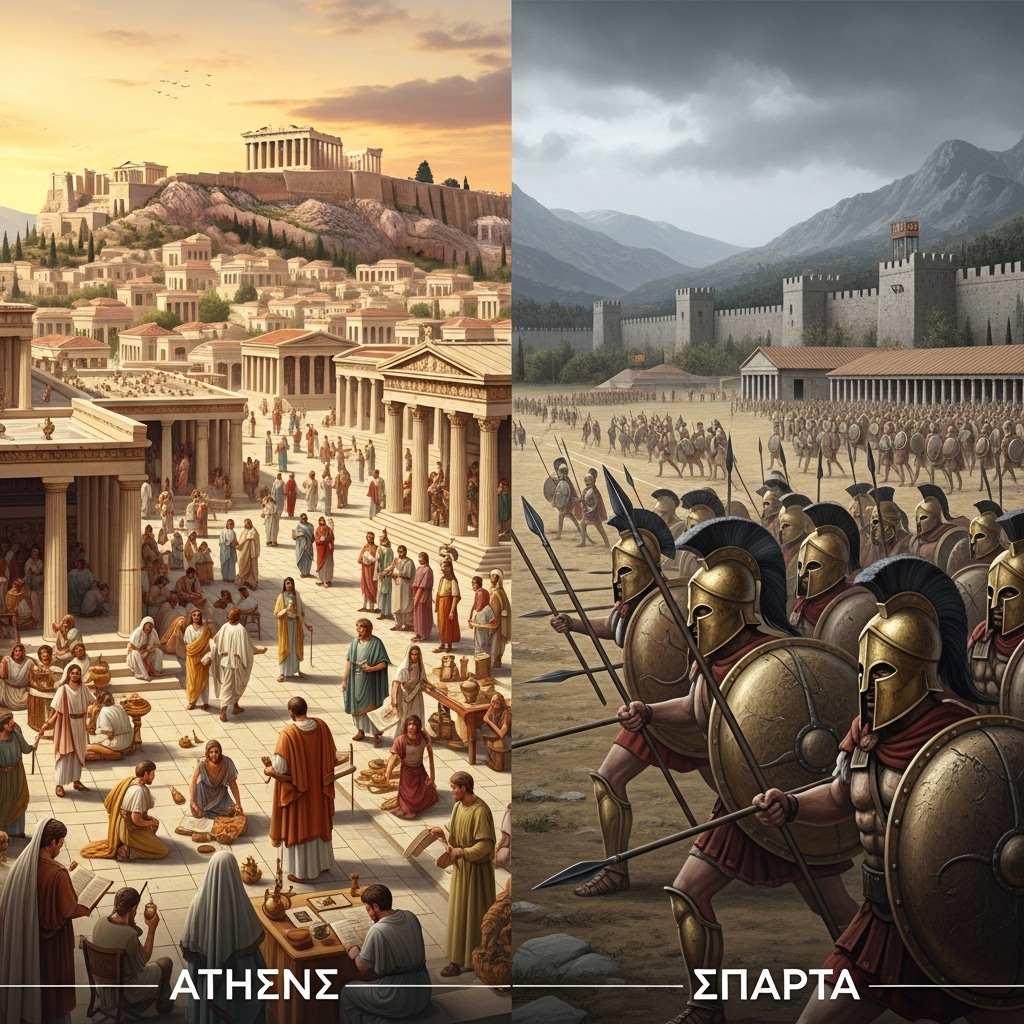
Ancient Greece was a collection of city-states, each with its unique culture, politics, and way of life. Among these city-states, Athens and Sparta stand out as two of the most prominent and influential. While both cities were major powers in ancient Greece, they had distinct differences in their governance, social structures, economies, and values. This article will delve into the distinguishing characteristics of ancient Athens and Sparta, exploring their histories, political systems, societal norms, and contributions to the ancient Greek world.
Government and Politics
The most notable difference between Athens and Sparta lies in their systems of government. Athens was a democracy, where power was held by the people either directly or through elected representatives. This form of governance allowed for a significant amount of freedom and encouraged participation in political life. In contrast, Sparta was an oligarchy, ruled by a small group of powerful individuals. The Spartan system was more authoritarian, with a strong emphasis on military discipline and obedience. For example, the Spartan Council of Elders, known as the Gerousia, held considerable power, and decisions were often made without input from the general populace.
Social Structure and Economy
The social structures of Athens and Sparta also exhibited significant differences. Athens had a more complex social hierarchy, with a large middle class of merchants, artisans, and farmers. This diversity contributed to Athens' vibrant cultural and economic life, including its famous theater and philosophical traditions. Sparta, on the other hand, was divided into three main groups: the Spartans (full citizens), the Mothakes (non-citizen free men), and the Helots (serfs). The Spartan economy was primarily based on agriculture and was supported by the labor of the Helots, who were bound to the land. This rigid social structure and the emphasis on military training from a young age gave Sparta its unique and formidable warrior culture.
Education and Military Training
Education and military training in Athens and Sparta reflected their societal values. In Athens, education was valued for its ability to cultivate well-rounded individuals, with an emphasis on philosophy, arts, and sciences. The Athenian system encouraged critical thinking and intellectual curiosity, producing some of the most influential figures in Western philosophy, such as Socrates, Plato, and Aristotle. In contrast, Sparta's education system, known as the agoge, was entirely focused on military training and discipline. From a young age, Spartan males were enrolled in the agoge, which taught them survival skills, combat, and the importance of loyalty and duty to the state. This rigorous training made the Spartans renowned for their bravery and martial prowess.
Cultural Achievements and Legacy
The cultural achievements of Athens and Sparta also highlight their differences. Athens is famous for its contributions to theater, with playwrights like Sophocles and Euripides, and to philosophy, as mentioned earlier. The city's architectural achievements, such as the Parthenon, are iconic symbols of ancient Greek culture. Sparta, while not as prolific in these areas, had a significant impact on the development of Western military tactics and the concept of a professional army. The Battle of Thermopylae, where a small force of Spartans fought against the vast army of the Persian Empire, is legendary for its display of courage and strategic warfare.
Conclusion
In conclusion, ancient Athens and Sparta were two city-states that, despite their shared Greek heritage, developed distinct cultures, political systems, and values. Athens, with its democratic governance, emphasis on education and the arts, and diverse economy, represents the pinnacle of ancient Greek civilization's cultural and intellectual achievements. Sparta, with its rigid oligarchic system, strong military tradition, and disciplined society, exemplifies the importance of martial valor and loyalty in ancient Greek culture. Understanding these differences provides insight into the complexity and richness of ancient Greek society, highlighting the diversity and innovation that characterized the city-state era.