
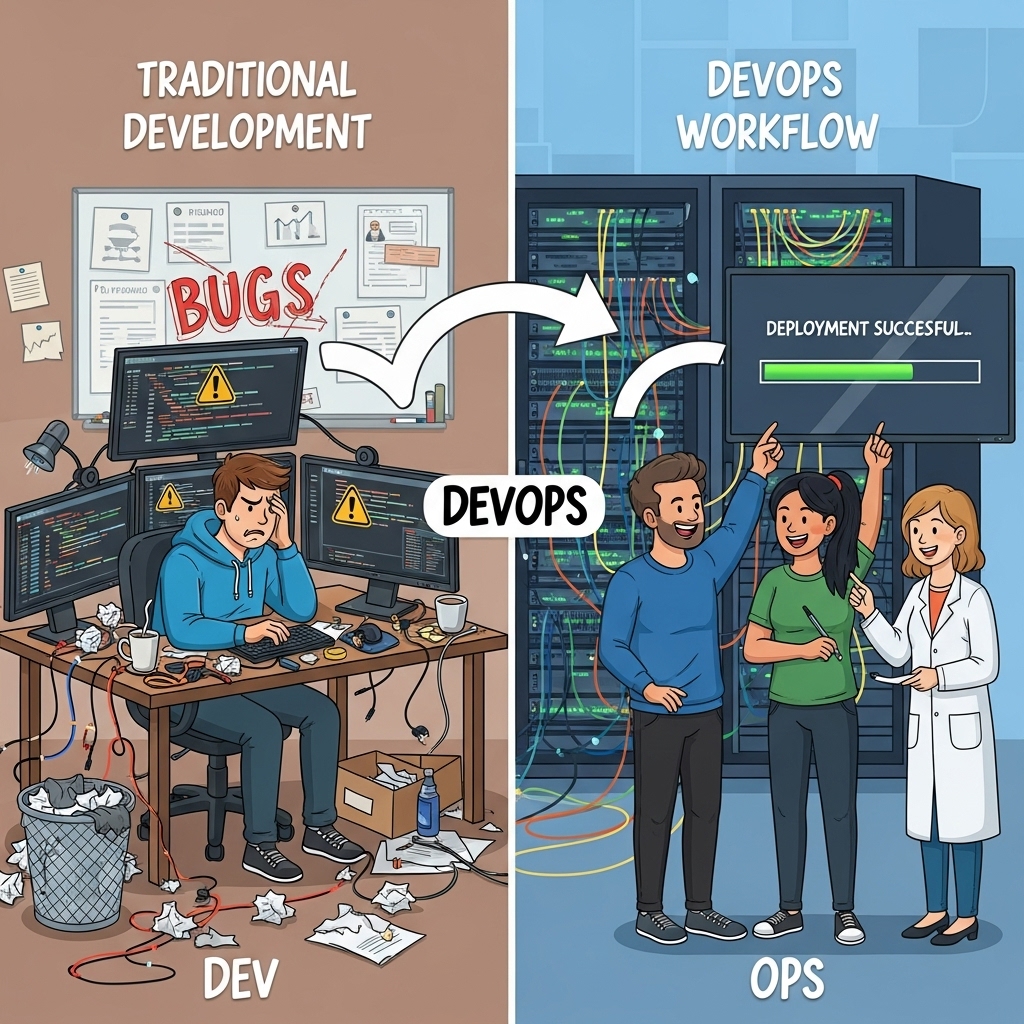
Introduction to DevOps
DevOps is a set of practices that combines software development (Dev) and IT operations (Ops) to improve the speed, quality, and reliability of software releases and deployments. It aims to bridge the gap between these two traditionally separate teams and create a culture of collaboration, automation, and continuous improvement. By adopting DevOps, organizations can reduce the time and effort required to develop, test, and deploy software, resulting in faster time-to-market, improved customer satisfaction, and increased competitiveness.
Understanding the DevOps Philosophy
The DevOps philosophy is centered around several key principles, including collaboration, automation, continuous integration and delivery, and continuous monitoring and feedback. It emphasizes the importance of breaking down silos and fostering a culture of communication and cooperation between development, operations, and quality assurance teams. By working together, these teams can identify and address issues earlier in the development cycle, reducing the likelihood of errors and downtime. For example, a DevOps team might use agile development methodologies, such as Scrum or Kanban, to facilitate collaboration and iterative development.
Benefits of DevOps
The benefits of DevOps are numerous and well-documented. Some of the most significant advantages include improved deployment frequency, reduced lead time, and increased quality and reliability. By automating testing, deployment, and monitoring, DevOps teams can reduce the risk of human error and ensure that software is deployed consistently and reliably. Additionally, DevOps enables organizations to respond more quickly to changing market conditions and customer needs, allowing them to stay ahead of the competition. For instance, a company like Amazon, which releases code changes every 11.6 seconds on average, is a great example of how DevOps can enable rapid deployment and innovation.
Key DevOps Practices
Several key practices are essential to a successful DevOps implementation. These include continuous integration, continuous delivery, continuous monitoring, and continuous feedback. Continuous integration involves integrating code changes into a central repository frequently, usually through automated builds and testing. Continuous delivery takes this a step further, automating the deployment of code changes to production. Continuous monitoring and feedback involve tracking the performance and health of applications in real-time, using data and analytics to identify areas for improvement. Tools like Jenkins, Docker, and Kubernetes are popular choices for implementing these practices.
DevOps Tools and Technologies
A wide range of tools and technologies are available to support DevOps practices. These include version control systems like Git, automation tools like Ansible and Puppet, and monitoring and logging tools like Splunk and ELK. Containerization tools like Docker and Kubernetes are also essential for deploying and managing applications in a scalable and efficient manner. Additionally, agile project management tools like Jira and Trello can help teams plan, track, and collaborate on software development projects. By leveraging these tools and technologies, organizations can streamline their DevOps workflows and improve overall efficiency.
Challenges and Limitations of DevOps
While DevOps offers many benefits, it also presents several challenges and limitations. One of the biggest hurdles is cultural, as DevOps requires a significant shift in mindset and behavior from traditional development and operations teams. Additionally, implementing DevOps practices and tools can be complex and time-consuming, requiring significant investment in training and resources. Security and compliance are also major concerns, as DevOps teams must ensure that automated deployments and continuous monitoring do not introduce new vulnerabilities or risks. Furthermore, measuring the success of DevOps initiatives can be difficult, as traditional metrics like deployment frequency and lead time may not capture the full range of benefits.
Conclusion
In conclusion, DevOps is a powerful approach to software development that can help organizations improve efficiency, quality, and reliability. By adopting DevOps practices and tools, teams can break down silos, automate manual processes, and respond more quickly to changing market conditions. While challenges and limitations exist, the benefits of DevOps far outweigh the costs, and organizations that invest in DevOps are likely to see significant improvements in deployment frequency, lead time, and customer satisfaction. As the software development landscape continues to evolve, DevOps is likely to play an increasingly important role in enabling organizations to innovate, compete, and succeed.