
Introduction to Jury and Judge Trials
The legal system in many countries, including the United States, offers two primary methods for trying cases: jury trials and judge trials. While both types of trials aim to deliver justice, they differ significantly in terms of their composition, procedure, and outcomes. Understanding the differences between jury and judge trials is essential for individuals involved in legal proceedings, as well as for those interested in the administration of justice. In this article, we will delve into the distinctions between these two types of trials, exploring their characteristics, advantages, and disadvantages.
Definition and Composition
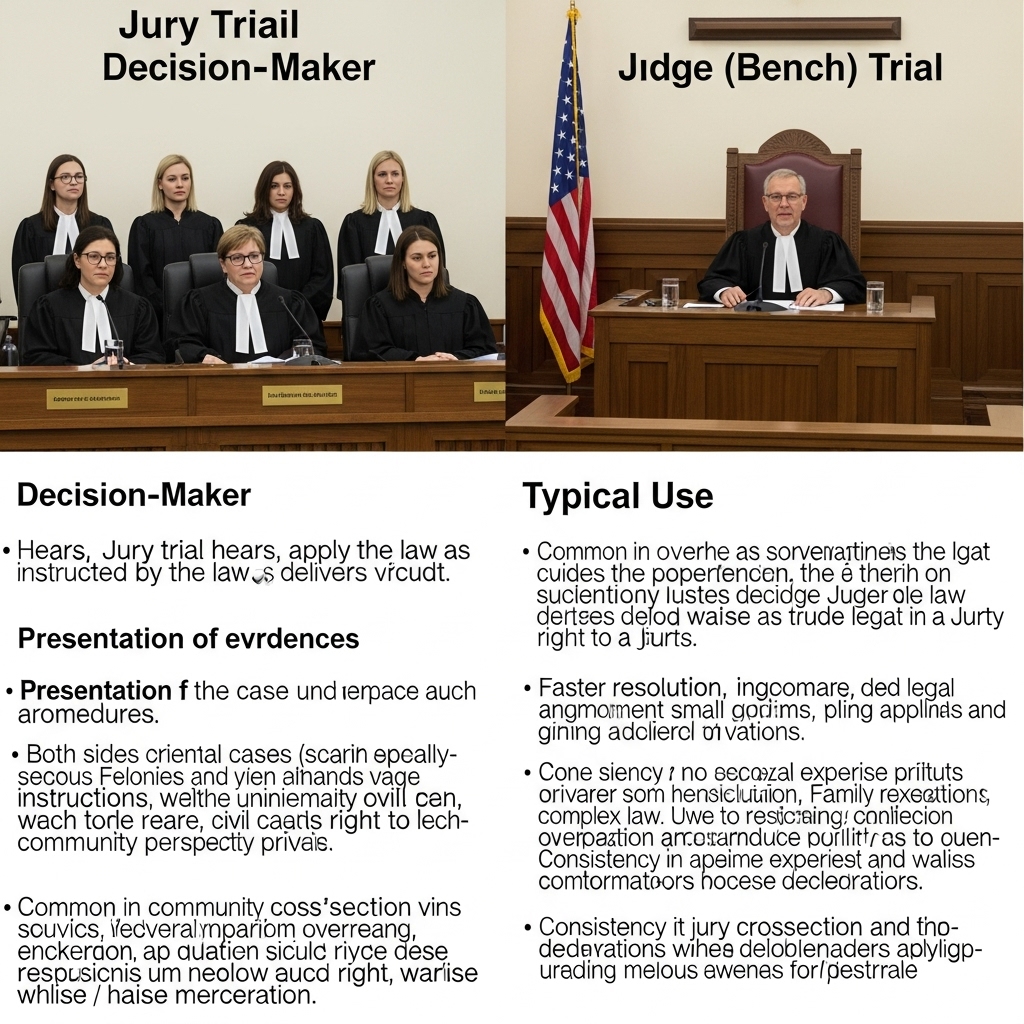
A jury trial involves a group of citizens, typically 6 or 12, who are selected to hear evidence and decide the outcome of a case. The jury is responsible for weighing the evidence presented, considering the arguments made by both the prosecution and the defense, and reaching a verdict based on the law as instructed by the judge. In contrast, a judge trial, also known as a bench trial, is presided over by a single judge who hears the evidence, applies the law, and renders a verdict. The judge's decision is usually based on their interpretation of the evidence and the applicable laws.
Jury Selection Process
The jury selection process, known as voir dire, is a critical component of jury trials. During this process, potential jurors are questioned by the judge and attorneys to determine their suitability to serve on the jury. The goal is to select a fair and impartial jury that can consider the evidence objectively. In contrast, judge trials do not require jury selection, as the judge is the sole decision-maker. For example, in a high-profile case, the jury selection process may be more rigorous to ensure that the jurors are not influenced by pre-trial publicity.
Advantages of Jury Trials
Jury trials have several advantages. Firstly, they provide an opportunity for citizens to participate in the administration of justice, which is a fundamental principle of democracy. Secondly, juries can bring a diverse range of perspectives and experiences to the decision-making process, which can lead to more nuanced and informed verdicts. Finally, jury trials can serve as a check on the power of judges and prosecutors, ensuring that the legal system remains accountable to the people. For instance, in a case where the prosecution's evidence is weak, a jury may be more likely to acquit the defendant than a judge.
Disadvantages of Jury Trials
Despite their advantages, jury trials also have some disadvantages. One of the primary concerns is that juries may not always understand the complex legal issues involved in a case, which can lead to inconsistent or unjust verdicts. Additionally, jury trials can be time-consuming and expensive, as the selection process and trial itself can take several days or even weeks. Furthermore, juries may be influenced by emotional appeals or biases, which can impact their decision-making. For example, in a case involving a sympathetic victim, the jury may be more likely to convict the defendant, even if the evidence is not conclusive.
Advantages and Disadvantages of Judge Trials
Judge trials, on the other hand, have their own set of advantages and disadvantages. One of the primary benefits is that judges are trained legal professionals who can quickly and efficiently hear evidence and apply the law. This can result in faster and more cost-effective trials. Additionally, judges are less likely to be swayed by emotional appeals or biases, as they are bound by the law and legal precedent. However, judge trials can also be criticized for lacking the democratic participation and community involvement that jury trials provide. Moreover, judges may have their own biases or prejudices, which can influence their decisions. For instance, in a case involving a controversial issue, a judge may be more likely to rule in favor of one party based on their personal beliefs.
Conclusion
In conclusion, the difference between jury and judge trials is significant, with each type of trial having its own strengths and weaknesses. While jury trials provide an opportunity for citizen participation and diverse perspectives, they can also be time-consuming and influenced by biases. Judge trials, on the other hand, offer efficiency and expertise, but may lack democratic participation and be subject to judicial biases. Ultimately, the choice between a jury trial and a judge trial depends on the specific circumstances of the case, as well as the preferences of the parties involved. By understanding the differences between these two types of trials, individuals can make informed decisions about their legal representation and navigate the complexities of the legal system.