
Introduction to System Architecture
When designing a software system, one of the most critical decisions is the choice of system architecture. System architecture refers to the overall structure and organization of a software system, including the relationships between different components and how they interact with each other. There are several types of system architectures, but two of the most popular ones are monolithic and microservices architecture. In this article, we will explore the difference between monolithic and microservices system architecture, their advantages, and disadvantages, and provide examples to help illustrate the concepts.
Monolithic System Architecture
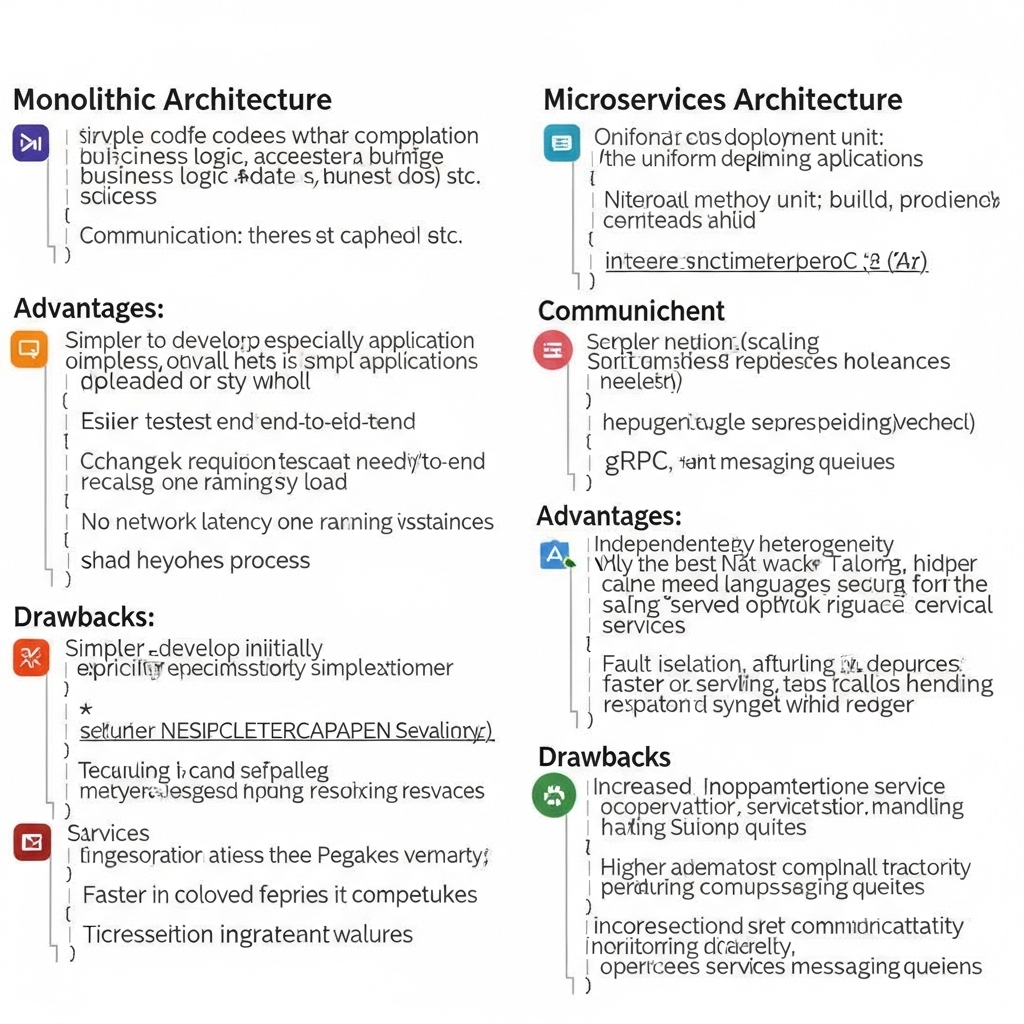
A monolithic system architecture is a traditional approach to software design where all the components of an application are built into a single, self-contained unit. This means that the entire application, including the user interface, business logic, and database, are all part of a single codebase. Monolithic architectures are often characterized by a single, large codebase that is compiled and deployed as a single unit. This approach was widely used in the past, especially for small to medium-sized applications, due to its simplicity and ease of development.
For example, a simple e-commerce website might be built using a monolithic architecture, where the entire application, including the user interface, shopping cart, and payment processing, are all part of a single codebase. This approach can work well for small applications, but it can become cumbersome and difficult to maintain as the application grows in size and complexity.
Microservices System Architecture
A microservices system architecture, on the other hand, is a more modern approach to software design where an application is broken down into a collection of small, independent services. Each service is responsible for a specific business capability and can be developed, tested, and deployed independently of other services. Microservices architectures are often characterized by a collection of small, loosely-coupled services that communicate with each other using APIs or messaging systems.
For example, a large e-commerce platform might be built using a microservices architecture, where each service is responsible for a specific capability, such as user authentication, product catalog, order processing, and payment processing. Each service can be developed and deployed independently, allowing for greater flexibility and scalability. This approach is particularly useful for large, complex applications that require multiple teams to work on different components of the system.
Key Differences Between Monolithic and Microservices Architecture
There are several key differences between monolithic and microservices architecture. One of the main differences is the level of coupling between components. In a monolithic architecture, all components are tightly coupled, meaning that changes to one component can affect other components. In a microservices architecture, components are loosely coupled, meaning that changes to one service do not affect other services.
Another key difference is the level of scalability. Monolithic architectures can become difficult to scale as the application grows in size and complexity, while microservices architectures can scale more easily by adding more instances of a particular service. Additionally, microservices architectures can be more resilient, as a failure in one service does not necessarily affect other services.
Advantages and Disadvantages of Monolithic Architecture
Monolithic architectures have several advantages, including simplicity and ease of development. They are often easier to develop and test, especially for small applications. Additionally, monolithic architectures can be more efficient, as all components are part of a single codebase and can communicate with each other directly.
However, monolithic architectures also have several disadvantages. They can become difficult to maintain and scale as the application grows in size and complexity. Additionally, monolithic architectures can be more prone to errors, as a single bug can affect the entire application.
Advantages and Disadvantages of Microservices Architecture
Microservices architectures have several advantages, including greater flexibility and scalability. They allow for greater independence between components, making it easier to develop and deploy new services. Additionally, microservices architectures can be more resilient, as a failure in one service does not necessarily affect other services.
However, microservices architectures also have several disadvantages. They can be more complex and difficult to develop, especially for large applications. Additionally, microservices architectures require greater communication and coordination between services, which can add complexity and overhead.
Conclusion
In conclusion, the choice between monolithic and microservices system architecture depends on the specific needs and requirements of the application. Monolithic architectures can be suitable for small to medium-sized applications, while microservices architectures are often more suitable for large, complex applications that require greater flexibility and scalability. By understanding the advantages and disadvantages of each approach, developers can make informed decisions about which architecture to use for their application. Ultimately, the key to success lies in choosing the right architecture for the specific needs of the application, and being willing to adapt and evolve as the application grows and changes over time.