
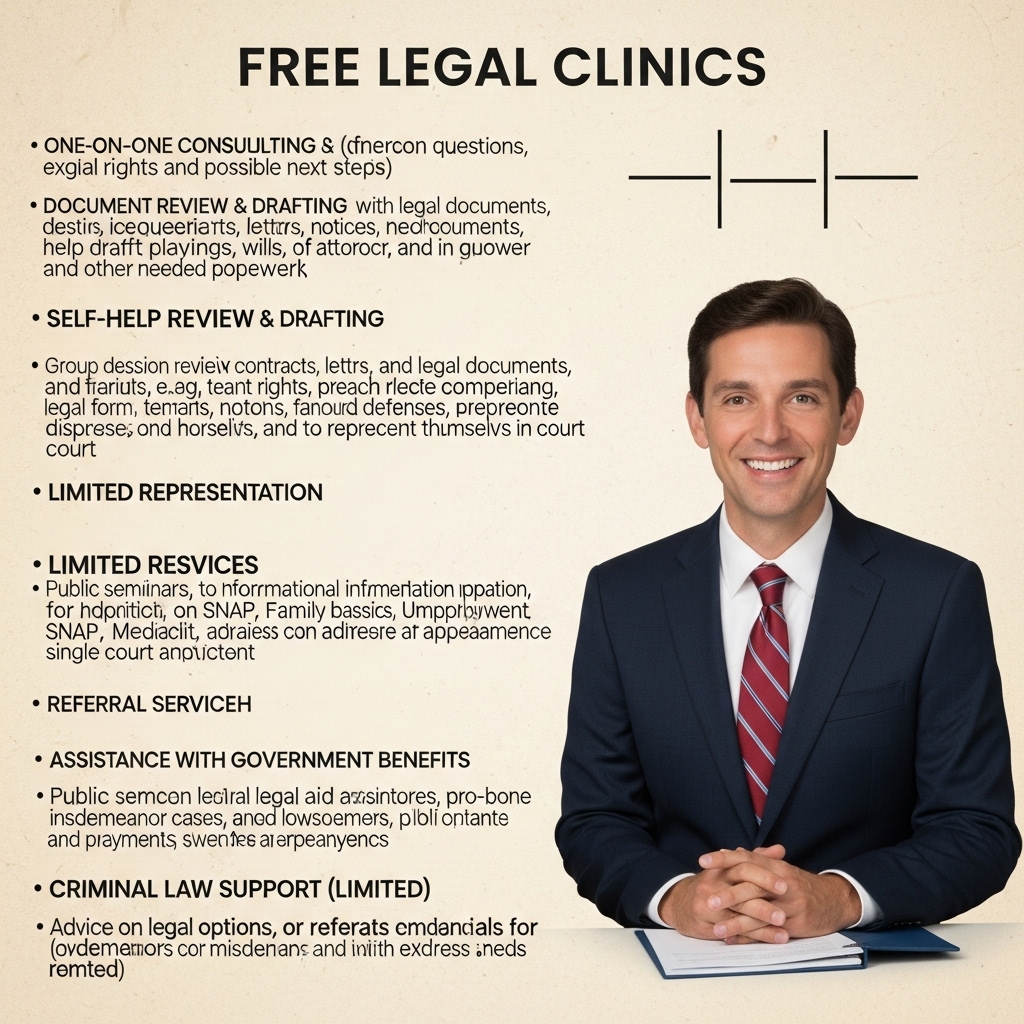
Introduction to Free Legal Clinics
Free legal clinics are organizations that provide legal services to low-income individuals who cannot afford to hire a lawyer. These clinics offer a wide range of services, from advice and counsel to representation in court. The goal of free legal clinics is to ensure that everyone has access to justice, regardless of their financial situation. In this article, we will explore the types of services that free legal clinics typically offer to low-income individuals.
Types of Services Offered
Free legal clinics offer a variety of services to low-income individuals, including advice and counsel, document preparation, and representation in court. For example, a clinic may offer advice on how to navigate the court system, help with filling out legal forms, or provide representation in a court case. Some clinics may also offer specialized services, such as assistance with immigration or bankruptcy cases. Additionally, many clinics offer workshops and educational programs to help individuals understand their legal rights and responsibilities.
Family Law Services
Many free legal clinics offer services related to family law, including divorce, child custody, and child support. For instance, a clinic may help a low-income individual navigate the divorce process, including filing paperwork and representing them in court. Clinics may also offer assistance with child custody and visitation arrangements, as well as help with obtaining or modifying child support orders. These services are critical for low-income individuals who may not have the financial resources to hire a private attorney.
Housing Law Services
Free legal clinics also often provide services related to housing law, including eviction defense and assistance with housing subsidies. For example, a clinic may help a low-income tenant who is facing eviction by representing them in court and negotiating with their landlord. Clinics may also assist with applications for housing subsidies, such as Section 8, and help individuals understand their rights as tenants. These services are essential for low-income individuals who may be at risk of homelessness or are struggling to find affordable housing.
Immigration Law Services
Some free legal clinics offer services related to immigration law, including assistance with citizenship applications, green card applications, and deportation defense. For instance, a clinic may help a low-income individual navigate the complex process of applying for citizenship, including preparing paperwork and representing them at interviews. Clinics may also assist with applications for asylum or other forms of relief from deportation. These services are critical for low-income immigrants who may not have the financial resources to hire a private attorney and may be at risk of deportation or other serious consequences.
Access to Justice
Free legal clinics play a critical role in ensuring access to justice for low-income individuals. By providing free or low-cost legal services, clinics help level the playing field and ensure that everyone has an equal opportunity to navigate the legal system. This is particularly important in cases where low-income individuals may be facing powerful opponents, such as corporations or government agencies. By providing representation and advocacy, clinics can help low-income individuals assert their rights and achieve justice.
Conclusion
In conclusion, free legal clinics offer a wide range of services to low-income individuals, including advice and counsel, document preparation, and representation in court. These services are critical for ensuring access to justice and helping low-income individuals navigate the complex legal system. By providing specialized services related to family law, housing law, and immigration law, clinics can help low-income individuals address specific legal needs and achieve positive outcomes. As the need for free legal services continues to grow, it is essential that we support and expand these critical organizations to ensure that everyone has access to justice, regardless of their financial situation.