
Introduction to Contrast Testing
Contrast testing is a crucial aspect of digital marketing and product development, allowing businesses to make data-driven decisions and optimize their online presence. Two popular methods of contrast testing are A/B testing and multivariate testing. While both techniques aim to improve the performance of a website, application, or marketing campaign, they differ significantly in their approach, application, and benefits. In this article, we will delve into the differences between A/B testing and multivariate testing, exploring their definitions, methodologies, and use cases.
What is A/B Testing?
A/B testing, also known as split testing, is a method of comparing two versions of a digital product, webpage, or marketing material to determine which one performs better. The "A" version is typically the original or control version, while the "B" version is the modified or variant version. The goal of A/B testing is to identify which version generates more conversions, such as clicks, sales, or sign-ups. This is achieved by randomly dividing the audience into two groups, with each group exposed to one of the versions. The results are then analyzed to determine which version is more effective.
For example, an e-commerce website might conduct an A/B test to compare the effectiveness of two different calls-to-action (CTAs) on their product page. The original version (A) features a "Buy Now" button, while the variant version (B) features a "Learn More" button. The test reveals that the "Learn More" button results in a 10% higher conversion rate, indicating that customers are more likely to engage with the product when given the opportunity to learn more about it.
What is Multivariate Testing?
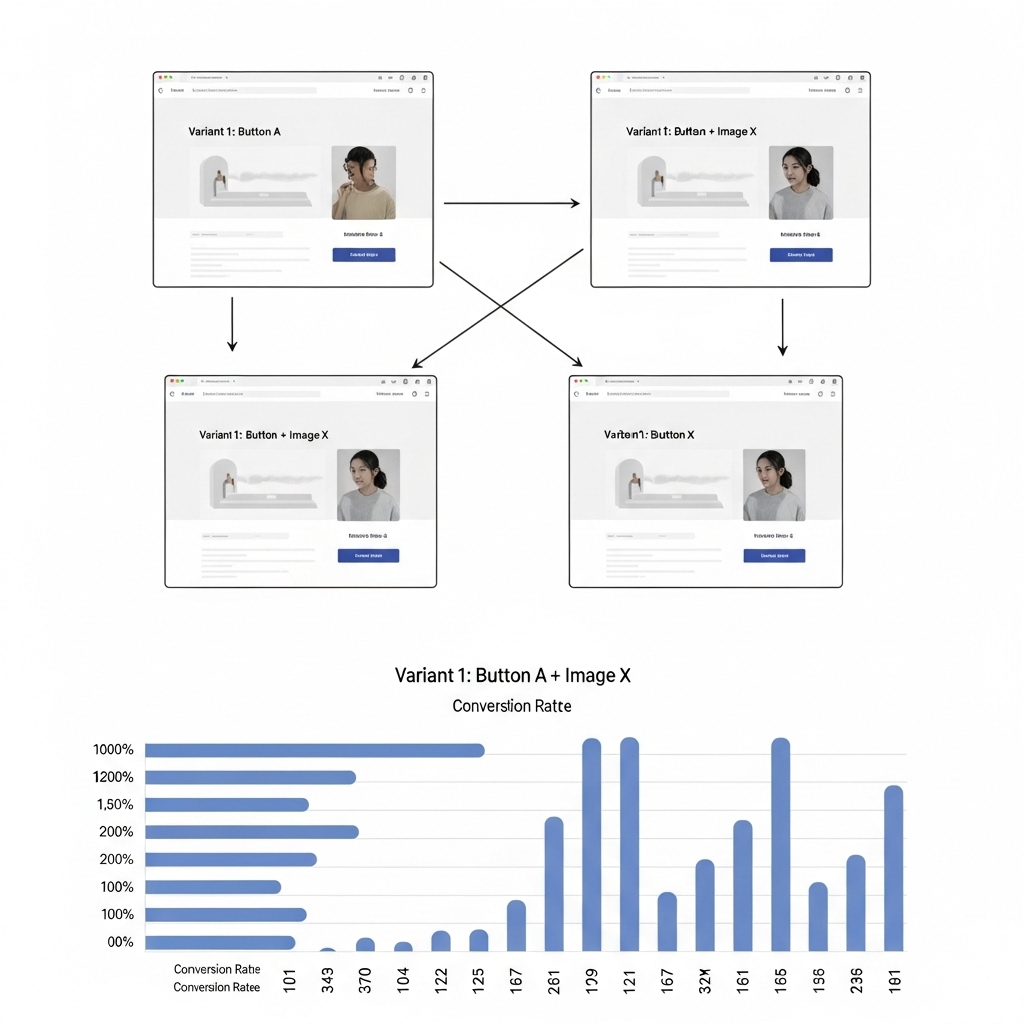
Multivariate testing is an extension of A/B testing, where multiple elements are tested simultaneously to determine which combination of variations performs best. This approach allows for the analysis of interactions between different variables and their impact on the overall performance of a webpage or application. Multivariate testing involves creating multiple versions of a webpage or application, each with a unique combination of variations, and then testing them against each other to identify the optimal combination.
A classic example of multivariate testing is a website that wants to optimize its homepage. The test might involve varying the following elements: headline, image, CTA button color, and background color. The multivariate test would create multiple versions of the homepage, each with a different combination of these elements, and then test them against each other to determine which combination results in the highest conversion rate.
Key Differences Between A/B Testing and Multivariate Testing
The primary difference between A/B testing and multivariate testing lies in the number of variables being tested. A/B testing involves testing a single variable, while multivariate testing involves testing multiple variables simultaneously. Additionally, A/B testing is typically used to answer a specific question, such as "Which CTA button color is more effective?", whereas multivariate testing is used to answer more complex questions, such as "What combination of headline, image, and CTA button color results in the highest conversion rate?"
Another significant difference between the two methods is the sample size required. A/B testing can be effective with relatively small sample sizes, whereas multivariate testing requires larger sample sizes to ensure accurate results. This is because multivariate testing involves analyzing multiple variables and their interactions, which requires more data to produce reliable conclusions.
When to Use A/B Testing and Multivariate Testing
A/B testing is suitable for situations where a specific question needs to be answered, such as comparing the effectiveness of two different CTAs or determining which version of a webpage results in a higher conversion rate. A/B testing is also useful when resources are limited, as it requires less data and can be completed quickly.
Multivariate testing, on the other hand, is ideal for situations where multiple variables need to be optimized simultaneously. This approach is particularly useful for complex webpages or applications where multiple elements interact with each other. Multivariate testing is also suitable for businesses that have a large amount of traffic and can afford to dedicate more resources to testing.
Best Practices for A/B Testing and Multivariate Testing
To get the most out of A/B testing and multivariate testing, it's essential to follow best practices. These include: defining clear goals and hypotheses, ensuring adequate sample sizes, using reliable testing tools, and avoiding biases in the testing process. Additionally, it's crucial to analyze the results carefully and make data-driven decisions based on the insights gained from the tests.
Another important consideration is to ensure that the testing process is ongoing and iterative. This involves continually testing and refining different elements of a webpage or application to optimize performance and stay ahead of the competition. By adopting a culture of continuous testing and improvement, businesses can maximize the benefits of A/B testing and multivariate testing and achieve long-term success.
Conclusion
In conclusion, A/B testing and multivariate testing are two powerful methods of contrast testing that can help businesses optimize their digital presence and improve performance. While A/B testing is suitable for simple, targeted tests, multivariate testing is ideal for complex, multi-variable tests. By understanding the differences between these two approaches and following best practices, businesses can make data-driven decisions and achieve significant improvements in their online presence.
Ultimately, the key to successful contrast testing is to adopt a mindset of continuous testing and improvement. By embracing a culture of experimentation and analysis, businesses can stay ahead of the competition and achieve long-term success in the digital landscape. Whether using A/B testing, multivariate testing, or a combination of both, the goal is to create a better user experience, drive more conversions, and maximize the potential of digital marketing efforts.