
Introduction to Software-Defined Networking
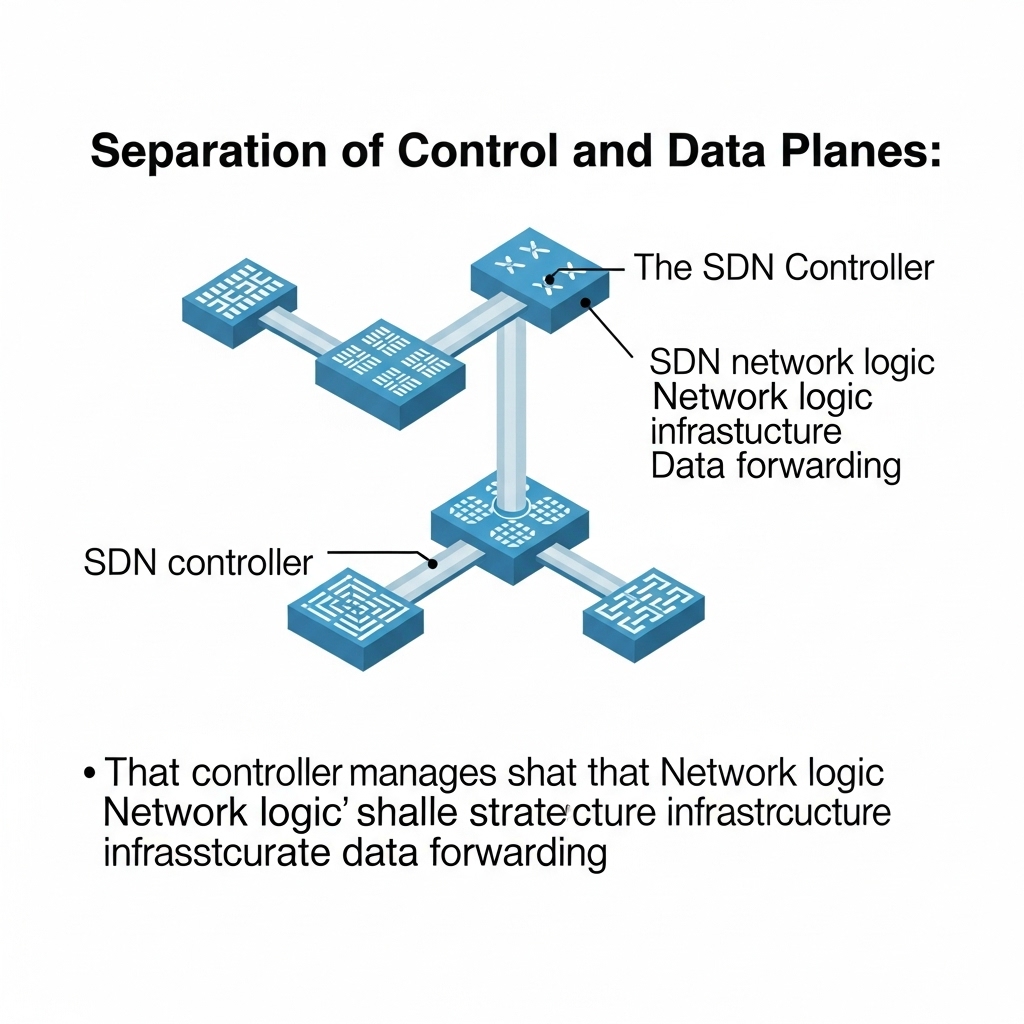
Software-Defined Networking (SDN) is a revolutionary approach to designing, building, and managing networks. It allows for the separation of the control plane from the data plane, enabling networks to be more flexible, scalable, and efficient. In traditional networking, the control and data planes are tightly coupled, making it difficult to introduce new services or modify existing ones. SDN changes this by providing a centralized view of the network, allowing administrators to manage and orchestrate network services from a single point.
This approach has gained significant attention in recent years due to its potential to transform the way networks are designed, deployed, and managed. SDN is not just a technology, but a paradigm shift in networking that enables organizations to respond quickly to changing business requirements and improve network performance.
Key Components of Software-Defined Networking
SDN consists of several key components that work together to provide a flexible and scalable network architecture. These components include the data plane, control plane, and application plane. The data plane, also known as the forwarding plane, is responsible for forwarding packets based on the decisions made by the control plane. The control plane, on the other hand, is responsible for making decisions about how packets should be forwarded.
The application plane is where network services and applications reside. It provides a northbound interface to the control plane, allowing applications to request specific network services or configurations. SDN controllers, such as OpenDaylight or Floodlight, are used to manage and orchestrate the control plane, providing a centralized view of the network.
How Software-Defined Networking Works
SDN works by decoupling the control plane from the data plane, allowing the control plane to be centralized and the data plane to be distributed. This is achieved through the use of SDN controllers, which communicate with network devices using southbound interfaces such as OpenFlow. The SDN controller provides a centralized view of the network, allowing administrators to manage and orchestrate network services from a single point.
When a packet arrives at a network device, the device consults the SDN controller to determine how the packet should be forwarded. The SDN controller makes a decision based on the network policies and configurations, and instructs the network device on how to forward the packet. This process allows for real-time traffic engineering and network optimization, enabling organizations to respond quickly to changing business requirements.
Benefits of Software-Defined Networking
SDN provides several benefits, including improved network flexibility, scalability, and efficiency. With SDN, organizations can quickly introduce new network services or modify existing ones, without the need for manual configuration of individual network devices. SDN also provides improved network visibility and control, enabling administrators to monitor and troubleshoot network issues in real-time.
Another benefit of SDN is its ability to provide network virtualization, which allows multiple virtual networks to coexist on the same physical network infrastructure. This enables organizations to provide network services to multiple tenants or departments, without the need for separate physical networks. SDN also provides improved network security, through the use of network segmentation and isolation.
Examples of Software-Defined Networking in Action
SDN is being used in a variety of scenarios, including data centers, campus networks, and service provider networks. For example, a data center may use SDN to provide network virtualization and traffic engineering, allowing multiple virtual networks to coexist on the same physical network infrastructure. A campus network may use SDN to provide network segmentation and isolation, improving network security and reducing the risk of cyber attacks.
Service providers are also using SDN to provide network services such as bandwidth-on-demand and network slicing. For example, a service provider may use SDN to provide a dedicated network slice for a specific customer, with guaranteed bandwidth and quality of service. This enables the customer to receive a high-quality network service, without the need for a separate physical network.
Challenges and Limitations of Software-Defined Networking
While SDN provides several benefits, it also presents several challenges and limitations. One of the main challenges is the need for a centralized SDN controller, which can become a single point of failure. SDN also requires a high degree of network programmability, which can be complex and time-consuming to implement.
Another challenge is the need for standards and interoperability between different SDN vendors and solutions. SDN is a relatively new technology, and there is currently a lack of standards and interoperability between different solutions. This can make it difficult for organizations to integrate SDN with existing network infrastructure and applications.
Conclusion
In conclusion, Software-Defined Networking is a revolutionary approach to designing, building, and managing networks. It provides a flexible and scalable network architecture, enabling organizations to respond quickly to changing business requirements and improve network performance. SDN has several benefits, including improved network flexibility, scalability, and efficiency, as well as network virtualization and improved network security.
While SDN presents several challenges and limitations, it has the potential to transform the way networks are designed, deployed, and managed. As the technology continues to evolve and mature, we can expect to see widespread adoption of SDN in a variety of scenarios, including data centers, campus networks, and service provider networks. Whether you are a network administrator, engineer, or architect, it is essential to understand the principles and concepts of SDN, and how it can be used to improve network performance and efficiency.
Post a Comment