
Introduction
The startup ecosystem is filled with various organizations that provide support to early-stage companies, including incubators, coworking spaces, and accelerators. While these entities share some similarities, they have distinct differences in their goals, structures, and benefits. In this article, we will delve into the world of startup accelerators, exploring what sets them apart from incubators and coworking spaces, and examining the key characteristics that define these programs. By understanding the unique features of top startup accelerators, entrepreneurs and startups can make informed decisions about which resources to leverage to drive their growth and success.
Defining Startup Accelerators
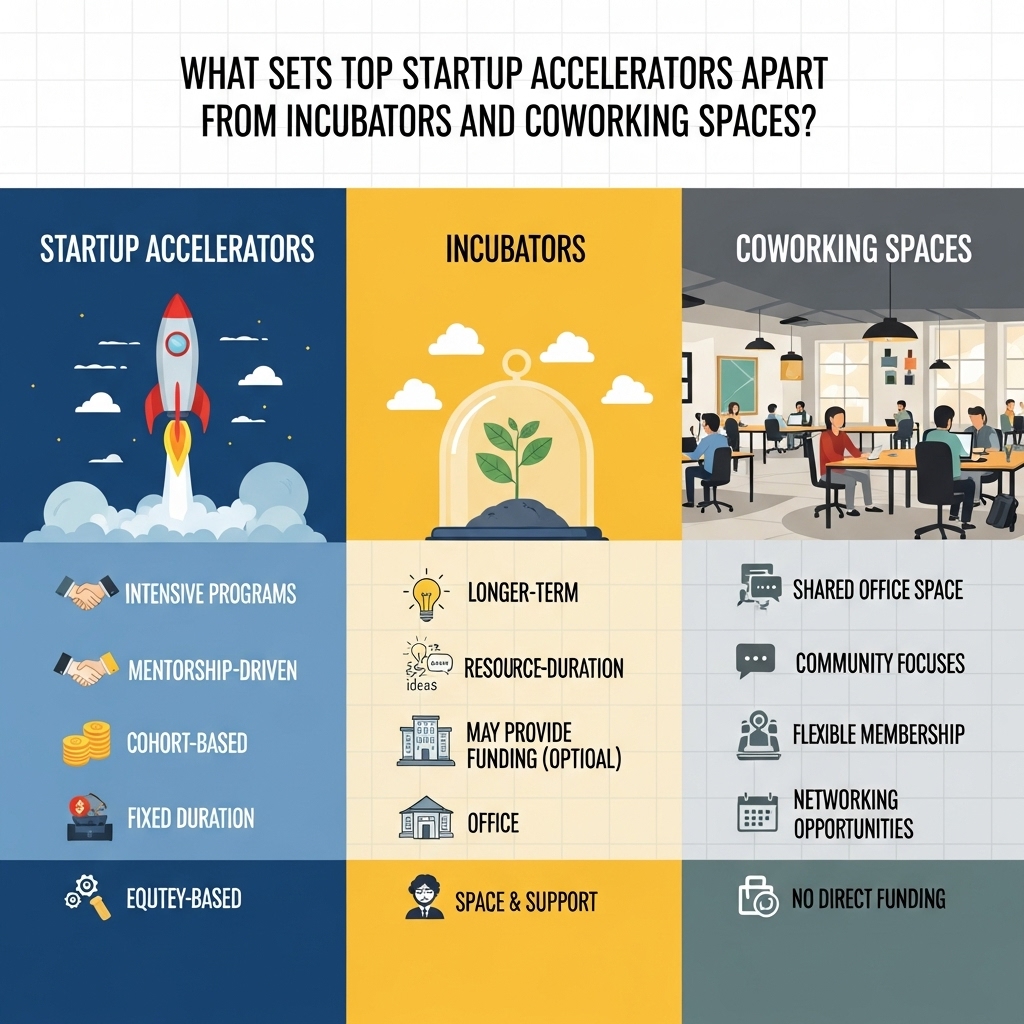
A startup accelerator is a program that provides a fixed-term, intensive mentorship and guidance to early-stage companies, typically in exchange for equity. These programs are designed to accelerate the growth and development of startups, helping them to refine their business models, build their teams, and secure funding. Accelerators usually have a competitive application process, and the selected startups participate in a cohort-based program that includes workshops, mentorship, and networking opportunities. The goal of an accelerator is to equip startups with the necessary tools, resources, and connections to scale their businesses and achieve significant milestones.
Key Characteristics of Top Startup Accelerators
So, what sets top startup accelerators apart from other organizations? Several key characteristics distinguish leading accelerators from incubators and coworking spaces. First, top accelerators have a strong network of mentors, investors, and industry experts who provide guidance and support to participating startups. These networks are often curated to match the specific needs of the startups, ensuring that they receive relevant and actionable advice. Second, top accelerators offer a structured program with a clear curriculum, milestones, and goals, which helps startups stay focused and motivated. Third, leading accelerators provide access to funding, either through investments or connections to venture capitalists, angel investors, and other funding sources.
Incubators vs. Accelerators: What's the Difference?
Incubators and accelerators are often confused, but they serve different purposes. Incubators are organizations that provide resources, such as office space, funding, and mentorship, to early-stage companies over a longer period, typically 1-3 years. Incubators focus on nurturing startups from the idea stage to the point where they can sustain themselves. In contrast, accelerators are designed for startups that already have a product or service and are looking to scale quickly. Accelerators provide a shorter, more intense program, usually 3-6 months, with a focus on rapid growth and fundraising. For example, Y Combinator is a well-known accelerator that provides a 3-month program, while the University of California, Berkeley's SkyDeck is an incubator that offers a 6-12 month program.
Coworking Spaces: A Different Animal
Coworking spaces are shared office spaces that provide a community-driven environment for entrepreneurs, freelancers, and startups to work, network, and collaborate. While coworking spaces may offer some resources, such as mentorship, workshops, and networking events, their primary focus is on providing a physical space for people to work. Coworking spaces do not typically offer the same level of structured programming, funding, or intense mentorship as accelerators. WeWork, for instance, is a popular coworking space that offers a range of amenities, but it does not provide the same level of support as an accelerator like Techstars.
Benefits of Top Startup Accelerators
So, why do startups join top startup accelerators? The benefits are numerous. First, accelerators provide access to a network of experienced mentors, investors, and industry experts who can offer valuable guidance and support. Second, accelerators provide a structured program that helps startups stay focused and motivated, with clear goals and milestones. Third, leading accelerators offer access to funding, which is critical for startups looking to scale quickly. Finally, accelerators provide a community of like-minded entrepreneurs and startups, which can lead to valuable connections, partnerships, and collaborations. For example, Airbnb, Dropbox, and Stripe are all alumni of the Y Combinator accelerator program, and have gone on to achieve significant success.
Conclusion
In conclusion, top startup accelerators are distinct from incubators and coworking spaces in their focus, structure, and benefits. By providing a competitive, cohort-based program with intense mentorship, funding, and networking opportunities, accelerators help startups accelerate their growth and achieve significant milestones. While incubators and coworking spaces have their own strengths, top startup accelerators offer a unique combination of resources, support, and connections that can make all the difference for early-stage companies looking to scale quickly and succeed. As the startup ecosystem continues to evolve, it's essential for entrepreneurs and startups to understand the differences between these organizations and leverage the resources that best fit their needs and goals.