
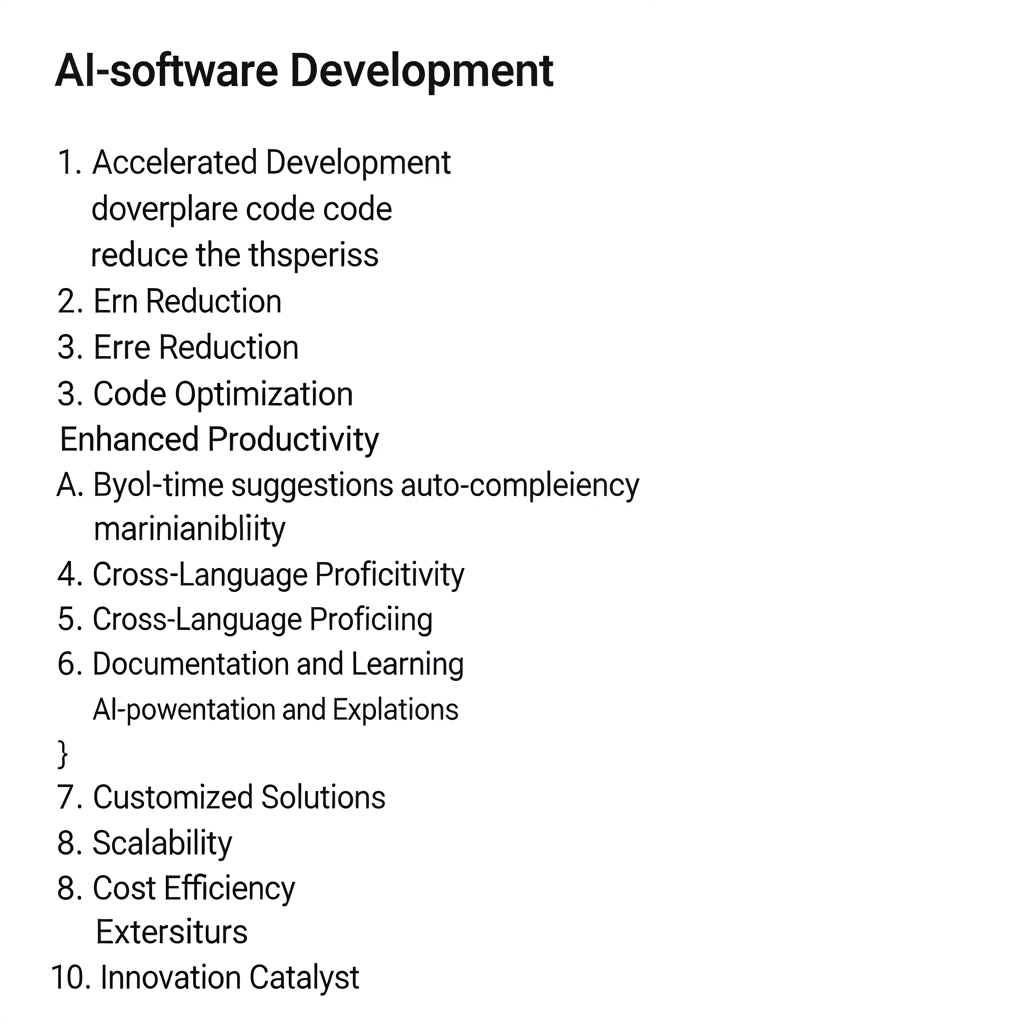
Introduction to AI-Generated Code
The advent of Artificial Intelligence (AI) has transformed numerous industries, and software development is no exception. One of the most significant advancements in this field is the emergence of AI-generated code, which has the potential to revolutionize software development efficiency. AI-generated code refers to the use of artificial intelligence algorithms to generate programming code, either partially or entirely, to develop software applications. This technology has been gaining traction in recent years, and its impact on the software development industry is expected to be substantial.
What is AI-Generated Code?
AI-generated code is created using machine learning algorithms that are trained on vast amounts of existing codebases. These algorithms can learn patterns, structures, and relationships within the code and use this knowledge to generate new code. The generated code can range from simple scripts to complex applications, depending on the sophistication of the algorithm and the quality of the training data. AI-generated code can be used for various purposes, including automating repetitive tasks, generating boilerplate code, and even creating entire applications from scratch.
Benefits of AI-Generated Code
The benefits of AI-generated code are numerous. One of the most significant advantages is increased efficiency. AI-generated code can automate many tedious and time-consuming tasks, freeing up developers to focus on more complex and creative tasks. Additionally, AI-generated code can reduce the likelihood of human error, as the generated code is based on established patterns and best practices. This can lead to higher-quality code and reduced debugging time. Furthermore, AI-generated code can also help to reduce the skill gap in software development, as less experienced developers can use AI-generated code to develop applications without requiring extensive expertise.
Applications of AI-Generated Code
AI-generated code has a wide range of applications in software development. For example, it can be used to generate web applications, mobile apps, and even entire operating systems. AI-generated code can also be used to automate tasks such as data processing, data analysis, and machine learning model development. Moreover, AI-generated code can be used to develop chatbots, virtual assistants, and other conversational interfaces. The use of AI-generated code can also be seen in the development of IoT devices, where it can be used to generate code for sensors, actuators, and other IoT devices.
Challenges and Limitations
While AI-generated code has the potential to revolutionize software development efficiency, there are also several challenges and limitations to consider. One of the main challenges is the quality of the training data. If the training data is of poor quality, the generated code may also be of poor quality. Additionally, AI-generated code may not always be able to replicate the nuances and complexities of human-written code. Furthermore, there are also concerns about the security and reliability of AI-generated code, as it may introduce new vulnerabilities and bugs. Finally, there is also the issue of intellectual property and ownership, as it is unclear who owns the rights to AI-generated code.
Real-World Examples
There are several real-world examples of AI-generated code in use today. For example, Google's AutoML platform uses AI to generate machine learning models for tasks such as image classification and natural language processing. Similarly, Microsoft's Bot Framework uses AI to generate code for chatbots and conversational interfaces. Additionally, companies such as GitHub and Amazon are also using AI-generated code to automate tasks such as code review and debugging. These examples demonstrate the potential of AI-generated code to improve software development efficiency and reduce the workload of human developers.
Conclusion
In conclusion, AI-generated code has the potential to revolutionize software development efficiency by automating tedious tasks, reducing human error, and improving code quality. While there are challenges and limitations to consider, the benefits of AI-generated code are substantial. As the technology continues to evolve, we can expect to see more widespread adoption of AI-generated code in software development. However, it is essential to address the challenges and limitations of AI-generated code, such as the quality of training data, security, and intellectual property concerns. By doing so, we can unlock the full potential of AI-generated code and transform the software development industry forever.