
Introduction to Financial Losses
The world of finance is filled with stories of triumph and disaster, where fortunes can be made and lost in the blink of an eye. Throughout history, there have been numerous instances of significant financial losses that have left a lasting impact on individuals, companies, and even entire economies. In this article, we will explore some of the most significant financial losses in history, examining the causes, consequences, and lessons that can be learned from these events.
Stock Market Crashes
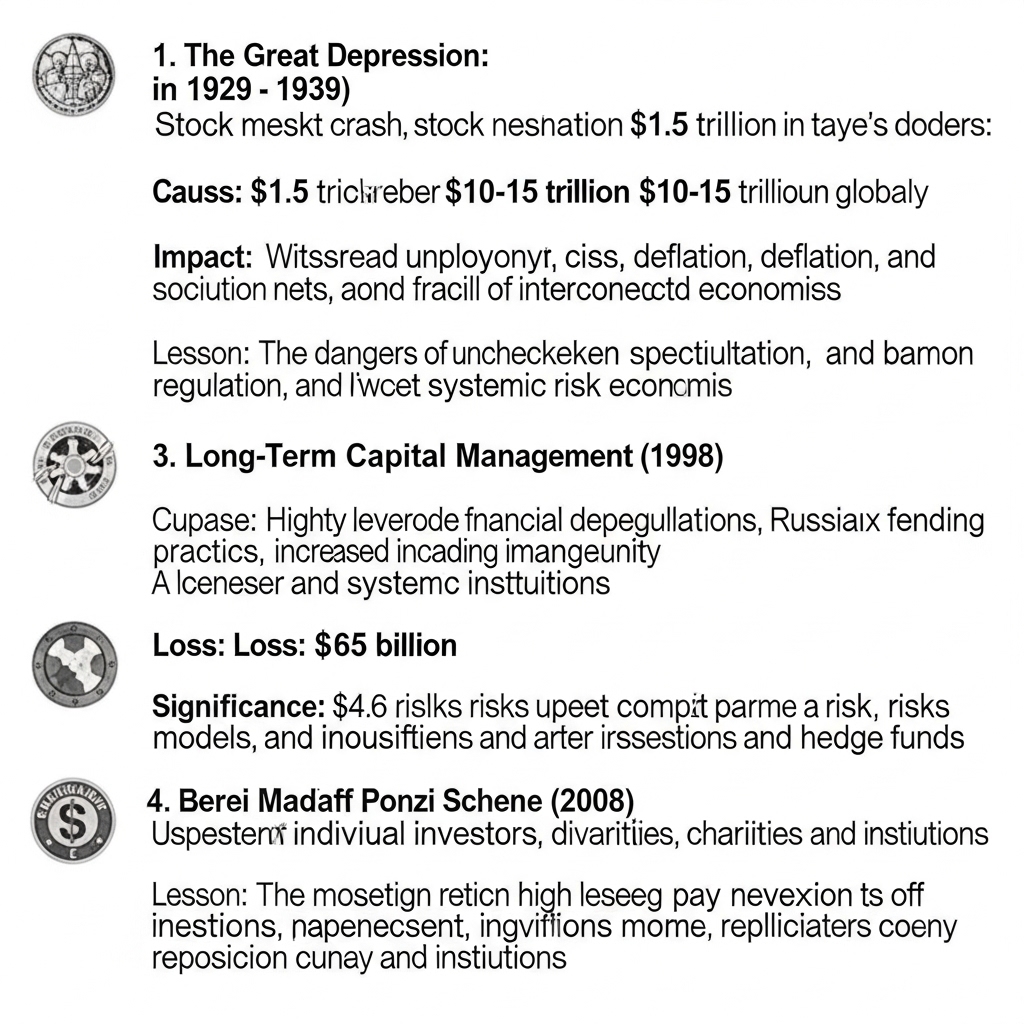
One of the most significant sources of financial losses is stock market crashes. These events occur when there is a sudden and significant decline in stock prices, resulting in a massive loss of wealth for investors. The most notable example of a stock market crash is the Wall Street Crash of 1929, also known as Black Tuesday. On October 29, 1929, stock prices plummeted, resulting in a loss of over $30 billion in a single day, which is equivalent to over $400 billion in today's dollars. This event marked the beginning of the Great Depression, a period of economic downturn that lasted for over a decade.
Another significant stock market crash occurred in 2008, when the global financial crisis led to a sharp decline in stock prices. The Dow Jones Industrial Average fell by over 50% in a matter of months, resulting in a loss of trillions of dollars in wealth. This event was triggered by a housing market bubble burst, which led to a global credit crisis and a recession that lasted for several years.
Corporate Bankruptcies
Corporate bankruptcies are another source of significant financial losses. When a company goes bankrupt, its assets are sold off to pay creditors, resulting in a loss of wealth for shareholders and employees. One of the most notable examples of a corporate bankruptcy is the collapse of Enron in 2001. The energy company's bankruptcy resulted in a loss of over $65 billion in shareholder value, making it one of the largest bankruptcies in history. The collapse of Enron was caused by a combination of factors, including accounting fraud, corruption, and poor management.
Another example of a significant corporate bankruptcy is the collapse of Lehman Brothers in 2008. The investment bank's bankruptcy resulted in a loss of over $600 billion in assets, making it one of the largest bankruptcies in history. The collapse of Lehman Brothers was a major contributor to the global financial crisis, as it led to a freeze in credit markets and a sharp decline in economic activity.
Investment Scams
Investment scams are another source of significant financial losses. These scams involve fraudulent investment schemes that promise unusually high returns, but ultimately result in a loss of wealth for investors. One of the most notable examples of an investment scam is the Ponzi scheme run by Bernie Madoff. Madoff's scheme, which promised investors unusually high returns through a complex investment strategy, ultimately resulted in a loss of over $65 billion in investor funds. The scheme was uncovered in 2008, and Madoff was sentenced to 150 years in prison for his role in the scam.
Another example of an investment scam is the scheme run by Allen Stanford, who promised investors high returns through a series of investments in certificates of deposit. The scheme ultimately resulted in a loss of over $7 billion in investor funds, making it one of the largest investment scams in history. Stanford was sentenced to 110 years in prison for his role in the scam.
Natural Disasters
Natural disasters are another source of significant financial losses. These events, such as hurricanes, earthquakes, and tsunamis, can result in a loss of property, infrastructure, and human life. One of the most notable examples of a natural disaster is Hurricane Katrina, which struck the Gulf Coast of the United States in 2005. The storm resulted in a loss of over $100 billion in damages, making it one of the costliest natural disasters in history. The storm also resulted in a significant loss of life, with over 1,800 people killed.
Another example of a natural disaster is the Tohoku earthquake and tsunami, which struck Japan in 2011. The disaster resulted in a loss of over $200 billion in damages, making it one of the costliest natural disasters in history. The disaster also resulted in a significant loss of life, with over 15,000 people killed.
Conclusion
In conclusion, the world of finance is filled with stories of significant financial losses, ranging from stock market crashes to corporate bankruptcies, investment scams, and natural disasters. These events can result in a loss of wealth, property, and human life, and can have a lasting impact on individuals, companies, and entire economies. By examining these events, we can learn valuable lessons about the importance of risk management, due diligence, and preparedness. We can also gain a greater appreciation for the complexity and unpredictability of the financial world, and the need for caution and prudence in our investment decisions.
Ultimately, the key to avoiding significant financial losses is to be informed, prepared, and cautious. By staying up-to-date with market trends, conducting thorough research, and diversifying our investments, we can reduce our risk of loss and achieve our financial goals. We can also learn from the mistakes of others, and use these lessons to inform our own investment decisions. By doing so, we can navigate the complex and often unpredictable world of finance with confidence and success.