
Introduction to Domain-Driven Design
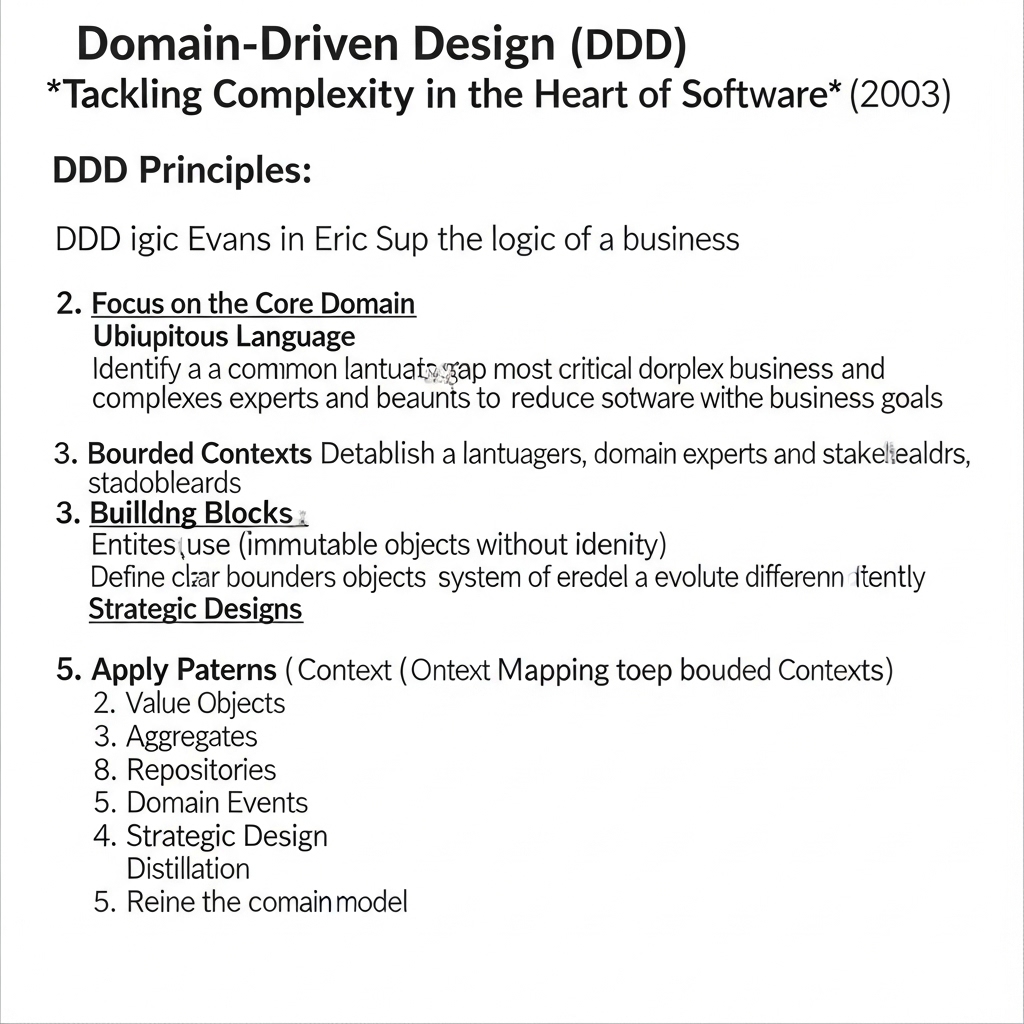
Domain-Driven Design (DDD) is an approach to software development that emphasizes understanding the core business domain and modeling it in code. It was first introduced by Eric Evans in his 2003 book "Domain-Driven Design: Tackling Complexity in the Heart of Software." The main idea behind DDD is to create software that is closely aligned with the business domain, making it more maintainable, flexible, and scalable. In this article, we will delve into the world of Domain-Driven Design, exploring its principles, benefits, and best practices.
Understanding the Domain
The domain refers to the area of expertise or the business domain that the software is intended to support. It includes the concepts, rules, processes, and behaviors that are specific to that domain. For example, in an e-commerce application, the domain would include concepts such as products, orders, customers, and payment processing. Understanding the domain is crucial in DDD, as it allows developers to create software that accurately models the business and meets its needs. This involves working closely with domain experts, such as business stakeholders and subject matter experts, to gain a deep understanding of the domain.
Key Components of Domain-Driven Design
There are several key components that make up the Domain-Driven Design approach. These include the domain model, entities, value objects, aggregates, and bounded contexts. The domain model represents the concepts and rules of the domain, and is typically implemented using a combination of entities, value objects, and aggregates. Entities are objects that have identity and state, such as customers or orders. Value objects are immutable objects that have a set of values, such as money or addresses. Aggregates are clusters of entities and value objects that are treated as a single unit of work. Bounded contexts are the boundaries within which a particular domain model applies, and are used to define the scope of the model.
Benefits of Domain-Driven Design
The benefits of Domain-Driven Design are numerous. By creating software that is closely aligned with the business domain, DDD helps to ensure that the software meets the needs of the business and is more maintainable and flexible. This, in turn, can lead to increased productivity, reduced costs, and improved customer satisfaction. Additionally, DDD promotes a collaborative approach to software development, bringing together developers, domain experts, and business stakeholders to work together to create software that truly meets the needs of the business. For example, a company that implements DDD in its e-commerce platform may find that it is able to respond more quickly to changing market conditions, and is better able to meet the evolving needs of its customers.
Challenges and Limitations of Domain-Driven Design
While Domain-Driven Design offers many benefits, it also presents several challenges and limitations. One of the main challenges is the need for a deep understanding of the domain, which can be time-consuming and require significant resources. Additionally, DDD requires a high degree of collaboration and communication between developers, domain experts, and business stakeholders, which can be difficult to achieve in practice. Furthermore, DDD can be complex and may require significant changes to existing software development processes and practices. For example, a company that is used to a more traditional, waterfall approach to software development may find it difficult to adopt the more iterative and collaborative approach of DDD.
Best Practices for Implementing Domain-Driven Design
To implement Domain-Driven Design successfully, there are several best practices that should be followed. These include working closely with domain experts to gain a deep understanding of the domain, using a collaborative and iterative approach to software development, and focusing on the core domain logic. Additionally, it is essential to use a programming language and framework that supports the principles of DDD, such as object-oriented programming and test-driven development. For example, a company that is implementing DDD in its software development process may choose to use a language such as Java or C#, and a framework such as Spring or.NET.
Conclusion
In conclusion, Domain-Driven Design is a powerful approach to software development that emphasizes understanding the core business domain and modeling it in code. By creating software that is closely aligned with the business domain, DDD helps to ensure that the software meets the needs of the business and is more maintainable and flexible. While DDD presents several challenges and limitations, the benefits it offers make it a worthwhile approach for companies looking to improve their software development processes and create software that truly meets the needs of their business. By following best practices and working closely with domain experts, developers can create software that is more effective, efficient, and scalable, and that truly supports the needs of the business.